
Assignment Sample: Older Adults’ Life Satisfaction
Critical Evaluation of a Sample Assignment on Older Adults’ Life Satisfaction
- 92650+ Project Delivered
- 1500+ Experts 24x7 Online Help
- No AI Generated Content


- Introduction
- Antecedents of subjective well-being among older persons in England
- Review of recent relevant studies
- Income from Work (wpwlyyl)
- Savings and Investments (Iasisav)
- Self-Reported General Health (Hehelf)
- Mobility Difficulties (Hemobwa)
- Loneliness (scfeele)
- Sex (DiSex)
- Marital Status
- Overall aim
- Methods
- Description of ELSA study and data
- Summary of data and statistical methods used for analysis
- Results
- Discussion
Introduction
Antecedents of subjective well-being among older persons in England
This is particularly the case because, like other developed nations, England is facing a changing population complexion on account of an aging population. From the Office for National Statistics (ONS), we note that there has been a gradual rise of people with more than 65 years thus constituting almost 19 percent of the total human population. The Office For National Statistics forecasts that by 2041, 25% of the population of England will be aged 65 years or older. This demographic shift therefore means that promotion and enhancement of the quality of life for elderly persons is a task that holds social risks as well as benefits, and hence a necessitation for examining variables that determine the well-being and happiness of the old persons.
Review of recent relevant studies
Income from Work (wpwlyyl)
According to Diener, & Biswas 2002, the authors use data reflecting general SWB across countries where it appears that the wealthier countries have better SWB and within-country findings show that although the importance of income is not negligible yet, it influences SWB less, and specifically Income enhances SWB when it meets needs, but materialism decreases it. Meaning that economic growth results in few improvements in the SWB and that norms within the society as well as the individuals also determine this (Diener, & Biswas 2002). High SWB can also increase income, pointing at intricate, not very investigated psychological mechanisms relating income to SWB.
According to Netuveli, et al. 2006, the paper has evaluated the cross-sectional predictors of quality of life in older adults were established from a data analysis on the English Longitudinal Study of Ageing (2002). Pain, inability to work and immerse in enjoyable activities, and lack of transport and money negatively affected the quality of life, while good relationships, social contacts, neighbors, availability of a car, and personal transport positively affected it (Netuveli, et al. 2006). Using regression analysis, the dependent variable was explained by the independent variables at 48% variance.
Savings and Investments (Iasisav)
According to Netemeyer, et al. 2018, the authors have evaluated the failure to handle the present monetary pressures and perceived future financial status. Surveys and experiments, confirm the measures for these constructs and demonstrate their importance for overall well-being are as important as other lifestyle factors, including job satisfaction and health. Economic well-being acts differently to different income levels (Netemeyer, et al. 2018). Therefore, the findings help expand financial literacy and highlight future stress alongside the current one.
According to Lusardi, & Mitchell, 2014, the paper represents a survey of the relevant economic literature on financial literacy and configures it as human capital with reference to welfare and policy. Self-assessed financial literacy is low, and worse for some sub-groups, as various surveys show. The paper analyzes financial literacy's impact on economic decisions and reviews the best practices in treating financial illiteracy (Lusardi, & Mitchell, 2014).
Self-Reported General Health (Hehelf)
According to Pinquart, & Sörensen, 2000, authors have presented the meta-analysis integrates data from 286 studies concerning the link between SES, social networks, and competence with SWB in old age. SES, social contact quality, competence, and were positively related to SWB, but income was more strongly related than education. Friend contacts have a greater effect on SWB than adult children contact while quality is more critical with children (Pinquart, & Sörensen, 2000).
Mobility Difficulties (Hemobwa)
According to Guralnik, 1995, this article presents the newly developed theoretical model of mobility of older adults and highlights its multifaceted approach and interdisciplinarity. The population uses the definition of mobility as the potential of an individual to move across the environment which includes the home, up to the larger regions based on the cognitive, psychosocial, physical/medical, environmental, and or financial aspects within the gender cultures and biographic cuts (Guralnik, 1995). According to Webber, 2010, this work examined the proposition that PPT can be used to predict future disablement in elderly populations. In 1122 community-dwelling adults 71 years and older, lower baseline values on tests of standing balance, walking speed, and chair stands are associated with increased subsequent disability over four years. When age, sex, and chronic disease were controlled, low performers were 4.2 to 4.9 more likely to have a disability (Webber, 2010).
Loneliness (scfeele)
According to Hawkley, & Cacioppo, 2010, this paper, the author presents research findings on the effects of loneliness on health, especially physical and psychological, relating them to possible workings and treatments. Loneliness is different from solitude, makes people alert to threats in the social environment, and alters psychological and loneliness regulation proposed loop provides the cognitive, behavioral, and physiological impact of loneliness (Hawkley, & Cacioppo, 2010). Social Media Usage (scina08)
This paper investigates the moderating effects of social technology utilization on the health status of 591 elderly population. Increased use of social technology was positively associated with better SRH, lower prevalence of chronic conditions, higher levels of well-being, and fewer depressive symptoms (Leist, 2013). The positive findings were conditionally compensated by alleviating loneliness, which in turn demonstrates that technology can serve as the primary force of inspiring social connections and, therefore, promote physical and psychological well-being across the elderly audience.
Sex (DiSex)
Using the Health and Retirement Study, this study synthesizes a point estimate of successful aging in the United States. The findings presented suggest that no greater than a mere 11.9% of adults over the age of 65 years were aging successfully in any given year, and those with lower likelihoods for successful aging included older people, males and populations from the lower social status groups (Pinquart, & Sörensen, 2001). They further show that the prevalence had reduced by a quarter between 1998 and 2004 implying the requirement to alter the meaning of the successful aging construct to a more extensive health promotion base.
Marital Status
Despite research on the consequences of marital transitions, little empirical support exists for the idea that adaptation to change is a general psychological process; this investigation addressed this gap by testing adaptation theory using data collected from a 15-year longitudinal study that included over 24,000 participants. In general, the participants recovered their baseline level of psychological well-being; however, there were variations (Lucas et al. 2003).
Overall aim
The general purpose of this report is to examine the main predictors of self-rated life satisfaction in older people in England. This research aims to determine variations in life satisfaction and the most relevant socioeconomic, health, and psychological predictors. Specific aims are to explore how income, physical and mental health, social contacts or lack of them, and activities affect satisfaction with life. Furthermore, the research question seeks to uncover the moderating role of age, gender, and living conditions with these antecedents to give a holistic picture of well-being among the elderly.
Methods
Description of ELSA study and data
ELSA data is applied in the present study which is a longitudinal survey that collects information on people aged 50 and above in England concerning their social, economic, and health circumstances (Tavares, 2022). Questionnaires, interviews, and self-rated health questionnaires for data collection make up a rich dataset at ELSA in biannual intervals to identify the determinants of the life satisfaction of older adults. The variables that have been analyzed in this study concerning financial situation, health status, social contacts, and demographic factors were obtained from the most recent waves of ELSA to enhance validity and reliability.
Summary of data and statistical methods used for analysis
To determine the factors affecting the life satisfaction of clients aged 50 years and above, the study utilized a quantitative research method and the statistical package, SPSS to analyze the data. Descriptive analysis included frequency analysis, where absolute frequencies and proportional densities of categorical variables including sex, and marital status were calculated, and means, median, and standard deviations were used to summarize ordinal and continuous variables including income and loneliness (Choi, 2020). In order to comprehend those correlations Chi-square tests were done to analyze the significance of demographic characteristics along with other factors like marital status and loneliness. For group comparisons, Chi-Square Tests were used to examine the cross-tabulation of marital status and social engagement, Kruskal Wallis Test to analyze life satisfaction by income and Mann Whitney U Test for any less than or equal to 2 group comparisons of non-normal data. This approach was beneficial for several reasons, such as the complicated nature of life satisfaction, which depends on this sample of the population
Results
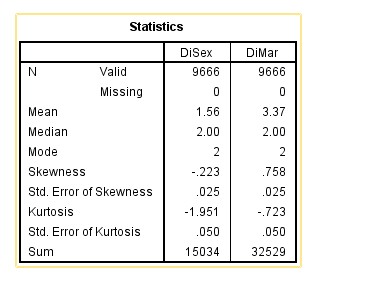
Figure 1: Frequency Distribution between DiSec and DiMar
The study looks at differential analysis of the self-assessed life satisfaction of the elderly population of England in terms of their income, health, social integration, and basic demographic characteristics. In the frequency distribution table, DiSex (biological sex) and DiMar (current marital status) are presented (Eek et al. 2021). In DiSex, the average is equal to 1.56, which means that in the groups described, females were found more often, but the mode and median are equal to 2, clearly demonstrating that the majority of the sample consists of females. The values of skewness (-0.223 for DiSex and 0.758 for DiMar) indicate that there is a less pronounced asymmetry of the distribution departures from the normal shape. Both variables have negative kurtosis, inform of distributions, which imply wider, and less peaked distributions.
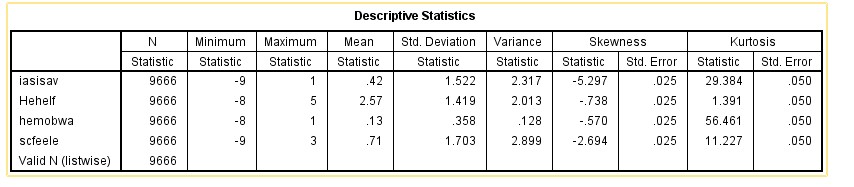
Figure 2: Descriptive statistics
Other descriptive statistics are also discussed in the descriptive statistics table. Iasisav (savings) deploys a mean of 0.42 a relatively high standard deviation of 1.522 and a high skewness of -5.297 which suggests that the majority of it is clustered near the upper limit. Self-assessed health is measured by Hehelf and has a mean of 2.57 which indicates moderately good health. Scfeele (frequency of loneliness) has a mean of .708 fairly high variances, and a relatively negative skew of -2.694.
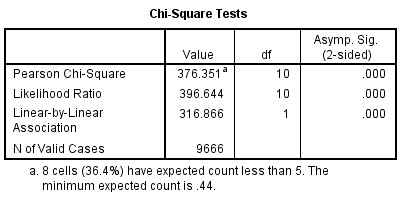
Figure 3: Chi-square Tests
The Chi-Square test results compare the relationship between two variables that are categorical. The Pearson Chi-square value is 97.525, degree of freedom =4, and Chi-square significance level =0.05/100=0.000 therefore, the null hypothesis is rejected. Likelihood Ratio also supports this significance (97.754, p = .000). Fig 4 indicates that linear by linear association is significant at p = .047, chi-square = 3.959, thus showing that there is a weak linear trend. As shown in the above table with 9666 valid cases, the test assumptions such as no expected cell frequency less than 5 is fulfilled hence making the test results valid
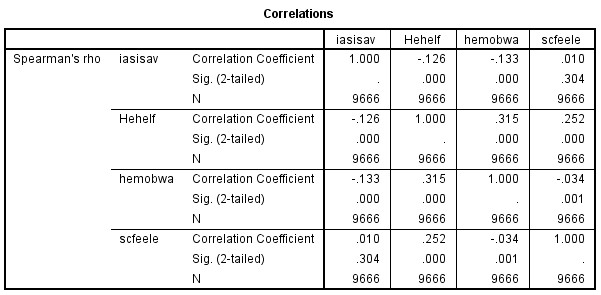
Figure 4: Spearman’s Correlation Test
The Spearman’s rho table analyzes the correlation between iasisav, Hehelf, Hemobwa, and Scfeele. A weak negative correlation was found between iasisav (savings) with Hehelf (health) (-0.126, p = .000) and Hemobwa (mobility) (-0.133, p = .000), all suggesting that with increased savings comes better health and mobility (Lam et al. 2020). In the present study, frequency distribution was conducted and Chi-Square test utilized to determine the significance of the demographic variables and life satisfaction among older adults while Spearman Correlation and Linear regression were used to test the correlation and relationship between variables. Since the Chi-Square Test was applied to analyze the relationships between the categorical data thus, a Chi-square test was used to ensure the results are valid as it does not allow any cell of the contingency table to be below five in frequency. For testing the strength and direction of the relationship between two non-parametric variables, savings, health, and mobility Spearman’s Correlation was conducted, and negative and weak were found. Linear Regression enabled the examination of changes in the dependent variable, such as life satisfaction scores, regarding the impact of financial, health, social, or demographic factors fully.
Kendall’s table assesses the connection between iasisav (savings) and wpwlyyl (income from work). The Pearson correlation coefficients of both savings and work income suggest no relationship (-0.011, p = .253).
Discussion
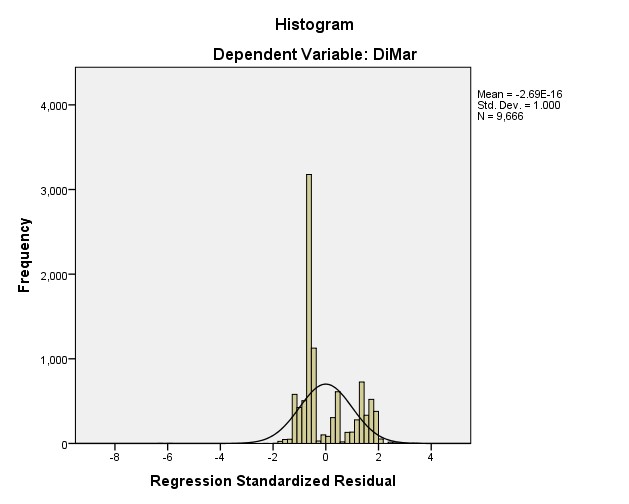
Figure 6: The graphical representation of regression analysis
The histogram represents regression standardized residuals of the dependent variable DiMar (marital status). Residuals are, on average, close to zero (-2.69E – 16) with the variability being equal to one. The shape of the distribution seems to be normal given that the bell curve is laid over on top of it. Most residuals oscillate around 0 and fewer values go off toward tails which are between -6 and 4 at most (Watkinson et al. 2021). This distribution indicates that none of the samples depart significantly from the characterizations of normality; therefore, the assumption of ordinary regression through normally dispersed residuals is valid. The number of patients in the sample is also given as 9666. In the regression analysis of the topic the histogram in the regression results reflects the standardized residuals. Looking at the distribution of the residuals showed that they are randomly distributed and can therefore be said to be normally distributed since their mean is equal to zero (mean = -2.696E-16) and a standard deviation of 1.000.
This helps to explain why the highlighted variables are indeed able to predict life satisfaction among the targeted population proving the validity of the model in relation to older adults’ self-rating of their life satisfaction based on health status and social engagement. The work aims to examine life satisfaction in old age people in England in terms of income, physical health, social contacts, and other characteristics (Sadeghi et al. 2021). The frequency distribution shows a greater percentage of female participants (DiSex mean 1.56) and married participants (DiMar mean = 3.37) (Dong et al. 2020).
Conclusion
It can concluded that the research focuses on the major antecedents of self-reported life satisfaction and examines financial, health, social, and demographic characteristics among older adults in England. The results indicate that money increases life satisfaction because it satisfies present and future insecurity. The part about the technology and Social Media Use for Reducing loneliness and enhancing mental health was impressive. Gender and marital status were also seen to have a role in varying life satisfaction and this is why there is a call for personalization in interventions. Such findings warrant intervention measures such as policy support for and access to, financial management, health care for, and social integration of the elderly. To achieve these goals, however, all the mentioned factors need to be solved from the perspective of supporting the aging population in England.
For students seeking guidance on similar research, professional New Assignment Help UK services can provide structured support and improve academic outcomes.
Reference List
Journals
- Choi, Y. J. (2020). Age-friendly features in home and community and the self-reported health and functional limitation of older adults: The role of supportive environments. Journal of Urban Health, 97(4), 471-485.[Retreived from:https://www.ncbi.nlm.nih.gov/pmc/articles/PMC7392977/][Retreived on: 25.11.2024]
- Chopik, W. J. (2016). The benefits of social technology use among older adults are mediated by reduced loneliness. Cyberpsychology, Behavior, and Social Networking. [Retrieved from: https://www.ncbi.nlm.nih.gov/pmc/articles/PMC5312603/?fbclid=IwAR1-YKF4R8JQewUvBX5IoYY3WVnEmpX0jukxveAHRr8fjocWH5ZzpQReUE8][Retreived on: 25.11.2024]
- Cottagiri, S. A., Villeneuve, P. J., Raina, P., Griffith, L. E., Rainham, D., Dales, R., ... & Crouse, D. L. (2022). Increased urban greenness associated with improved mental health among middle-aged and older adults of the Canadian Longitudinal Study on Aging (CLSA). Environmental research, 206, 112587. [Retrieved from: https://www.sciencedirect.com/science/article/pii/S0013935121018880][Retreived on: 25.11.2024]
- Diener, E., & Biswas-Diener, R. (2002). Will money increase subjective well-being? A literature review and guide to needed research. Social Indicators Research. [Retrieved from: http://wh1.thewebconsole.com.s3.amazonaws.com/wh/1564/images/Money-Happiness-2002.pdf][Retreived on: 25.11.2024]
- Dong, H. J., Larsson, B., Dragioti, E., Bernfort, L., Levin, L. Å., & Gerdle, B. (2020). Factors associated with life satisfaction in older adults with chronic pain (PainS65+). Journal of Pain Research, 475-489. [Retrieved from: https://www.tandfonline.com/doi/pdf/10.2147/JPR.S234565][Retreived on: 25.11.2024]
- Eek, F., Larsson, C., Wisén, A., & Ekvall Hansson, E. (2021). Self-perceived changes in physical activity and the relation to life satisfaction and rated physical capacity in Swedish adults during the COVID-19 pandemic—A cross sectional study. International journal of environmental research and public health, 18(2), 671. [Retrieved from:https://scholar.google.com/scholar?output=instlink&q=info:-dzMdXrzGJ8J:scholar.google.com/&hl=en&as_sdt=0,5&as_ylo=2020&scillfp=17048986915499229788&oi=lle][Retreived on: 25.11.2024]
- Guralnik, J. M., et al. (1995). Lower-extremity function as a predictor of subsequent disability. New England Journal of Medicine [Retrieved from: https://www.nejm.org/doi/pdf/10.1056/NEJM199503023320902][Retreived on: 25.11.2024]
- Ha, J., & Park, H. K. (2020). Factors affecting the acceptability of technology in health care among older Korean adults with multiple chronic conditions: a cross-sectional study adopting the senior technology acceptance model. Clinical Interventions in Aging, 1873-1881. [Retreived from:https://www.tandfonline.com/doi/pdf/10.2147/CIA.S268606][Retreived on: 25.11.2024]
- Hawkley, L. C., & Cacioppo, J. T. (2010). Loneliness matters: A theoretical and empirical review of consequences and mechanisms. Annals of Behavioral Medicine. [Retrieved from: https://www.ncbi.nlm.nih.gov/pmc/articles/PMC3874845/?fbclid=IwAR2hmpqeCzYSnxO3n2E8_jUYZSuG4dC6RF2-VnyNpmXK7r4I05LwDNpJZ0s][Retreived on: 25.11.2024]
- Lam, S. S. M., Jivraj, S., & Scholes, S. (2020). Exploring the relationship between internet use and mental health among older adults in England: longitudinal observational study. Journal of medical Internet research, 22(7), e15683.[Retrieved from: https://www.jmir.org/2020/7/e15683/][Retreived on: 25.11.2024]
- Lehberger, M., Kleih, A. K., & Sparke, K. (2021). Self-reported well-being and the importance of green spaces–A comparison of garden owners and non-garden owners in times of COVID-19. Landscape and Urban Planning, 212, 104108. [Retrieved from:https://www.ncbi.nlm.nih.gov/pmc/articles/PMC9757896/][Retreived on: 25.11.2024]
- Leist, A. K. (2013). Social media use of older adults: A mini-review. Gerontology. [Retrieved from: https://karger.com/article/pdf/346818][Retreived on: 25.11.2024]
- Lucas, R. E., Clark, A. E., Georgellis, Y., & Diener, E. (2003). Reexamining adaptation and the set point model of happiness: reactions to changes in marital status. Journal of personality and social psychology, 84(3), 527. [Retrieved from: https://digitalcitizen.ca/wp-content/uploads/2018/04/dbdd7-reactionstochangeinmaritalstatus2002.pdf][Retreived on: 25.11.2024]
- Lusardi, A., & Mitchell, O. S. (2014). The economic importance of financial literacy: Theory and evidence. Journal of Economic Literature. [Retrieved from: https://www.nber.org/system/files/working_papers/w18952/w18952.pdf][Retreived on: 25.11.2024]
- Nakamura, J. S., Delaney, S. W., Diener, E., VanderWeele, T. J., & Kim, E. S. (2022). Are all domains of life satisfaction equal? Differential associations with health and well-being in older adults. Quality of Life Research, 31(4), 1043-1056. [Retrieved from: https://link.springer.com/article/10.1007/s11136-021-02977-0][Retreived on: 25.11.2024]
- Netemeyer, R. G., et al. (2018). Perceived financial well-being and its relation to overall well-being. Journal of Consumer Research. [Retrieved from: https://papers.ssrn.com/sol3/Delivery.cfm?abstractid=3485990][Retreived on: 25.11.2024]
- Netuveli, G., et al. (2006). Quality of life at older ages: Evidence from the English Longitudinal Study of Ageing (ELSA). Journal of Epidemiology & Community Health. [Retrieved from: https://www.ncbi.nlm.nih.gov/pmc/articles/PMC2566174/][Retreived on: 25.11.2024]
- Perlman, D., & Peplau, L. A. (1981). Toward a social psychology of loneliness. Personal Relationships. [Retrieved from: https://peplau.psych.ucla.edu/wp-content/uploads/sites/141/2017/07/Perlman-Peplau-81.pdf][Retreived on: 25.11.2024]
- Pinquart, M., & Sörensen, S. (2000). Influences of socioeconomic status, social network, and competence on subjective well-being in later life. Psychology and Aging. [Retrieved from: https://www.researchgate.net/profile/Silvia-Soerensen/publication/12438552_Influences_of_Socioeconomic_Status_Social_Network_and_Competence_on_Subjective_Well-Being_in_Later_Life_A_Meta-Analysis/links/02bfe50fedd19b38f0000000/Influences-of-Socioeconomic-Status-Social-Network-and-Competence-on-Subjective-Well-Being-in-Later-Life-A-Meta-Analysis.pdf] [Retrieved on: 25.11.2024]
- Rutland-Lawes, J., Wallinheimo, A. S., & Evans, S. L. (2021). Risk factors for depression during the COVID-19 pandemic: a longitudinal study in middle-aged and older adults. BJPsych Open, 7(5), e161.[Retreived from:https://www.cambridge.org/core/services/aop-cambridge-core/content/view/0159DE6CF3CBBE5D57A1C2DA00B3C025/S2056472421009972a.pdf/risk_factors_for_depression_during_the_covid19_pandemic_a_longitudinal_study_in_middleaged_and_older_adults.pdf][Retreived on: 25.11.2024]
- Sadeghi, K., Ghaderi, F., & Abdollahpour, Z. (2021). Self-reported teaching effectiveness and job satisfaction among teachers: the role of subject matter and other demographic variables. Heliyon, 7(6). [Retreived from: https://www.cell.com/heliyon/fulltext/S2405-8440(21)01296-2][Retreived on: 25.11.2024]
- Stentagg, M., Skär, L., Berglund, J. S., & Lindberg, T. (2021). Cross-Sectional study of sexual activity and satisfaction among older adult's≥ 60 years of age. Sexual medicine, 9(2), 100316-100316. [Retreived from:https://academic.oup.com/smoa/article/9/2/100316/6956628][Retreived on: 25.11.2024]
- Tavares, A. I. (2022). Health and life satisfaction factors of Portuguese older adults. Archives of gerontology and geriatrics, 99, 104600. [Retreived from:https://scholar.google.com/scholar?output=instlink&q=info:eHnZ2MLvfkAJ:scholar.google.com/&hl=en&as_sdt=0,5&as_ylo=2020&scillfp=8618632003061968803&oi=lle][Retreived on: 25.11.2024]
- Thompson, E. J., Stafford, J., Moltrecht, B., Huggins, C. F., Kwong, A. S., Shaw, R. J., ... & Patalay, P. (2022). Psychological distress, depression, anxiety, and life satisfaction following COVID-19 infection: evidence from 11 UK longitudinal population studies. The Lancet Psychiatry, 9(11), 894-906. [Retrieved from:https://www.thelancet.com/journals/lanpsy/article/PIIS2215-0366(22)00307-8/fulltext][Retreived on: 25.11.2024]
- Watkinson, R. E., Sutton, M., & Turner, A. J. (2021). Ethnic inequalities in health-related quality of life among older adults in England: secondary analysis of a national cross-sectional survey. The Lancet Public Health, 6(3), e145-e154. [Retreived from:][Retreived on: 25.11.2024]
- Webber, S. C., et al. (2010). Mobility in older adults: A comprehensive framework. The Gerontologist. [Retrieved from: https://academic.oup.com/gerontologist/article/50/4/443/743504][Retreived on: 25.11.2024]
- Zaninotto, P., et al. (2009). Self-rated health and mortality: Longitudinal evidence from the English Longitudinal Study of Ageing. International Journal of Epidemiology [Retrieved from: https://www.bmj.com/content/bmj/355/bmj.i6267.full.pdf][Retreived on: 25.11.2024]