
FINN3081 Module title Behavioural Finance Assignment Sample
The Role Of Sentiment And Social Media In Financial Markets: Theoretical Insights, Methodological Challenges, And Innovative Approaches
- 92650+ Project Delivered
- 1500+ Experts 24x7 Online Help
- No AI Generated Content


- Introduction - FINN3081 Module title Behavioural Finance Assignment Sample
- Theoretical Foundations
- Efficient Market Hypothesis (EMH) vs. Behavioural Finance
- Sentiment and Investor Behaviour
- Social Media as an Information Source
- Empirical Studies and Research Gaps
- Proposed Research Methodology
- Justification of Proposed Approach
Introduction - FINN3081 Module title Behavioural Finance Assignment Sample
The informational role of social media has emerged to play a significant role in determining the financial markets and investors' sentiments in determining the prices of financial assets. Unlike other media channels, such as television, newspapers and blogs, Twitter, Reddit, and Stock Twits are social media outlets that give time for discussion to enhance market sentiments. Hysterical phenomena like meme stakes and wild rides in the price of cryptocurrencies show that sentiment plays a more significant role in trading now. While traditional theories support the efficiency of the markets and the ability to incorporate all the available information into the price, behavioural finance postulates that emotions lead to price inefficiencies. Thus, measuring and analysing the sentiment from social media is problematic due to data noise, bias and questionability of actual causality.
Theoretical Foundations
Efficient Market Hypothesis (EMH) vs. Behavioural Finance
According to the Efficient Market Hypothesis (EMH), the markets for financial assets contain all relevant information at any point, and then the price at which assets trade is optimal (Lekhal and El Oubani, 2020). This theory holds that investors can not secure returns better than average returns because markets are efficient and price all Investable information. EMH presupposes market agents' efficiency and ability to process and respond to new information (Nyakurukwa and Seetharam, 2023).
Behavioural finance assignments covering investor psychology and market anomalies are highly specialised; reliable finance assignment help supports students in applying theoretical frameworks to real-world financial behaviour.
Conversely, behavioural finance argues with psychological factors such as biases, heuristics and self-control failures (Mahmood et al., 2024). Research indicates that investors tend to deviate from underlying values because they are bound to emotions, cognitive biases, and market sentiment. This topic in behavioural finance helps explain phenomena like bubbles, panic, and momentum, where an investor’s attitude leads to high and unjustified price fluctuation (Rasool and Ullah, 2020). Phenomena like the dot-com bubble and meme stock rallies are cited to show that sentiment can often overpower fundamental understanding, causing extreme price discrepancies.
Sentiment and Investor Behaviour
Investor sentiment is comprised of the total feeling of optimism or pessimism, which might be experienced by investors in the market (Wang, Su and Duxbury, 2022). It becomes essential to note that reactions can be derived from news events, earnings releases, economic indicators and most recently, posts on the social web (Ahmed, 2020).
Specifically, retail investors are said to be sensitive to sentiment cues at the online platform level when making their trades (Ahmed, 2020). With the advent of social media and affiliated platforms, wholesale manipulation of sentiments that usually contribute to the share movement has also amplified (Han et al., 2022). Also, institutional investors track sentiment factors, which inform how the market feels and allow them to act appropriately.
Social Media as an Information Source
Social media has become an essential source of information through which financial markets can track real-time sentiment and activity (Rashid, Tariq and Rehman, 2021). It is estimated that traditional financial news sources impart information slowly that, unlike new social media platforms, investors can counter-move fast-developing events (Bouteska and Regaieg, 2018). It has become trendy amongst retail and institutional investors, financial analysts and corporate chieftains to express opinions and market development on the micro-blogging site Twitter. Reddit, especially WallStreetBets, brands itself as an exchange for retail traders. They often spread information about specific stocks that can create viral movements or bet on them through coordinated manipulations (Huynh et al., 2021). Stock Twits collects overall sentiment on particular companies’ stocks, whereas YouTube and TikTok, as examples of the newest platforms, effectively shape retail investors through stock analysis and recommendations.
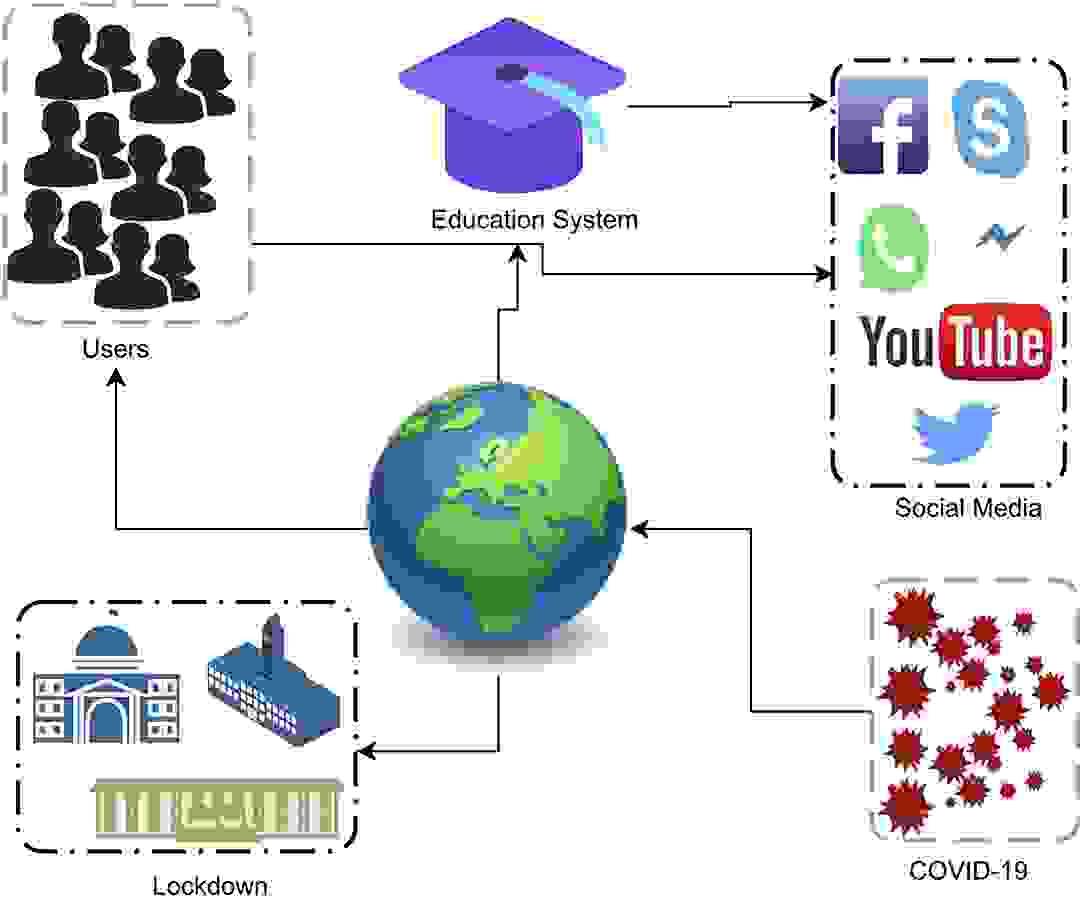
Figure 1: Social media adoption
The flexibility of social media as a platform for content dissemination ensures that news, opinions and rumours travel through the market faster than traditional media can respond to them (Lan and Tung, 2024). This is the case of meme stocks and cryptocurrencies, which go in tandem with the posts, topics, and endorsements that go viral.
Empirical Studies and Research Gaps
Hansen & Borch (2022) focus on using alt data and sentiment in applying machine learning in finance. Their work focuses on how traditional modes of gathering data, including but not limited to social media and online forums, are being used for predicting financial effects (Zachlod et al., 2022). However, they underscore some potential problems of information noise, bias and interpretational ambiguities within such data feed, which affect the predictability of market sentiments with respect to profit.
Heydarian, Bifet, and Corbet (2024) offer a comprehensive review of market sentiment analysis and include approaches to sentiment measurement. Their findings show that although the general sentiment indicators can provide the means and ways to capture price movements quickly, their capacities in the long-term predictions are still unpredictable.
Nyakurukwa and Seetharam (2023) review the literature on feelings expressed on social sites and their effects on the stock exchange by performing a bibliometric analysis of the studies of Sentiment analysis models. Their study shows a new trend toward deep learning for SA but points out the absence of cross-platform research on social media.
Rouf et al. (2021) present an analysis of the ten years of reviewing the application of machine learning models in stock market prediction and the chances of different algorithms for predicting the stock market. Despite improving the general outlook through ML for sentiment-driven conclusions, the study raises concerns about overfitting, interpretability, and data sparsity.
Valle-Cruz et al. (2021) examine the effects of the sentiment of the microblogging platform on the stock market during pandemics and contrast the investors’ response during the H1N1 and COVID-19 times. Their research also reveals that crises cause various negative sentiments that quickly spread, leading to more volatility and uncertainty.
Experience stress-free academics with our reliable UK Assignment Help team! We combine expertise, dedication, and timely delivery to ensure your complete satisfaction and academic growth.
Proposed Research Methodology
The sentiment data will be gathered from various social media accounts, the financial press and investors’ chat rooms. The idea is to eventually look for similarities between various platforms in terms of sentiment and examine whether social media activity dictates stock returns (Dwivedi et al., 2021). Collecting tools such as Tweepy for the Twitter API and the Reddit API will be employed to gather appropriate financial conversations.
However, the amount of data available on social media is vast and only contains pertinent information. On the other hand, filtering will be done to eliminate spam, advertisements, and irrelevant discussions (Ahmed et al., 2022). These keywords can extract relevant data related to finance and particular stocks. There are ways to test machine learning classifiers that help to tailor the sentiment classification and its accuracy (Kawintiranon, Singh and Budak, 2022).
Sentiment data and stock price data will be obtained from online financial websites, and a correlation between sentiments increasing or decreasing trends and corresponding changes in stock prices will be identified (Varghese and Mohan, 2023). The relatively straightforward technique of correlation analysis will be used to compare if the sentiments affect the fluctuation of the prices.
Justification of Proposed Approach
Selecting and conceptualizing data using keywords and primitive forms of categorization enhances the validity of the given sentiment analysis while maintaining its approachable nature (Taherdoost and Madanchian, 2023). Using simple correlation coefficients to evaluate whether presidential sentiment caused the corresponding cross-sectional stock price response offers an intuitive approach to test for sentiment-induced market reactions without using cumbersome econometric techniques (Tan, Lee and Lim, 2023). Also, event analysis enables the differentiation of the impact observing crucial financial announcements or trending topics on social media has on stock prices, making the results more applicable to the actual market movement (Kaur and Sharma, 2023). This approach is helpful as it makes the research tractable and relevant, affording insights into the affinity between sentiment analysis and financial markets.
Conclusion
Social media has emerged as a major player in the complex and dynamic financial market, often dictating investors’ views and leading to the changing of assets. Relative to classical economic theories, behavioural finance focuses on the feelings, attitudes, preconceptions, moods and trends affecting financial decisions. Previous works have provided evidence of sentiment on stock prices, but difficulties enshrouded data noise, sentiment misclassification, and causality exist.
To overcome the abovementioned limitations, this research provides a viable sentiment analysis strategy comprised of the output from existing substantial tools, multiple data feeds, and event-based evaluation. Using sentiment data from Twitter and Reddit, sorting out relevant finance discussions, and observing price reactions of stocks, this approach offers a clearly defined methodology for studying the impact of sentiment on the market. An analysis of correlation and event studies provides a practical way for an ordinary student to evaluate sentiment-induced market movements without adopting machine learning techniques.
References
- Ahmed, B. (2020). Understanding the impact of investor sentiment on the price formation process: A review of the conduct of American stock markets. The Journal of Economic Asymmetries, 22, p.e00172. doi:https://doi.org/10.1016/j.jeca.2020.e00172.
- Ahmed, N., Amin, R., Aldabbas, H., Koundal, D., Alouffi, B. and Shah, T. (2022). Machine Learning Techniques for Spam Detection in Email and IoT Platforms: Analysis and Research Challenges. Security and Communication Networks, [online] 2022, pp.1–19. doi:https://doi.org/10.1155/2022/1862888.
- Bouteska, A. and Regaieg, B. (2018). Loss aversion, overconfidence of investors and their impact on market performance evidence from the US stock markets. Journal of Economics, Finance and Administrative Science, 25(50). doi:https://doi.org/10.1108/jefas-07-2017-0081.
- Dwivedi, Y.K., Ismagilova, E., Hughes, D.L. and Carlson, J. (2021). Setting the Future of Digital and Social Media Marketing research: Perspectives and Research Propositions. International Journal of Information Management, [online] 59(1), pp.1–37. doi:https://doi.org/10.1016/j.ijinfomgt.2020.102168.
- Han, X., Sakkas, N., Danbolt, J. and Eshraghi, A. (2022). Persistence of investor sentiment and market mispricing. Financial Review. doi:https://doi.org/10.1111/fire.12301.
- Hansen, K.B. and Borch, C. (2022). Alternative data and sentiment analysis: Prospecting non-standard data in machine learning-driven finance. Big Data & Society, 9(1), p.205395172110707. doi:https://doi.org/10.1177/20539517211070701.
- Heydarian, P., Bifet, A. and Corbet, S. (2024). Understanding market sentiment analysis: A survey. Journal of economic surveys. doi:https://doi.org/10.1111/joes.12645.
- Huynh, T.L.D., Foglia, M., Nasir, M.A. and Angelini, E. (2021). Feverish sentiment and global equity markets during the COVID-19 pandemic. Journal of Economic Behavior & Organization, 188, pp.1088–1108. doi:https://doi.org/10.1016/j.jebo.2021.06.016.
- Kaur, G. and Sharma, A. (2023). A deep learning-based model using hybrid feature extraction approach for consumer sentiment analysis. Journal of Big Data, 10(1). doi:https://doi.org/10.1186/s40537-022-00680-6.
- Kawintiranon, K., Singh, L. and Budak, C. (2022). Traditional and context-specific spam detection in low resource settings. Machine Learning, 111(7), pp.2515–2536. doi:https://doi.org/10.1007/s10994-022-06176-x.
- Khan, M.N., Ashraf, M.A., Seinen, D., Khan, K.U. and Laar, R.A. (2021). Social Media for Knowledge Acquisition and Dissemination: The Impact of the COVID-19 Pandemic on Collaborative Learning Driven Social Media Adoption. Frontiers in Psychology, [online] 12. doi:https://doi.org/10.3389/fpsyg.2021.648253.
- Lan, D.H. and Tung, T.M. (2024). Exploring fake news awareness and trust in the age of social media among university student TikTok users. Cogent Social Sciences, 10(1), pp.1–24. doi:https://doi.org/10.1080/23311886.2024.2302216.
- Lekhal, M. and El Oubani, A. (2020). Does the Adaptive Market Hypothesis explain the evolution of emerging markets efficiency? Evidence from the Moroccan financial market. Heliyon, 6(7), p.e04429. doi:https://doi.org/10.1016/j.heliyon.2020.e04429.
- Mahmood, F., Arshad, R., Khan, S., Afzal, A. and Bashir, M. (2024). Impact of behavioral biases on investment decisions and the moderation effect of financial literacy; an evidence of Pakistan. Acta psychologica, 247, pp.104303–104303. doi:https://doi.org/10.1016/j.actpsy.2024.104303.
- Nyakurukwa, K. and Seetharam, Y. (2023a). Alternatives to the efficient market hypothesis: an overview. Journal of capital markets studies, 7(2), pp.111–124. doi:https://doi.org/10.1108/jcms-04-2023-0014.
- Nyakurukwa, K. and Seetharam, Y. (2023b). The evolution of studies on social media sentiment in the stock market: Insights from bibliometric analysis. Scientific African, [online] 20, p.e01596. doi:https://doi.org/10.1016/j.sciaf.2023.e01596.
- Rashid, K., Tariq, Y.B. and Rehman, M.U. (2021). Behavioural errors and stock market investment decisions: recent evidence from Pakistan. Asian Journal of Accounting Research, ahead-of-print(ahead-of-print). doi:https://doi.org/10.1108/ajar-07-2020-0065.
- Rasool, N. and Ullah, S. (2020). Financial literacy and behavioural biases of individual investors: empirical evidence of Pakistan stock exchange. Journal of Economics, Finance and Administrative Science, ahead-of-print(ahead-of-print). doi:https://doi.org/10.1108/jefas-03-2019-0031.
- Rouf, N., Malik, M.B., Arif, T., Sharma, S., Singh, S., Aich, S. and Kim, H.-C. (2021). Stock Market Prediction Using Machine Learning Techniques: A Decade Survey on Methodologies, Recent Developments, and Future Directions. Electronics, [online] 10(21), p.2717. doi:https://doi.org/10.3390/electronics10212717.
- Taherdoost, H. and Madanchian, M. (2023). Artificial Intelligence and Sentiment Analysis: A Review in Competitive Research. Computers, [online] 12(2), p.37. doi:https://doi.org/10.3390/computers12020037.
- Tan, K.L., Lee, C.P. and Lim, K.M. (2023). A Survey of Sentiment Analysis: Approaches, Datasets, and Future Research. Applied Sciences, [online] 13(7), p.4550. doi:https://doi.org/10.3390/app13074550.
- Valle-Cruz, D., Fernandez-Cortez, V., López-Chau, A. and Sandoval-Almazán, R. (2021). Does Twitter Affect Stock Market Decisions? Financial Sentiment Analysis During Pandemics: A Comparative Study of the H1N1 and the COVID-19 Periods. Cognitive Computation, 14. doi:https://doi.org/10.1007/s12559-021-09819-8.
- Varghese, R.R. and Mohan, B.R. (2023). Study on the sentimental influence on Indian stock price. Heliyon, [online] 9(12), p.e22788. doi:https://doi.org/10.1016/j.heliyon.2023.e22788.
- Wang, W., Su, C. and Duxbury, D. (2022). The conditional impact of investor sentiment in global stock markets: A two-channel examination. Journal of Banking & Finance, 138, p.106458. doi:https://doi.org/10.1016/j.jbankfin.2022.106458.
- Zachlod, C., Samuel, O., Ochsner, A. and Werthmüller, S. (2022). Analytics of social media data – State of characteristics and application. Journal of Business Research, [online] 144(0148-2963), pp.1064–1076. doi:https://doi.org/10.1016/j.jbusres.2022.02.016.