
Green Pack Global Expansion: Assignment Sample
Green Pack Strategic Expansion Plan Sample
- 92650+ Project Delivered
- 1500+ Experts 24x7 Online Help
- No AI Generated Content


Introduction
There is a need to apply strategic internationalisation when GreenPack Solutions plans to penetrate other countries in the next five years. Developed in 2015 in Glasgow, GreenPack has rapidly become an industry pioneer in providing sustainable packaging services to catering businesses and delivering biodegradable food packaging and compostable cutlery. This emphasis on sustainability has placed the company in a logic spot to reap from the emerging new world need and urge for responsible products.
It is in harmony with transformation in regulation standards and modern society’s increased environmental consciousness. This poses major prospects for GreenPack especially in the global market where the trend toward environmentally friendly packaging products is quickly arising. However, international expansion comes with its share of challenges such as; solving the issue of diverse legal systems, culture differences and featuring products that will suit the new country, and lastly trying to identify the right mode of entry.
To aspire to becoming the world’s leading provider of sustainable packaging solutions, GreenPack has its work cut out for it. The managers of the company, including the Chief Executive Officer, Derek Trotter, have examined the growth areas mostly in North America, Western Europe and East Asia. These regions do involve significant opportunity but some challenges associated with GreenPack include low brand visibility, and little to no experience in the international market when entering a new market.
This consultancy report’s purpose is to present GreenPack with an actionable plan on how best to enter these international markets. The sections below of this report will consequently employ PESTEL, SWOT analyses and Porter’s Five Force models to define the most attractive markets, outline appropriate modes of entry into those markets and offer detailed recommendations for GreenPack’ successful internationalisation.
Improve your strategic analysis skills with this consultancy report example and get expert New Assignment Help UK for business and management topics.
Company Background
Strategic Analysis for Expansion Plan of GreenPack
GreenPack Solutions was founded in 2015 in Glasgow as a startup company with the focus to change the tendency in catering service by using eco-friendly food packaging materials. Established by Derek Trotter, the organisation was named after his observations resulting from the management of Coffee Oasis; he realized that there was a huge market in supplying sustainable packaging (Kao, et al. 2020). Heating up by this issue, Trotter came up with the idea of starting GreenPack with a mission to design unique, environmental friendly products to meet this business need.
The second aspect concerns and proves Green-Pack’s financial strength to support this strategic plan. These resources provide working capital and flexibility – paramount in managing risks of uncertain markets and funding costs associated with compliance regulatory, specific geographic location advertising or any other localized marketing campaigns (Heinemann, 2022). Sustained by those figures, the company has built a solid ground for its domestic strategies, which put it in a good starting point for its international expansion.
Recent Strategic Development
These following are the growth stages and patterns of GreenPack and show sustainability consciousness and innovation. Launched with a limited selection of biodegradable bowls and disposable cutlery, it quickly attracted people and companies who were conscious about the environment (Peng, et al. 2021). The COVID-19 pandemic only added to its popularity because the increase in takeaway and delivery services made sustainable packaging a necessity. Capitalizing on this demand, GreenPack diversify its range of products by adding for example cups for hot and cold beverages, sushi containers and tubs for ice cream and entered into the contracts with leading companies providing catering services becoming the leading company of such sector in the region.
It has also strategically positioned and expanded its market within the realms of GreenPack strengthen operational capacity. Along side growth in product portfolio, the firm has purposely expanded into branding and intellectual property. These intangible assets such as patents and certifications show that GreenPack targets its business and energy innovations at standing out from other companies (Masih, 2024). Through multiple orders for takeaway in the middle of a pandemic, GreenPack was able to strengthen its presence through various social media campaigns. These strategic developments have also not only widend the company’s domestic market share but also created foundation to penetrate other competitive foreign markets.
Industry Trend Impacts on Decision
Many accomplishments of GreenPack can reflect its commitment to sustainability. The company obtained the FSC certificates in 2019, as proof of its responsibility when it comes to using materials. Carbon Neutral Britain accreditation is currently underway, and GreenPack has plans to achieve operation as a carbon-neutral company.
What has been witnessed is that the company is in harmony with sustainable development principles across the world, which enhances the competitive position of the company. EU laws like the Single-Use Plastics Directive and the new consumer orientation with 33% of the consumers not willing to accept unsustainable packaging form a protective environment for GreenPack organic products (Awalgaonkar, et al. 2020). Also, the governments of developing market economies such as North America and Asia are encouraging sustainable practices through provision of grants and subsidies.
Such developments corroborate GreenPack’s product offering and line of business strategies. The current meandering of sustainable green materials such as compostable plastics continues to challenge GreenPack to enhance on its R&D to abide by and success in different regulatory structures.
Customer Insights and Market Validation
Currently, GreenPack has a very good reputation as a pioneer formers of eco-friendly packaging in the UK market. Its key strategies include being a customer-oriented service provider with reasonable price and excellent quality, thus catering to a large base of clients who include some of the better known food and refreshment outlets (Lindgren, 2021). When combined with the fact that the global market for environmentally friendly packaging products is growing rapidly, GreenPack has all the attributes that could make it a worthy entrant into the international market.
Able to meet the market demand, GreenPack has a good customer base highlights consistent income flow. The following financial ratio corroborates this by presenting affordability, quality and, sustainable product provision central to the firm’s strategy (Xie, et al. 2021). These figures also underscore GreenPack’s readiness to vis–à–vis changing international market trends. In addition, stock associations with the UK’s most popular food and beverage businesses are apparent, demonstrating operational efficiency, which will be crucial for gaining credibility overseas.
Business Problem
GreenPack Solutions faces three critical challenges in its journey to internationalisation: market choice, entry mode decision and product positioning. Solving these challenges is important for achieving the goal of adaptative and sustainable growth of the company with taking into account its resources.
Market Selection
The choice of the correct market remains an important question for achieving both a high return on investment and efficient production. GreenPack is thinking of future locations such as North America, Western Europe and East Asia because there are high levels of demand for green packaging. For instance, regulatory work Environment Australia is more favorable for sustainable solutions than the work of Western Europe, including the EU Single-Use Plastics Directive; the higher disposable incomes and the consumers’ concern about the environment make NA attractive (Kaushani, et al. 2022). Thus, having substantial current and non-current assets worth £3m and £2.5m respectively, GreenPack would benefit from developing operations internationally.
Market Entry Strategy
Market entry decision is therefore the process of selecting a right market entry mode from a range of options based on risk, cost and control considerations. While direct exports may be a more financially safe option, it will not expand the market share, whereas joint venture or licensing will allow local presence and less bureaucratic access.
Product Adaptation
It is crucial to fit each product with cultural and legal requirements as well as preferences of people. For example, even today when writing about labelling standards and packaging sizes, the differences between the US, the Netherlands, and China can be crucial (Nguyen Khanh, 2020). Furthermore, it ensures that GreenPack aligns itself to the strengths of recycling for local infrastructure as well as meets consumers’ needs for biodegradable products in foreign markets.
If GreenPack manages to overcome these challenges then the company will be able to improve its international performance and become an international leader in the sphere of sustainable packaging.
Methods
Data Collection
The data collection strategy focuses on collecting existing data from different sources. The current paper is based on secondary data, collected from both internal and external sources available within GreenPack Solutions organisation.
The internal sources in this case constitute the base of this evaluation. The documents include balance sheet of GreenPack Company that was prepared at December 2023 to get a basic understanding about the firm’s financial strength and the ability to conduct its operations. Further, the interview with the ‘Derek Trotter’ gives us the experiential understanding of some of the problems faced by the company, its strategic direction and vision towards internationalization (Zainurrafiqi, and Gazali, 2024). Accompanying these are an industry profile of green packaging to situate GreenPack and its opportunities for market entry.
Third party information is collected from reputable sources like the interview trabnsript, company fiancial data, reports on the global business risks, sustainability and government resources like the Overseas Business Risk Index of the current period and the Scottish Government’s Exporting Guidance for the current fiscal year. These resources offer a bird’s eye view into possible markets and regulatory conditions (Oswald, 2020). For this purpose, the industry dynamics have been gathered from public sources showcasing the competitor benchmarking of leading sustainable packaging companies.
The collection process identified the data that is relevant to GreenPack’s goals and objectives, specifically in relation to market selection, entry mode strategies, and product and market accommodation. It is also important to note that the above multiple source of data guarantees that our analysis is sound, relevant and as much evidence based as is practically possible to achieve, to help GreenPack craft suitable strategies.
Data Analysis
The findings in this consultancy report are based on a systematized and compound approach to qualitative and quantitative data. The analysis focuses on addressing GreenPack Solutions' objectives through key frameworks: PESTEL analysis, quantitative financial data analysis, SWOT analysis, Porter’s Five Forces and analysis of two organizations.
Qualitative PESTEL Analysis: Exploration of macro-environmental factors helps to define strengths and threats in possible segments of industry to venture into. Favourable policies on sustainability in western Europe for instance are compared to regulatory challenges in emerging markets. Social factors are also examined, such as increased customer demand for sustainable products in countries and territories such as the US. This qualitative evaluation enables or confirms that the GreenPack strategies proposed are in parallel with the external environment affecting the expansion.
Quantitative Financial Data Analysis: Market entry plans are quantitatively analyzed by calculating different financial indicators that reflect GreenPack’s ability to support these strategies: £5.5m total assets, £3m current assets. Financial ratios such as current and debt-to-equity are computed in an attempt to establish measures of liquidity and debt (Singh, et al. 2021). These insights inform assessments of whether direct exports are conceivable, whether joint ventures are possible, or any other market entry models.
SWOT Analysis: Strengths are measured against East Asia’s weaknesses: regulatory issues; Henry’s strengths include innovative products and FSC accreditation. Increasing sustainability trends provide opportunities which are followed and again provide a lens to examine GreenPack’s lack of international operations.
Competitor Analysis (Porter’s Five Forces): The strategies adopted by various competitors of the industry such as Biopak and Vegware are analyzed to understand the competitiveness of the entire industry based on the factors like entry barriers and customer power (Qian, et al. 2023). Based on these dynamics, GreenPack positioning is established through differentiation of innovation and relative affordability when compared to the competition.
This combined analysis makes it possible to obtain comprehensive, executable, and consistent results aligned with GreenPack’s expansion strategy.
Refined Investigation Design
Research Design
Improved Mixed Method Design: The research methodology for this consultancy report employs both quantitative and qualitative techniques, thus providing a sound study of the international expansion prospects for GreenPack. The qualitative aspect deals with assessing macro- environmental influences and competitive rivalry and the quantitative aspect having assessment on the company’s financial strength and market opportunity.
Focused Data Collection Techniques: In the method used for data collection for this Consultancy report, both primary and secondary research has been excluded and only secondary data relating to GreenPack Solutions and relevant external sources have been included. The first consultant’s interview with Derek Trotter is the first internal source of qualitative information on GreenPack vision, problems, and strategies (Lau, and Wong, 2024). Furthermore, the company balance sheet as of December 2023 provides quantitative support for a qualitative examination of GreenPack’s financial position and organizational capabilities. Competitive materials consist of a broad overview of green packaging industry and relevant market trends that place GreenPack and its operations in the appropriate scope.
These internal documents are backed up by many external sources, including regulatory reports, analysis of competitors, and global market research for a more comprehensive picture of the potential and challenges in global markets. Conducting these kinds of data collection ensures a systematic as well as informed approach towards the recommendations that will undergird GreenPack’s approach to going international.
Qualitative Analysis:
PESTEL Framework: This evaluates the dynamics of the market selection process from outside factors for instance the regulatory policies in Europe or the technological innovation on the packaging material in East Asia.
Porter’s Five Forces: Applied to analyze the industries, with concern with the buyer and supplier power and threat from rivalry of the substitute product as re-usable containers.
Quantitative Analysis:
Liquidity and leverage are analysed using the current ratio and the debt-to-equity ratio based on GreenPack’s balance sheet data. These metrics help in feasibility decisions concerning the entry modes, for example, direct exportation or Joint Ventures.
Potential markets are evaluated with scoring models, so the criteria such as size, compliance to regulations, and growth rate are given certain scores.
To increase the credibility of the findings, the design prioritises data triangulation, drawing from internal documents provided by the company, external sources and market numbers. Charts and tables are used to provide an understandable, and unambiguous view of results for decision-making (Shandilya, et al. 2020). It is believable that the comprehensive design allows for GreenPack to receive recommendations that are significant and possible according to the specifications of both GreenPack and me as the analyst.
Advanced-Data Analysis Techniques
In order to offer practical recommendations for GreenPack, this work uses analytical tools based on the company’s strategic objectives. These techniques expand the depth and the reliability of the results.
Comparative Scoring Models: The target markets are prioritized or rated based on factors such as ease of regulatory environment, market need, and competition (US, Netherlands, China). Each factor is assigned a relative quantification score and consolidated in a competitive priority matrix for efficient market segmentation.
Financial Ratio Analysis: Key financial ratios have been ascertained from balance sheet of GreenPack. The analysis of these ratios influence recommendations for the company’s market entry strategies and resource needed for those strategies.
Market Trend Analysis: The consumption patterns of sustainable packaging are forecasted with reference to latest trends like a crackdown on single-use plastics by the EU. This technique highlights areas that would show sector affinities that are highly correlated with the new and evolving consumers’ demands and preferences as well as the regulatory factors.
Competitor Benchmarking: Here GreenPack is benchmarked against similar green packaging solutions offered by companies like Biopak and Vegware, based on price, differentiation and market coverage. Such benchmarking serves to define goals for creating GreenPack’s competitive advantage.
Scenario Planning: Potential entry strategies (for instance, licensing compared to direct exports) is assessed on the aspect of cost, risk, and control (Čolnik, et al. 2020). The simulations allow for predictions of the course of action when different conditions are present, so the strategies created here are more reliable.
These techniques incorporate qualitative data analysis and the use of quantitative data hence providing GreenPack with a competitive advantage in the decision making process with regards to its international expansion plans.
Identification of Potential Threats
An appropriate identification of threats is critical to the management of risks during business expansion to the global market by GreenPack. These threats comprise of regulatory, operational and competitive risks.
Regulatory Threats: The targets markets present different regulatory conditions as shown below. For example, under the EU’s Single-Use Plastics Directive that entails the recycling of most single-use products, product design changes are necessary to fit stiff recyclability criteria. Likewise, sustainability may create a problem for operational processes due to the requirement of following different state laws in the United States markets.
Operational Threats: Logistics has high risks especially in delivering material on time and at lower cost. From the present analysis, there might be some hitches in the way GreenPack currently sources supplies and materials from local UK suppliers in order to perform operation globally or internationally (Karimi, and Nassery, 2022). Also, changes in cross rates of currency may affect the operating profit in areas such as East Asia since the volatility level of its currency is relatively high.
Competitive Threats: Biopak and Vegware have already established their brands in other countries which act as a threat to GreenPack. It is more difficult for the new entrants to penetrate these markets because the firms involved get to enjoy economies of scale, and have well developed distribution networks. More so, the market development of reusable packaging as an option to GreenPack’s product can be a threat.
Financial Threats: Sustaining an average long-term debt of £1.2m for GreenPack means that overall leverage must be well managed during expansion. Improper decisions regarding resources may affect financial security of the organization.
Through the identification of these threats, the report proffered specific grievant solutions inclusive of stakeholder alliances, change in products portfolio and adequate financial safeguard. They are important in enabling GreenPack to manage the risks common in the industry while pursuing a sustainable and successful expansion in the relevant markets.
Findings
Qualitative Thematic Analysis
A qualitative thematic analysis of GreenPack Solutions’ expansion challenges, based on the interview with CEO Derek Trotter and other supporting materials, highlights three key themes: Regulatory Complexity, Market Adaptation Needs, and Operating Challenges.
Regulatory Complexity: Another recognizable issue is to operate in different regulatory landscapes. Thus, such EU legislation as Single-Use Plastics Directive does induce clear market entry opportunities as GreenPack’s product range includes fully biodegradable bags. On the other hand, dependency on disjointed rules of the US where some states like California is way ahead on sustainability issues than other states ask for the unique solutions to problems. The new emerging markets in East Asia, especially in China have their own challenges including the quasi-formal regulations like the Plastic Ban Policy Unfortunate, bureaucratic barriers add to the challenge (Tavoletti, et al. 2022). Such markets are therefore likely to require compliance expertise to facilitate easiness in the entry processes.
Market Adaptation Needs: Lastly, GreenPack has to incorporate cultural differences and consumer preferences into it products. For instance, US markets require convenience oriented designs while on the other side European customers are willing to pay a premium for environmentally pleasant products (Klochan, et al. 2021). In China, the middle class has developed the preference for small, takeaway portions since they order food deliveries frequently. Local recycle compatibility and customer acceptance should therefore guide packaging material choices as well as packaging designs.
Operational Challenges: The global strategy presents operational challenges concerning the supply chain and their related costs. Currently, the leadership of GreenPack has a strong domestic experience but limited expatriate experience as pointed out by Derek Trotter. In the newly entered markets, brand familiarity will be an intense task, and hence, marketing initiatives along with joint venture formations will be needed (Zhao, and Kim, 2021). Organizational supply chain management plays a critical role in prompt delivery while at the same time assures affordability.
Based on this thematic analysis, it is impossible not to stress the need for specific strategies paving the way to effective internationalisation in terms of meeting the regulatory frameworks, matching organisational culture, and achieving operational preparedness.
PESTEL Analysis: Macro-Environmental Factors
Hence through a PESTEL analysis one is able to look at the Macro-environmental factors likely to affect GreenPack Solutions’ potential international markets systematically. There is an emphasis on economic, political, social technological, environmental and legal factors as examined in the following:
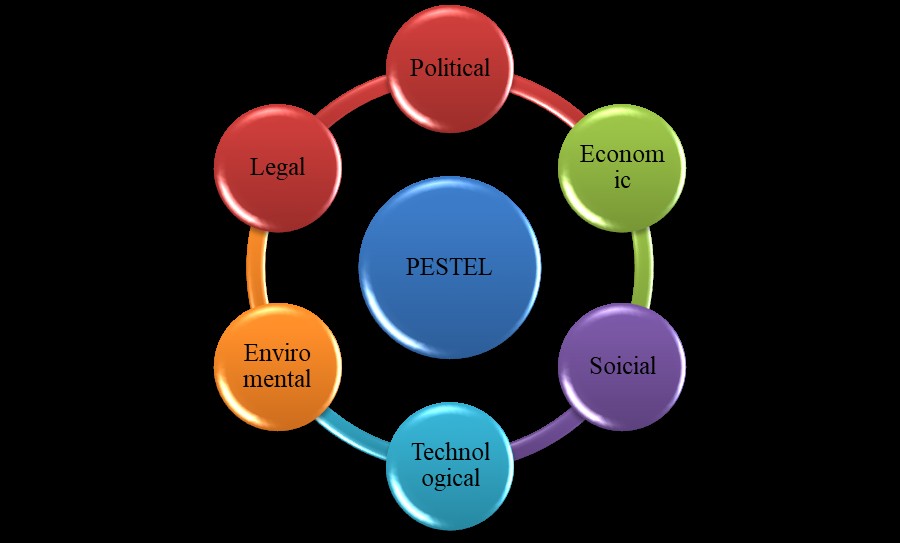
Figure 1: PESTEL Analysis
Political: Global governments are increasing restrictions to manage plastics in the environment leading to opportunities for sustainable packaging firms (Lindgren, 2021). In markets that already demonstrated a clear policy toward environmental issues like for example EU Single-Use Plastics Directive GreenPack Solutions has more chances.
Currently governments all across the world are introducing measures towards regulation of plastic waste (Bajan, et al. 2021). For instance, the EU’s Single-Use Plastics Directive prohibits such items as non-recyclable plastic straws, and contains very strict laws on producer responsibility. This also compliments GreenPack’s biodegradable products and affords a first to market opportunity into the European Union. Nevertheless, the structure of the United States’ regulation policy is fragmented; the states such as California can advance their sustainability efforts while other states have not. Indeed, the disparities of the regions call for compliant adjustments.
The emerging markets of East Asia, especially China, have come up with quasi-formal policies like Plastic Ban Policy on non-degradable packaging material (Borges, and Paananen, 2020). However, to exercise the rights thrown on individuals by these countries bureaucratic systems could at times prove difficult. A comparative analysis points at the EU as the most regulatory-favourable market, other progressive US states and select Asian countries.
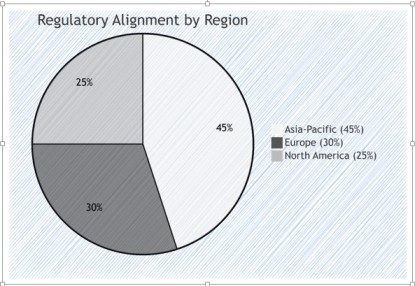
Figure 2: Regulatory Compliance Heat Map
The above pie chart, representing "Regulatory Alignment in Political Manner," shows the distribution of regulatory compliance across regions: Asia-Pacific, Europe and North America account for 45%, 30% and 25% respectively (oecd.ai/en, 2024). The data has thereby, shown difference in the regulatory alignment by the real-world data based on the advancement in technology and the policies in place. In separate reports from OECD AI Policy Observatory, Europe currently boasts of a set regulatory frameworks for emergent technologies such as AI and data privacy (e.g., GDPR).
The figure of 45% for the Asia-Pacific region might include the commitment towards improving the regulatory approaches, especially the emerging governing AI and sustainability approaches but the number will require calibration to true compliance levels (oecd.ai/en, 2024). North America with 25% pointed out improvements however there is a slower growth in a few industries. More precise numbers may demand the use of more current sources such as the OECD and regional regulating indexes.
In support of this, a regulatory diagram on EU, US & China would show exactly where GreenPack needs to align its products with regulations. The heat map presents the compatibility of different EU, US, and Chinese regulations and shows where GreenPack’s products are most in harmony with sustainability regulations. The EU member states (including Netehreland), who have a high level of legislation such as the Single-Use Plastics Directive top the chart of compliance potential. The US has variability by region, while the China has newly emergence policies with more moderate opportunities but bureaucratic factors. Market prioritisation is facilitated as a result of this visual.
Economic: The analysis of developed regions such as North America and Western Europe proves increased consumer expenditure and optimum disposable income, providing better opportunities for consuming selective and costly green products (Mometto, 2022). Some of the emerging economies are in Asia and despite the growth prospects they present could present a hurdle in the form of price sensitivity.
Market attributes in terms of economics differ to certain extent from one potential market to the other. High number of customers in western Europe and GDP per ca pita linked to sustainability funding supports premium product pricing. For instance, the packaging market size in Germany was € 95 billion in 2023 with biodegradable packaging having 20% of market stake (Petrenko, et al. 2024).
As for the trends in North American countries, high disposable income leads to an increase in the consumption of premium products which are preferred in large population urban centers (Ilyas, et al. 2021). However, the areas of risk for GreenPack as a TP are inflation, impacts of which have already manifested themselves, and regional economic disparities, for instance, low income in some southern states of the United States (Allen, 2021).
Newer Asian markets such as China serves high growth prospects because of their increasing urban population base and concern for environment among middle class. Nevertheless, the issues such as price sensitivity in addition to foreign exchange may put pressure on its revenues and hence profitability.
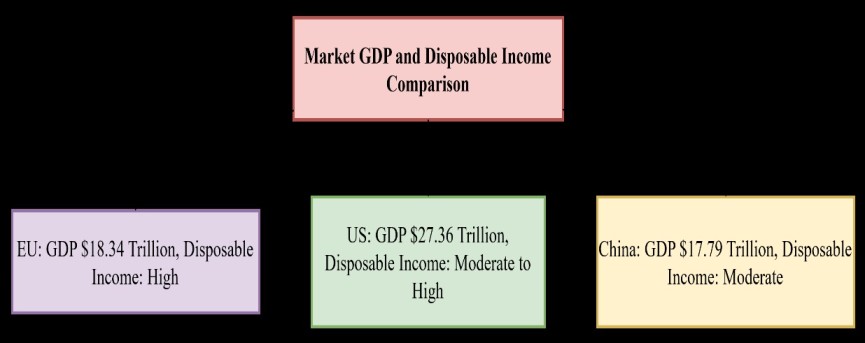
Figure 3: GDP and Disposable Income
The chart illustrates the GDP and disposable income for the EU (GDP18.34 trillion DI high), For USA (GDP27.36 trillion, DI moderate to high,) and China (GDP 17.79 trillion, DI moderate). These numbers have to be supported by organisations of reasonable repute like the IMF and World Bank. Based on the data obtained for 2023, the income per capita in the EU amounted to 25 687 USD, and the EU’s GDP was around 18,34 trillion USD; The level of disposable income also remains high (tradingeconomics.com, 2023). The US GDP was about 27.36 trillion, and disposable income was moderate to high because of inflation and wages’ difference. China’s GDP was roughly $ 17.79 trillion with moderate disposable income due to reform in economy (datacatalogfiles.worldbank.org, 2023). It mainly offers more realistic picture, which gives a much better view of world economic status.
Social: This sensitive pushes for the formulation of the green packaging since consumers are now aware of the sustainability aspect of any product they use. The emerging markets like US and China have revealed their sensitization to environmentally friendly brands.
Social factors have a large impact on consumers’ behavior. Over 60% of consumers in Western Europe belong to the millennials and Gen Z who prefer brands that are environmentally conscious (Banerjee, 2021). Concerning the European consumers’ willingness to pay; the studies show that they are ready to pay a premium for green products of about 15-20% thus making that part of the market a worth option for GreenPack.
In the US, convenience is culturally sensitive and resonates with GreenPack’s new takeaway packaging (Milburn, 2021). However, menu-penetrating regional formats, or larger portions, non-kaleido-scoped food cultures require product-specific concepts.
China’s food delivery market is one of the largest in Asia, as more than 500 million people order takeaway every year. This surge is a great advantage for GreenPack, but It poses a societal shift that needs to be addressed, like having a portion-sizable package.
It is a fact that within the Western European countries, the current bulk of the consumers represent the Millennial as well as the Gen Z generation, who have already demonstrated their inclination towards buying products of brands that are sustainable. Additionally, research shows that these consumers are more than ready to be charged a little more for green products – thus the current market for GreenPack’s packaging solutions. However, the greatest level of convenience in accessing products is in the US market; thus, takeout packaging is a popular product in this market.
The China market that has one of the largest takeaway markets in Asia with 500 plus million takeaway orders a year is slowly moving towards greener options. But, Chinese consumers are sensitive to the price and it may pose a threat to GreenPack that it needs to focus on the prices while formulating its product line. Indeed, there will be certain tendencies in the demand for product customization These tendencies will be the need for small and convenient packaging.
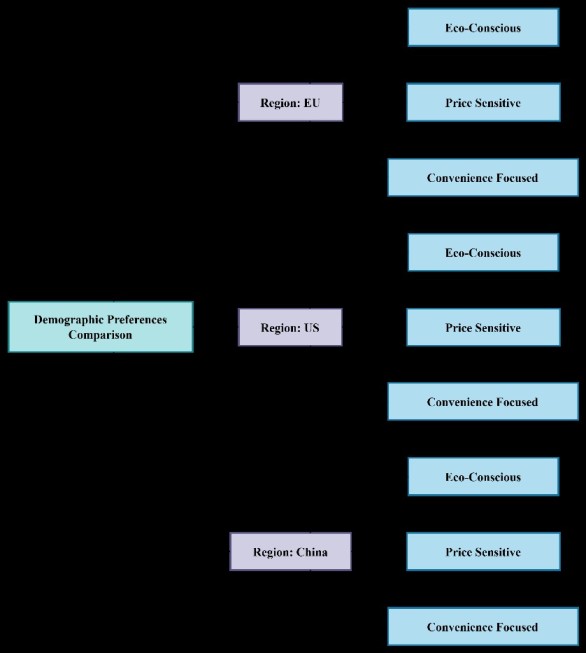
Figure 4: Demographic Preference
Some of these social trends can be represented through a demographic preference chart in above namely EU, US and China. The chart above shows where the consumers stand in terms of eco-consciousness, price sensitivity and convenience across EU, US and China (Bielik, et al. 2024). The EU remains the most sensitive to ecological concerns making it the best market for costly green products. The US still values convenience and a medium awareness of the environment while China opted for conveniently and price sensitive demands imply that adaptative measures. This chart helps product localisation and related marketing decisions.
Technological: Technological improvement in biodegradable and compostable materials offers the possible means of low cost and diversification. Developed nations with a vibrant research and development agency could be suitable for partnerships, for instance Germany and Japan.
The breakthroughs of the biodegradable material technology produce the competitive advantages. In Germany for example, the government promotes collaborations in research and development between various packaging companies and universities. There is an opportunity for GreenPack to partner with institutions in Germany and create new efficient packaging material products (Marchiori, et al. 2023).
The US also has a very strong environment for technology development, and the leader states for compostable material are based in California. Although the technologies are adopted in a dispersed manner throughout the country, one needs to enter innovation centers carefully (Han, et al. 2020).
Simplified and modernised supply chain coupled with eco-prioritisation is something China, in its advancement of AI, could provide to GreenPack. That renders information sharing of proprietary technologies a sensitive affair as protection of intellectual property rights call for precaution.
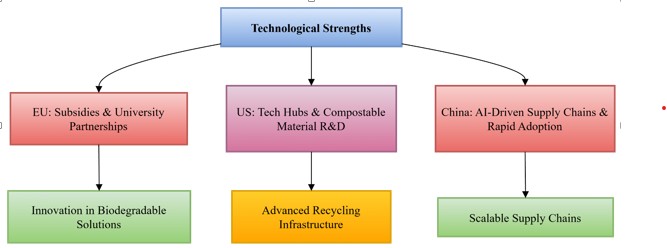
Figure 5: Technological Strength Comparison
A diagram that compares the technological strengths of the EU, US and China will show the R & D and innovation settings. The chart represents the comparison of technological ecosystems in the EU, US and China (Kożuch, et al. 2024). The EU collaborates in Research and Development with great sensation; the US specializes in compostable material development; and China masters AI solutions for supply chain transformation. Such a comparison allows GreenPack determine areas of interest for technology sourcing or for operational synergies.
Environmental: The drive toward minimal carbon emissions around the world complements GreenPack’s objectives (Bliumska-Danko, et al. 2022). In this case markets as the Netherlands with an existing recycling infrastructure are presented as operational synergies.
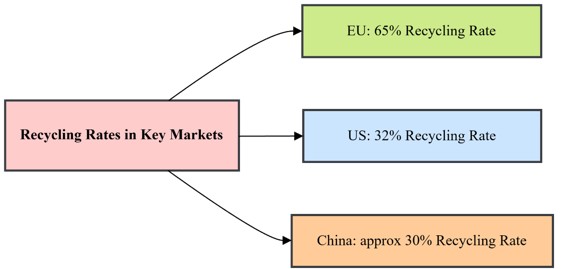
Figure 6: Recycling Rates
The above diagram illustrates recycling rates in key markets: the EU, the US, and China. The recycling rate in the China stands at near about 30% (reuters.com, 2024). Conversely, the US are at the rate of 32% according to the current information (epa.gov, 2024). And, the EU is estimated to be at about 65% which is a good percentage (statista.com, 2024). Meanwhile, the following illustration aim at establishing how these major economies are engaging in recycling efforts in a relative manner.
External environment also has a central role to GreenPack Solution’s growth plan. Since there is a growing global trend of the concern in sustainable packaging, countries with strict environmental regulation laws, especially in the EU, are ideal for GreenPack products. The European Green Deal and the Circular Economy Action Plan are the strategy to achieve the climate neutrality of the EU by 2050, which is closely connected with the aims of GreenPack as the company focused on the minimization of impact of packaging on the natural environment (Kurniawan, et al. 2022). Germany and the Netherlands rank among the best world performers in recycling, so they represent absolutely suitable markets for GreenPack’s environmentally friendly products.
However, complications remain in a region such as China in the face of management and recycling of waste. Therefore, it can be seen that GreenPack might require shifting some of its products to match the local capacities, and hence BIT may require focusing on biodegradable products that align with China’s green agenda. Thus, with the help of escalating worldwide tendencies, GreenPack can enhance the company’s availability for markets focusing on the adaption of green technologies.
The nature and global environmental factors have a substantial impact on the sustainable packaging business. EU Waste: Recycling – especially in the Netherlands – is highly developed; 80% of packaging waste is recycled. The EU’s Circular Economy Action Plan and the European Green Deal that seeks to make Europe carbon neutral by 2050 also point to GreenPack’s’ biodegradable materials market.
Currently in Europe, Germany and the Netherlands are the largest market for biodegradable packaging whereby by 2023 more than 20% of the market share is expected to be occupied by biodegradable packaging. They also represent a high governmental support for environmental initiatives that proves that GreenPack has high potential setting up its business in these countries.
Legal: The steps should therefore concretely uphold international environmental standards. Coexisting legislation regarding labelling, the recyclability of materials used and material itself differ across the globe and therefore necessitates such alterations to a product (Lee, 2022).
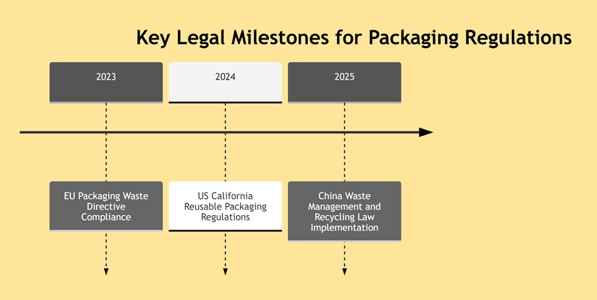
Figure 7: Legal Milestones
The diagram shows some of the global policies over the years that have boosted sustainable packaging practice. Then it goes to 2023 to the EU Packaging Waste Directive that has been implementing stiffer sustainability provisions (packagingeurope.com, 2023). Reusable Packaging Regulation was implemented in California in 2024 focusing on single-use plastics in packaging (packagingschool.com, 2024). In the same year, China launched the Waste Management and Recycling Law in the same year and in 2025 (waste360.com, 2024). The task shows these gradual legal actions correspond internationally to combat packaging waste and advance sustainability which each time point refers to the enforcement year and spheres in the global policy.
The following timeline takes an insight of the legal activities for sustainable packaging in the EU, US, and China. Netherlands laws are stringent in compliance with the Packaging and Packaging Waste Directive while US state laws differ. Consequently, regulations governing the Chinese market are dynamic and deserve attention. Organizing by this timeline allows GreenPack to properly strategise for compliance and subsequently coordinate products and designs as necessary.
The legal factors are essential to GreenPack as a company that goes overseas. In the EU, such legislation as the Packaging and Packaging Waste Directive provide requirements for achieving high recycling rates. The EPR laws further place demands of a business to take responsibility for the packaging waste. These regulations present GreenPack with considerable opportunities as organisations look for sustainable solutions to meet new rigid environmental compliance laws.
In the same way, in North America, for instance California Reusable Packaging Regulations and Canada’s Environmental Protection Act have enumerations which encourage corporations to recycle their packaging (Wandosell, et al. 2021). On the other hand, some markets such as China may present some difficulties because of the weaknesses in the recycling laws, and packages and labeling norms of the countries. Entities use GreenPack so GreenPack must adhere to certain legal requirements that pertain to the state it operates in. Mastery of such legal environments is crucial for GreenPack’s survival and stable market performance.
This PESTEL analysis offers guidelines on the best market choices and how to conduct entry in the chosen markets.
Quantitative Financial Data Analysis
A comparative financial analysis underlines the specifics of GreenPack Solutions’ readiness for its international expansion based on the balance sheet and key ratios. This analysis assesses the liquidity situation, leverage position and operational capability as a base on which strategies are implemented.
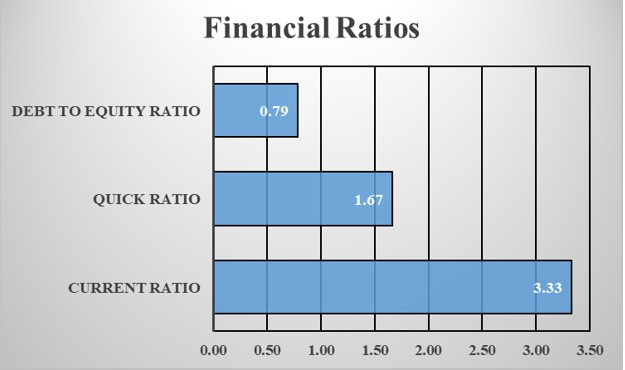
Figure 8: Financial Ratios
Liquidity Analysis
The current ratio of 3.33 which has been obtained by dividing total current assets (£3,000,000) by total current liabilities (£900,000) reveal satisfactory absolute ratio occurrences. The above ratio shows that GreenPack has the ability to meet its short term liabilities more than three fold and this makes it financially sound (Lan, 2023). Furthermore, a quick ratio of 1.67 that ignores inventory in current assets also demonstrates that the company has enough resource to cover short-term liabilities even when nominal stock turnover is notional. This solid cash position gives GreenPack the maneuverability to subsidise entrance costs into a segment including the costs of regulation, local adaptation and marketing.
Leverage Analysis
The measured debt- to- equity ratio of 0.79 which is arrived from total debts £2,200,000 and total equity £2,800,000 exhibit that company has adequate liabilities in relation to equity. A value less than 1.00 indicates efficient fund management and leaves analysts in little doubt that GreenPack is not over-dependent on external sources of funds (Mio, et al. 2020). This places the firm in a good stead in that, in the event it needs more capital to fund its internationalization strategies it does not have to borrow too much [Referred to Appendix 1].
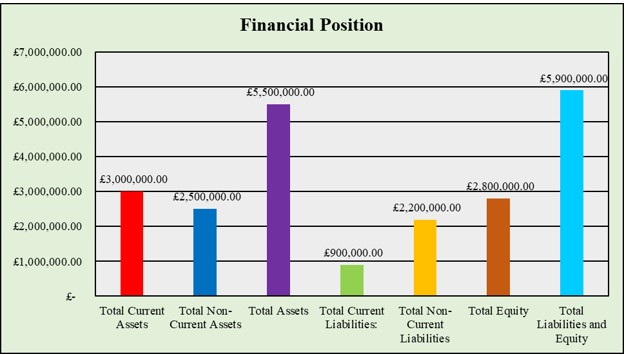
Figure 9: Financial Position
Operational Capacity
Basis the balance sheet of GreenPack, we have the total revenue capacity of £ 5,500,000 factored out of which the current assets include the inventory of £ 1,500,000 and cash of £ 800,000. With this inventory value, it means GreenPack can easily expand operations in order to satisfy increasing demand in new markets (Baumüller, and Sopp, 2022). In addition, the non current assets of £2,500,000 in company’s balance sheet contain necessary certification and patents that has more strategic importance for GreenPack seeking to pioneer the packagings that are friendly to the environment [Referred to Appendix 2].
Key Financial Strengths
Liquidity: GreenPack is less vulnerable to the short-term financial blockage so it can implement the entry strategies in the target markets.
Leverage: The existence of comparatively low Debt/Equity ratio enable GreenPack to obtain more funds for expanding its internationalisation strategy without compromising the company’s solvency.
Asset Management: Better cash stocking and inventory management put GreenPack in a better place to adopt to market changes.
Strategic Implications
The financial analysis for GreenPack supplied evidences that it is ready to expand internationally but resources need to be leveraged strategically. High liquidity makes it possible to fund compliance, product modifications and supply chain construction in their early phases (Jelonek, et al. 2022). Nonetheless, its financial shallowness is its greatest strength and proper management is needed to retain such stability as it looks for new projects.
The low value of leverage suggests that the Company is well positioned to seek external financing in case if needed – such as loans or equity – to fund a major expansion in higher-growth markets of the EU, North America, or China (Alon, et al. 2020). Furthermore, the inventory along with non –current assets show GreenPack’s ability to support operational growth in the long run which is pivotal in the current global environment to sustain strategic stands.
Thus, the established financial ratios of the GreenPack foreground its financial readiness and certain directions are viewed here as critical when it comes to strategic financial planning to enhance the company’s internationalisation effectiveness.
SWOT Analysis
SWOT analysis taking an appraisal of GreenPack Solution internal environments and the external environments which the company faces. The overall evaluation in this case will state the current situation and opportunities for global expansion of the company as well as weaknesses and opportunities and the required conditions.
| Strengths | Weaknesses | Opportunities | Threats |
|---|---|---|---|
| Strong Financial Position: GreenPack has ensured adequate funds for market entry and compliance costs based on current ratio of 3.33 and quick ratio of 1.67. | Limited International Experience: Despite having leadership with considerable domestic experience, firms with no international experience are likely to take longer or encounter challenges in managing their operations internationally. | Growing Demand for Sustainable Packaging: Increasing awareness of sustainability, backed by laws such as the EU’s Single-Use Plastic Directive, offers a positive market context for GreenPack. | Regulatory Variability: Different compliance frameworks across markets, such as fragmented policies in the US or inconsistent enforcement in China. |
| Innovative Product Portfolio: GreenPack offers recyclable and renewable packaging solutions such as biodegradable and compostable materials to meet global demand for green products. | Low Brand Recognition Overseas: GreenPack is well known in Scotland; however, its absence in global markets requires significant promotion and branding investment. | High-Potential Markets: Western Europe, North America, and East Asia show strong growth in demand for green products due to consumer awareness and regulation. | Competition from Established Players: Strong competition from Biopak, Vegware, and Notpla, which already have established global markets. |
| Industry Accreditations: The company holds certifications such as FSC and is pursuing Carbon Neutral Britain certification, strengthening its position in environmentally conscious markets. | Reliance on Domestic Supply Chains: Current supply chain operations are UK-centered and may need adjustment for international markets. | Technological Advancements: Innovations in biodegradable and compostable materials allow the development of cost-efficient, advanced packaging solutions. | Logistical Challenges: Expanding internationally increases complexity in supply chain management regarding time, cost, and infrastructure. |
| Customer-Centric Approach: GreenPack’s focus on price and customer value supports future growth, particularly in regions needing affordable sustainable packaging. | Product Adaptation Costs: Meeting different standards and customer expectations in the US, EU, and China will require product modifications and R&D investment. | Partnerships and Joint Ventures: Collaborations with local companies can help understand regulations, build brand recognition, and strengthen supply chains. | Economic Instability: Exchange rate fluctuations and inflation may affect profitability and operational costs, particularly in emerging economies like China. |
This part GreenPack’s SWOT analysis as a valuable assessment of the company’s preparedness for engaging the global market alongside noting areas of interest that may get attention in the future. Building on financial resource, for example, and identifying and exploiting opportunities in attractive global markets will help GreenPack establish a robust international foundation (Alami, et al. 2021). At the same time, safeguarding the key threats by following the regulations and standards, improving the operations and forming the partnership relations will also remain a priority.
Competitor Analysis (Porter’s 5 Force)
The Five Force model is applied in the analysis of competition among the vigorous forces in the markets of GreenPack Solutions. By understanding the major competition forces within the industry, this work proposes insights into the way through which GreenPack can securely compete and resist competitors such as Biopak, Vegware, and Notpla.
Threat of New Entrants
The extent of the barriers of entry in the eco-friendly packaging industry is moderate. Technological advancement, increasing demand, entrance of new competitors simply because of these factors make the entrance barriers high in theTelecommunications Equipment Manufacturing Industry through high initial investments on R&D, establishment of manufacturing plants, and meeting the complicated legislative requirements (Khan, and Al-Ghamdi, 2023). The existing entrant firms, such as Vegware and Notpla, enjoy core competency economies of scale and brand identity, which pose a major challenge to aspiring firms.
In its strategic context, for GreenPack its groundwork in product development and Industry certification (such as FSC certification ) give an advantage over new entrants. However, to maintain this competitive advantage it is imperative that GreenPack proceeds to invest in increased innovation as well as develop strategic partnership that can be useful in increasing the firm’s cost leadership advantage as well as product differentiation.
Bargaining Power of Suppliers
Currently suppliers’ bargaining power is moderate in this industry due to scarcity of input materials such as biodegradable plastics and bio- plastics, from bagasse, cornstarch and bamboo. Lack of a large number of such suppliers can lead to high fluctuations in prices and a number of other problems.
Regarding expectation of suppliers, GreenPack has promised to source the best sustainable materials ,though supplier networks must be diversified (Papathomas, and Konteos, 2024). Collaborations with material suppliers from Germany and Japan locales can improve GreenPack’s material requirements positioning by improving access to innovative materials, determine more stable materiel charges.
Bargaining Power of Buyers
The bargaining power of buyers is relatively high since restaurant, supermarket, and food chains, can easily switch their suppliers. This acts as pressure for the large clients who demand for lower priced quality standards that compromises the profit making ability of the company (Moshood, et al. 2021). Moreover, consumer knowledge regarding sustainable products affects buyer habits, so environmental responsibility status has become paramount.
From the analyzed factors of buyer needs, it is clear that GreenPack has the competitive price strategy that will assist this company to meet buyer’s demands. As a result, its promising and cheap range of products will allow it attract environmentally sensitive firms in search of efficient solutions (Latilo, et al. 2024). There is also an opportunity for the targeted marketing as well as the flexible pricing that can help to enhance the opportunities of acquiring GreenPack for buyers.
Threat of Substitutes
The threat of substitutes is also moderate. In turn, some would consider reusable packaging solutions and traditional plastic packaging as a pair of opposite solutions, however, growing limitations on the industry and changing customers’ preferences make them quite non-profitable (Minutti-Meza, 2021). For example, the EU Single-Use Plastics Directive restricts the use of items that cannot degrade, despite the fact that GreenPack provides degradable products.
To address this threat, GreenPack can manage its operation by developing new affordable and workable solutions that will be suitable for consumers and meeting required standards. Improving product sustainability, particularly in the area of post-consumer end applications will also improve the companies market standing.
Industry Rivalry
The threat of rivalry in the context of the eco-friendly packaging industry is high because of key major players such as Biopak and Notpla which have evidently dominated the market and possess international operations. Another problem that GreenPack faced in the international markets is that its competitors have invested more money in branding and innovation as well as partner ship.
In response to this, GreenPack can only differentiate GreenPack by product attributes, certifications, and partnerships. Through this, it means that the marketer needs to find other advantages that are unique that can help to offset the impact of rivalry by marketing strengths such as customer satisfaction and product quality.
Nevertheless, GreenPack is under pressure from its competitors, but the company has every chance of avoiding serious impacts in this regard. Namely, the management of supplier dependencies, the improvement of the firm’s buyer relationships, and sustained innovation path put GreenPack in a position to manage threats and maximize opportunities existing in the environment of the worldwide market for eco-friendly packaging (Vaníčková, and Szczepańska-Woszczyna, 2020). This competitor analysis forms the basis for strategic processes that GreenPack is to undertake in order to achieve the objectives of expanding its business across the national borders.
Recommendations
Taking into account the findings of the present work, the following recommendations may help GreenPack Solutions successfully complement its international strategy. That covers issues to do with the market entry strategy, product adaption, implementation of timeframes, and measures being taken to manage risks.
Market Entry Strategy
GreenPack should choose the phased market entry strategy that would involve targeting the initial markets of Western Europe, mainly Germany and the Netherlands. These countries align well with GreenPack’s packaging material initiative since they have strong policies in place with regards to regulations including the EU’s Single Use Plastics Directive and the facility of advanced recycling systems (Rollins, et al. 2023). Exporting directly should be initiated in the first stage followed by a gradual increase in risk exposure as brand awareness is developed.
After, GreenPack should consider the idea of having alliances or acquiring joint ventures with either local distributors or any organisations which advocate environmentalism in the regions of North America and East Asia. These partnerships will bring local market expertise, greater brand recognition and dispersion of operating hazards. For instance, the business can work with distributors in California as the state embraces sustainability efforts that will make it support GreenPack’s strategy.
Product Analysis
Customization of products is also important in order to fit into the legal requirements of each market, their culture and their tastes.
Europe: When it comes to packaging, its design should highlight the product’s very high recyclability and EU labelling regulation conformity. The products that have been developed for this market include biodegradable and compostable products, but GreenPack’s innovations, like reusable packaging, may be valuable for these markets.
North America: Priotisation of convenience and large portion sizes will be favourable if described with appropriate cultural characteristics in the takeaway packaging (Zakeri, et al. 2022). These features as promotional tools by incorporating certificational aspects like FSC accreditation to GreenPack will enhance the product position.
East Asia: Grater packaging which can fit into individual portions equally, are needed due to the region’s frequent reliance on food delivery. Further, materials should fit the local recycling facilities and must meet the standards that most facilities are adopting today.
To address these markets, GreenPack must rely on its R&D capabilities to design specific products that will serve these regions while at the same time positioning it as a company that offers multipurpose and sustainable packaging solutions.
Product Portfolio Analysis
The company provides a range of product offerings that are also harmonious with the current market trend of conscious use of environmentally friendly packaging, especially ‘GreenPack Solutions that has biodegradable and compostable packaging for foods and other consumables mainly in foods and food services. The products within the portfolio include, food containers, drink cups, utensils, and take out packagings, for restaurant, supermarkets, and all other catering services.
Figure 10: Product Porfolio
Its core competitive advantage is reflected in the company’s dedication for innovation, as well as the use of high-quality materials which make the products expensive and environmentally friendly in the prevailing market (Capobianco, et al. 2021). Nonetheless, the company seeking international market should consider product differentiation that suits the regions. For instance, While macro-sized portions and smaller carry-home, convenience packaging utilities would be preferred in North America, similar Cases that of Mack in East Asia require smaller, portable, easily disposable packaging solutions.
Furthermore, for example, GreenPack may consider more future adaptive product models of reusable packaging since fashion for sustainability is constantly developing. Further diversification of the product offering in specific regions, specifically in regional markets, will also improve GreenPack’s position on the global market.
Timeline and Implementation Plan
Phased is useful because growth is done systematically thus minimizing on risks.
Year 1 (2024):
- Start directly export its products directly to Germany and the Netherlands.
- Promote marketing access through partnerships that are relevant in the local markets.
- Focus on product customization in specific markets regarding regulation of new products and customers’ preferences.
Year 2–3 (2025–2026):
- Start new centres in North America especially in California through affiliate or joint investment.
- Appoint dedicated ads to ensure that corporations are seen in newer regions.
- The task involves enhancing the flexibility of the supply chain operations to enable the organisation deal with international logistics effectively.
Year 4 (2027):
- Choose some of the East Asian countries, for example, China or South Korea and concentrate on cities with a great propensity to order food online.
- Organise product line of each launching region in accordance with the existing recycling and waste system.
Ongoing:
Always look at the markets and tweak the approaches.
- Diversify the product portfolio to meet increasing remainders of customer base and changing standard conformity.
Risk Mitigation
Also, therefore, going global entails the following risks: Legal/Political risks, Administrative Logarithmic Bumps and Economic instabilities (Donner, and de Vries, 2021). GreenPack should adopt the following measures to mitigate these risks:
Regulatory Compliance:
- Hire local legal and regulatory consultants to be sure of conformity of the products to market standards.
- Create internal policies that will track modifications of regulations in the international market effectively.
Supply Chain Optimisation:
- Sourcing should be from multiple sources so that reliance on few sources of biodegradable material is not made.
- Introduce reliable supply chain management mechanisms that would reduce timeouts on the external environment and control costs adequately.
Economic and Financial Stability:
To guard against the risk of fluctuations on exchange rates particularly in the East Asian markets maintain profitability.
- Be prepared for any operational risks, GreenPack has rather solid current ratio with its value of 3.33.
Brand Building:
- Advertise GreenPack through direct niche marketing message that focus on sustainability and accreditation
- Local distributors should be embraced as a way of increasing credibility, and thus trust, in new markets for the company.
The company GreenPack Solutions is ready for the international expansion, because they have the strongest assets in the area of innovations and environmental impact. Smear entry strategies, alongside with suitable product adjustments and effective risk management practices, suggests that this organisation will be well placed to expand market presence in specific target areas while at ensuring longterm viability and competitiveness (McLennan, 2022). The given approach will ensure full-scaled realization of the key goals assigned to GreenPack and bring it to the ranks of world’s leaders in the sphere of ecologically friendly packaging.
Conclusion
GreenPack Solutions is at an exciting stage of its evolution, with recognised expertise in innovation and sustainable packaging, ready and willing to develop its customer-oriented services to global markets. In this consultancy report, the reader is furnished with clear responses to essential questions and massages that outline important challenges and necessary actions to address the reality of globalisation.
Based on the findings it is noted that markets of Western Europe especially Germany and Netherlands are the most suitable for initial entry because they have highly developed regulatory environments and tested market readiness of recourses to eco -friendly packaging. Currently, North America offering a well-developed consumer market with acceptable cultural requirements and East Asia which is characterized by high growth potential others opportunities can be offered in phased manner.
Policies and strategies of the business environment have been discussed in PESTEL, SWOT and Porter’s Five Forces frameworks with special emphasis on issues of regulatory requirement, supply chain and product differentiation. A market entry plan that involves gradual market penetration, product positioning based on target market needs, and measures to manage risks arising from fragmentation of industry regulations, competition, and operations complexity enable GreenPack to respond to market challenges.
By so doing, GreenPack would be able to establish itself in the worldwide market of environmentally friendly packaging material. The Company’s strong financial position, innovation in its products and services and especially the vision stating its commitment in eliminating waste and its global policy on environmental affairs gives a good platform to attain the ideal goal of becoming the world’s leader in packaging.
As GreenPack begins this process, much attention must be paid to partnership, steady improvement, and flexibility in the organization’s work. The findings outlined in the report propose solutions enabling GreenPack to turn vision into action and helps the firm to understand the international environment.
Reference List
- Alami, I., Dixon, A.D. and Mawdsley, E., 2021. State capitalism and the new global D/development regime. Antipode, 53(5), pp.1294-1318. Available At: https://onlinelibrary.wiley.com/doi/pdf/10.1111/anti.12725 [Acceded On: 20.11.2024]
- Allen, H., 2021. To Bag the Ban or Ban the Bag: Analysing a shifting discourse in Canadian online news during the pandemic year, 2020. Available At: https://era.library.ualberta.ca/items/ec4b548c-d11d-4ac1-936c-e66dd052f7a4/download/de89e4de-b007-47df-baeb-6a5218be8576 [Acceded On: 20.11.2024]
- Alon, I., Jaffe, E., Prange, C. and Vianelli, D., 2020. Global marketing: strategy, practice, and cases. Routledge. Available At: https://moodle2.units.it/pluginfile.php/243130/mod_resource/content/0/3_Segmentation_Targeting_Positioning.pdf [Acceded On: 20.11.2024]
- Awalgaonkar, G., Beaudry, R. and Almenar, E., 2020. Ethylene‐removing packaging: Basis for development and latest advances. Comprehensive Reviews in Food Science and Food Safety, 19(6), pp.3980-4007. Available At: https://ift.onlinelibrary.wiley.com/doi/abs/10.1111/1541-4337.12636 [Acceded On: 20.11.2024]
- Bajan, B., Łukasiewicz, J. and Smutka, L., 2021. Similarity and Competition of Polish Agri-food Export with the Largest Agricultural Producers in the EU. Analysis of EU, US and China Market. Agris on-line Papers in Economics and Informatics, 13(1), pp.29-47. Available At: https://ageconsearch.umn.edu/record/320246/files/Similarity%20and%20Competition%20of%20Polish%20Agri-food%20Export%20with%20the%20Largest%20Agricultural%20Producers%20in%20the%20EU%2C%20Analysis%20of%20EU%2C%20US%20and%20China%20Market.pdf [Acceded On: 20.11.2024]
- Banerjee, S. (2021). A comprehensive review on the economic status of the global convenience food industry. International Journal of Business, Management and Economics, 2(1), 43-52. Available At: https://journal.jis-institute.org/index.php/ijbmer/article/download/236/198 [Acceded On: 20.11.2024]
- Baumüller, J. and Sopp, K., 2022. Double materiality and the shift from non-financial to European sustainability reporting: review, outlook and implications. Journal of applied accounting research, 23(1), pp.8-28. Available At: https://www.emerald.com/insight/content/doi/10.1108/JAAR-04-2021-0114/full/pdf [Acceded On: 20.11.2024]
- Bhavsar, P.H., 2024. Isolation of potential polyurethane-degrading microorganisms from landfill soil and determination of their degradation mechanisms (Doctoral dissertation, Swinburne University of Technology). Available At: https://figshare.swinburne.edu.au/articles/thesis/Isolation_of_potential_polyurethane-degrading_microorganisms_from_landfill_soil_and_determination_of_their_degradation_mechanisms/26297950/1/files/47666563.pdf [Acceded On: 20.11.2024]
- Bielik, P.E.T.E.R., Belinska, S., Bajusová, Z., Adamičková, I., Bullová, T., Belinska, Y.A.N.I.N.A. and Husárová, P.A.T.R.Í.C.I.A., 2024. Economic Impact of Using Biomass for Biogas Production in the Context of Sustainable Development. WSEAS Trans. Bus. Econ, 21, pp.1684-1697. Available At: https://www.wseas.com/journals/bae/2024/c825107-2745.pdf [Acceded On: 20.11.2024]
- Bliumska-Danko, K., Charreire-Petit, S., Qu, D. and Shevchenko, T., 2022. Mapping organic packaging research: Environmental concern and health safety. Environmental Economics, 13(1), pp.155-170. Available At: https://www.businessperspectives.org/images/pdf/applications/publishing/templates/article/assets/17400/EE_2022_01_Bliumska-Danko.pdf [Acceded On: 20.11.2024]
- Borges, L. and Paananen, A., 2020. Consumer perception and purchasing behavior towards green cosmetics: A market research. Available At: https://www.theseus.fi/bitstream/handle/10024/356822/Borges%20Lilibeth%2C%20Paananen%20Amalia.pdf?sequence=2 [Acceded On: 20.11.2024]
- Capobianco, N., Basile, V., Loia, F. and Vona, R., 2021. Toward a sustainable decommissioning of offshore platforms in the oil and gas industry: A PESTLE analysis. Sustainability, 13(11), p.6266. Available At: https://www.mdpi.com/2071-1050/13/11/6266/pdf [Acceded On: 20.11.2024]
- Čolnik, M., Knez-Hrnčič, M., Škerget, M. and Knez, Ž., 2020. Biodegradable polymers, current trends of research and their applications, a review. Chemical industry and chemical engineering quarterly, 26(4), pp.401-418. Available At: https://doiserbia.nb.rs/ft.aspx?id=1451-93722000018C [Acceded On: 20.11.2024]
- Donner, M. and de Vries, H., 2021. How to innovate business models for a circular bio‐economy?. Business Strategy and the Environment, 30(4), pp.1932-1947. Available At: https://onlinelibrary.wiley.com/doi/pdfdirect/10.1002/bse.2725 [Acceded On: 20.11.2024]
- Han, J., Heshmati, A. and Rashidghalam, M., 2020. Circular economy business models with a focus on servitization. Sustainability, 12(21), p.8799. Available At: https://www.mdpi.com/2071-1050/12/21/8799/pdf [Acceded On: 20.11.2024]
- Harker, B., 2023. Henry Green's Investments. Modernism/modernity, 30(4), pp.807-829. Available At: https://www.torrossa.com/gs/resourceProxy?an=5617215&publisher=F25843 [Acceded On: 20.11.2024]
- Heinemann, G., 2022. Innovating in the off-grid sector: Sustainable supply chains and business models for solar home system provision in Bangladesh and Kenya. Energy Research & Social Science, 94, p.102853. Available At: https://depositonce.tu-berlin.de/bitstreams/04533561-8fc2-4a8d-ab4e-39a0cd05fd8e/download [Acceded On: 20.11.2024]
- Ilyas, R.A., Sapuan, S.M., Megashah, L.N., Ibrahim, R., Atikah, M.S.N., Ainun, Z.M.A., Aung, M.M., SaifulAzry, S.O.A. and Lee, C.H., 2021. Regulations for Food Packaging Materials. Bio‐based Packaging: Material, Environmental and Economic Aspects, pp.467-494. Available At: https://www.academia.edu/download/99214642/Bio_based_Packaging_Material_Environmental_and_Economic_Aspects.pdf#page=482 [Acceded On: 20.11.2024]
- Jelonek, D., Tien, N.H., Dao, M.T.H. and Minh, D.T., 2022. Comparative analysis of business strategy of Vietnamese real estate developers: the use of Hoffer matrix. International journal of multidisciplinary research and growth evaluation, 3(1), pp.197-204. Available At: https://www.researchgate.net/profile/Hoang-Tien-Nguyen-2/publication/358022086_Comparative_analysis_of_business_strategy_of_Vietnamese_real_estate_developers_The_use_of_Hoffer_matrix/links/62a9db286886635d5cdbb4af/Comparative-analysis-of-business-strategy-of-Vietnamese-real-estate-developers-The-use-of-Hoffer-matrix.pdf [Acceded On: 20.11.2024]
- Kao, C.K., Sun, M., Tang, Z.B., Luo, Y.P. and Zeng, F., 2020. Green Manufacturing Strategy of E-Commerce Express Packaging in China. The International Technology Management Review, 9(1), pp.11-26. Available At: https://www.atlantis-press.com/article/125936133.pdf [Acceded On: 20.11.2024]
- Karimi, A. and Nassery, S.M., 2022. A Study Of Applying Green Marketing Strategies And Its Influence In Company Standing. Journal Homepage: http://ijmr. net. in, 10(08), pp.17-23. Available At: https://www.academia.edu/download/90053982/IJMSS2AUG_22_9211.pdf [Acceded On: 20.11.2024]
- Kaushani, K.G., Rathnasinghe, N.L., Katuwawila, N., Jayasinghe, R.A., Nilmini, A.H.L.R. and Priyadarshana, G., 2022. Trends in smart packaging technologies for sustainable monitoring of food quality and safety. International Journal of Research and Innovation in Applied Science, 7(07), pp.07-30. Available At: https://www.researchgate.net/profile/Gayan-Priyadarshana/publication/362529104_Trends_in_Smart_Packaging_Technologies_for_Sustainable_Monitoring_of_Food_Quality_and_Safety/links/62f29a0388b83e7320bec651/Trends-in-Smart-Packaging-Technologies-for-Sustainable-Monitoring-of-Food-Quality-and-Safety.pdf [Acceded On: 20.11.2024]
- Khan, M.I. and Al-Ghamdi, S.G., 2023. Hydrogen economy for sustainable development in GCC countries: A SWOT analysis considering current situation, challenges, and prospects. International Journal of Hydrogen Energy, 48(28), pp.10315-10344. Available At: https://www.researchgate.net/profile/Sami-G-Al-Ghamdi/publication/366663857_Hydrogen_economy_for_sustainable_development_in_GCC_countries_A_SWOT_analysis_considering_current_situation_challenges_and_prospects/links/64020ce057495059455fd4c0/Hydrogen-economy-for-sustainable-development-in-GCC-countries-A-SWOT-analysis-considering-current-situation-challenges-and-prospects.pdf [Acceded On: 20.11.2024]
- Klochan, V., Piliaiev, I., Sydorenko, T., Khomutenko, V., Solomko, A. and Tkachuk, A., 2021. Digital Platforms as a tool for the transformation of strategic Consulting in Public Administration. Journal of Information Technology Management, 13(Special Issue: Role of ICT in Advancing Business and Management), pp.42-61. Available At: https://jitm.ut.ac.ir/article_80736_94639e8c13981bc25f902118471a98d3.pdf [Acceded On: 20.11.2024]
- Kożuch, A., Cywicka, D. and Górna, A., 2024. Forest Biomass in Bioenergy Production in the Changing Geopolitical Environment of the EU. Energies, 17(3), p.554. Available At: https://www.mdpi.com/1996-1073/17/3/554/pdf [Acceded On: 20.11.2024]
- Kurniawan, T.A., Maiurova, A., Kustikova, M., Bykovskaia, E., Othman, M.H.D. and Goh, H.H., 2022. Accelerating sustainability transition in St. Petersburg (Russia) through digitalization-based circular economy in waste recycling industry: A strategy to promote carbon neutrality in era of Industry 4.0. Journal of cleaner production, 363, p.132452. Available At: http://eprints.utm.my/102964/1/MohdHafizDzarfan2022_AcceleratingSustainabilityTransition.pdf [Acceded On: 20.11.2024]
- Lan, T.T.N., 2023. Market development strategy of renewable energy industry in Vietnam. International journal of business and globalisation, 1, pp.1-9. Available At: https://www.researchgate.net/profile/Hoang-Tien-Nguyen-2/publication/368987885_Market_development_strategy_of_renewable_energy_industry_in_Vietnam/links/64bd2b52b9ed6874a53e90cb/Market-development-strategy-of-renewable-energy-industry-in-Vietnam.pdf [Acceded On: 20.11.2024]
- Latilo, A., Uzougbo, N.S., MC, U. and Oduro, P., 2024. Strategies for Corporate Compliance and Litigation avoidance in multinational enterprise. World Journal of Advanced Science and Technology, 6(01), pp.073-087. Available At: https://www.researchgate.net/profile/Adetoyese-Latilo/publication/383491669_Strategies_for_corporate_compliance_and_litigation_avoidance_in_multinational_enterprises/links/66cfbff9b1606e24c2a65118/Strategies-for-corporate-compliance-and-litigation-avoidance-in-multinational-enterprises.pdf [Acceded On: 20.11.2024]
- Lau, C.C. and Wong, C.W., 2024. Achieving sustainable development with sustainable packaging: A natural‐resource‐based view perspective. Business Strategy and the Environment. Available At: https://onlinelibrary.wiley.com/doi/pdf/10.1002/bse.3720 [Acceded On: 20.11.2024]
- Lee, Y.C., 2022. News consumption and green habits on the use of circular packaging in online shopping in Taiwan: An extension of the theory of planned behavior. Frontiers in Psychology, 13, p.1025747. Available At: https://www.frontiersin.org/journals/psychology/articles/10.3389/fpsyg.2022.1025747/pdf [Acceded On: 20.11.2024]
- Lindgren, J., 2021. Values, beliefs and norms influencing sustainable consumer behavior among Finnish consumers in the context of fast-moving consumer goods. Available At: https://aaltodoc.aalto.fi/bitstreams/d836d3e3-7c9b-4904-b164-239b99da866a/download [Acceded On: 20.11.2024]
- Marchiori, L., Morais, M.V., Studart, A., Albuquerque, A., Andrade Pais, L., Ferreira Gomes, L. and Cavaleiro, V., 2023. Energy Harvesting Opportunities in Geoenvironmental Engineering. Energies, 17(1), p.215. Available At: https://www.mdpi.com/1996-1073/17/1/215/pdf [Acceded On: 20.11.2024]
- Masih, A., 2024. Green Supply Chain Management Practices in DHL, Amazon, and UPS. Available At: https://www.theseus.fi/bitstream/handle/10024/855235/Masih_Amir.pdf?sequence=2 [Acceded On: 20.11.2024]
- McLennan, M., 2022. The global risks report 2022 17th edition. Cologny, Switzerland: World Economic Forum. Available At: http://tatsigroup.com/fa/wp-content/uploads/2022/02/the-global-risks-report-2022.pdf [Acceded On: 20.11.2024]
- Milburn, K., 2021. Unmasked: Public relations' struggle for legitimacy in post-World War II West Germany (Doctoral dissertation, Swinburne). Available At: [Acceded On: 20.11.2024]
- Minutti-Meza, M., 2021. The art of conversation: The expanded audit report. Accounting and Business Research, 51(5), pp.548-581. Available At: https://www.tandfonline.com/doi/pdf/10.1080/00014788.2021.1932264 [Acceded On: 20.11.2024]
- Mio, C., Panfilo, S. and Blundo, B., 2020. Sustainable development goals and the strategic role of business: A systematic literature review. Business strategy and the environment, 29(8), pp.3220-3245. Available At: https://iris.unive.it/bitstream/10278/3727942/1/Mio%20et%20al.%20%282020%29.%20Sustainable%20development%20goals%20and%20the%20strategic%20role%20of%20business_A%20systematic%20literature%20review.pdf [Acceded On: 20.11.2024]
- Mometto, A., 2022. The impact of sustainable packaging on consumers' choices: an empirical analysis in the food industry. Available At: https://figshare.swinburne.edu.au/articles/thesis/Unmasked_Public_relations_struggle_for_legitimacy_in_post-_World_War_II_West_Germany/26281774/1/files/47646058.pdf [Acceded On: 20.11.2024]
- Moshood, T.D., Nawanir, G., Mahmud, F., Mohamad, F., Ahmad, M.H. and Abdul Ghani, A., 2021. Expanding policy for biodegradable plastic products and market dynamics of bio-based plastics: challenges and opportunities. Sustainability, 13(11), p.6170. Available At: https://www.mdpi.com/2071-1050/13/11/6170/pdf [Acceded On: 20.11.2024]
- Nguyen Khanh, L., 2020. The effects of green digital marketing towards finnish consumers’ environmental awareness and company’s sustainability. Available At: [Acceded On: 20.11.2024]
- Oswald, L.R., 2020. Doing semiotics: A research guide for marketers at the edge of culture. Oxford University Press. Available At: https://www.theseus.fi/bitstream/handle/10024/348635/Linh%20Nguyen%20Khanh%27s%20Thesis%202020.pdf?sequence=2 [Acceded On: 20.11.2024]
- Papathomas, A. and Konteos, G., 2024. Financial institutions digital transformation: the stages of the journey and business metrics to follow. Journal of Financial Services Marketing, 29(2), pp.590-606. Available At: https://link.springer.com/content/pdf/10.1057/s41264-023-00223-x.pdf [Acceded On: 20.11.2024]
- Peng, Y., Gao, F. and Chen, J., 2021. Green packaging and communication: The implications of bring-your-own-container. Kelley School of Business Research Paper, (2021-39). Available At: https://ieeexplore.ieee.org/iel7/9732629/10304822/10304824.pdf [Acceded On: 20.11.2024]
- Petrenko, L., Puzko, S., Lavrenenko, V. and Gernego, I., 2024. Fostering Sustainable Packaging Industry: Global Trends and Challenges. European Journal of Sustainable Development, 13(2), pp.63-63. Available At: http://ojs.ecsdev.org/index.php/ejsd/article/download/1526/1498 [Acceded On: 20.11.2024]