
Sociological Imagination Assignemnt Sample
The importance of developing social care for people belonging to a society has come across in a social democracy.
- 92650+ Project Delivered
- 1500+ Experts 24x7 Online Help
- No AI Generated Content


- Introduction Of Sociological Imagination Assignment
- Part A
- The concept of social democracy
- Public Issue in Social Care: The Crisis in Elderly Care
- Relevant Legislation/Policy Frameworks
- Part B
- Two Sociological Perspectives on the Family
- Similarities and Differences Between Contemporary and Traditional Family Structures
- Similarities
- Differences
- Three Factors that Have Shaped the Development of Family Structures
- Economic Changes
- Cultural and Social Changes
- Government Policies
- Three Sociological Concepts Related to the Role of the Family
- Role Theory
- Social Constructionism
- Culture
Introduction Of Sociological Imagination Assignment
The importance of developing social care for people belonging to a society has come across in a social democracy. In this present study, the socio-democratic environment of society will be conducted to assess the care system for individuals. The social issue of elderly care will be addressed in this essay.
Part A
The concept of social democracy
Social democracy is a concept that deals with a connection between capitalism and socialism. In the structure of social democracy, the growth of democratic collective actions has been witnessed to promote equality and freedom in society and economy. On the other hand, it opposes agression and inequality in the social structure (Bremer and McDaniel, 2020). Under a social democratic context, identifying the social issues in terms of developing care for people in society is effective. In the process of developing a ‘sociological imagination’ perspective the social weaknesses, and problems of people in the public context have to be redefined and refocused to implement care and social participation to address the issues. The sociological imagination process primarily starts with the issue of an individual; later it indicates the whole public concern of the society under the democracy. Social democracy, has developed as a important method that seeks to address structural and individual problems with the view of enhancing individual and community well-being (Flinders, 2021). Thus, social democracy develops an individual or collective influence over social crises such as deprivation, health, and education including access to provision in areas for those living in less structured and deprived manner.
Assignment deadlines piling up? Let New Assignment Help ease your burden with expert solutions tailored for student success.
The purpose of developing social democracy is to achieve a social structure based on equal democratic principles of individual or collective people, enhancing the opportunity for people from the backward classes to get effective treatment in healthcare, education, and other social rights. Moreover, the ability to think sociologically has been developed as an aim of social democracy to ensure delivery in areas with lower financial status, unattended and unrecognized in terms of getting elderly care in the care structure of society (Flinders, 2021). In a social democratic situation, the ability to understand the problem of individuals which seeks expert monitoring and social care has to be developed to build a socioeconomic condition with equal care. Understanding the situation of families and individuals is equally important in social democracy for providing the service user’s adequate social care.
Public Issue in Social Care: The Crisis in Elderly Care
In order to identify the public issues in social care, the crisis and negligence in Elderly Care can be important (Vercher et al. 2021). In the UK the aging population has increased in the last few years. on the other hand, the elderly population has been affected by a lack of care during the pandemic period in the UK. 2.6 million people in England aged over 50 are unable to get effective care. The elderly people of the UK are seen to be unattended in their homes for doing their daily activities of eating, bathing, going to the washroom, and taking medicines in 67% of cases (Statista, 2024). This kind of crisis is witnessed due to structured care is not available for elderly people at home caused of family negligence, and poor financial conditions to hire a caregiver for the elders (Daly, 2020). the shortage of social care staff and care home beds has been perceived in the UK due to hundreds and thousands of elderly people suffering from chronic pain, anxiety, and unmet support from healthcare organisations. The Fixing Foundation report highlights 12% of people over 50, and almost 2.6 million people having unmet social care needs among whom 15% people are at their 70’s and 21% at their 80’s (The guardian, 2023). According to the report of NHS, in the UK there has been a huge vacancy for social care staff and caregivers since the COVID-19 pandemic period. As a result, negligence in treatment process and discharging from hospitals have been perceived in elderly care in the hospitals of the UK.
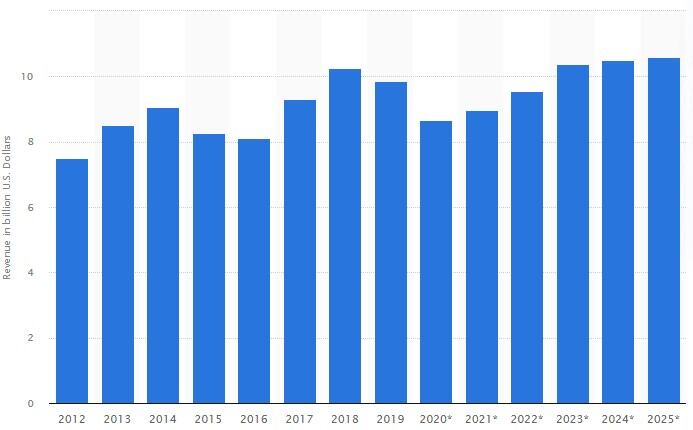
Figure 1: Industry revenue of residential care activities
It has been found from the above statistics that residential care costs have increased in the UK affecting the care process of the common people according to their capacity (Walby, 2021). On the other hand, the lack of NHS home care has been perceived since the pandemic period in the UK that forced almost 900,000 older people to be admitted to the hospital each year. the healthcare system NHS fails to meet the necessity of the elderly population of the UK outside and inside the hospital as well (The Guardian, 2023). The cost of care in the UK has become huge for common people to get treated in the hospital, and the provision of A&E ambulance, and 24/7 caregiver at home has not been met in the UK healthcare system.
Assignments bridging sociological and psychological perspectives require understanding social determinants of mental health; students use psychology assignment help to apply Mills' sociological imagination alongside psychological theory.
Relevant Legislation/Policy Frameworks
The legislation associated with care development in society has been implemented in the UK to determine the development of care for people. For instance, The Care Act 2014 has been developed to establish care and maintain new reformations. This act will be redefined with new dimensions of care in 2024 (Legislation.gov.uk, 2024). It is the general duty of the local authorities to care for the individuals. The local bodies have to develop plans effectively to promote care plan for the well-being assurance in the society.
Another act for care such as The National Health Service and Community Care Act 1990 can be identified as an important legislation that establishes health service in community care. This act introduces the internal market of the service of healthcare in the UK (Legislation.gov.uk, 2024). The stare can become an enabler in the process of receiving healthcare services in the UK.
Part B
Two Sociological Perspectives on the Family
Functionalism
The functionalist perspective of society is referred to as a complex system that works in the way of getting stability in the society. This approach looks at a social construction that shapes society as a whole. According to research the functionalist aspect of society looks at an organism with different kinds of institutions working together (Lombardozzi et al. 2020). The Functionalism of society is based on the process of managing factors in the society to reproduce them effectively. The different parts of society are designed to achieve equality. The relationship between the parts of society has been maintained by organising the functions effectively. In society, the major perspectives such as the relational approach, innovation, and developing community have been maintained by the functionalism approach. The family is regarded as a social construction that has been maintained by functions such as relationships among the family members, hierarchy of the family, and social bonds.
Feminism
Feminism has been developed as a social construction that builds to find the source of inequality and social oppression of women. According to the feminist perspective of family the social inequal position of women has been identified by the feminist activists. In the family structure, women have been recognised as less valuable in respect of men (Lombardo and Kantola, 2021). The domestic viewpoints of the family have been handed by women in most of cases. whereas women have been oppressed and their responsibility and social role have been ignored in the family.
Similarities and Differences Between Contemporary and Traditional Family Structures
Similarities
Emphasis on Emotional Support: The traditional and modern family concepts also support the affective functions and relationships within the family. Although the old British family structure is no longer a cultural norm, the family remains an essential part of people's lives throughout their lives. Many British households prefer a compact family unit, which permits movement and relieves financial pressure over a parent's lifetime. It is believed that the value of family membership is primarily driven by the special interpersonal bonds and mutual support that family members have with one another (Evason, 2020). Traditional families defined their purpose mainly in emotional partnership, and today’s families also cherish emotions, although the framework is more relaxed.
Child Socialisation: In one way or the other, both traditional and contemporary families are very important in the socialisation of children. Patriarchal and matriarchal families are alike in the sense that both giving values, norms, and cultural expectations that children have about the world. To ensure their children's financial future, parents frequently make calculated decisions regarding their children's education. Financial strain is the main issue facing British families, according to government surveys. From a young age, children are taught to be independent (Evason, 2020).
The past examples of family arrangement reflect large families, whereas the present families are comparatively small, and possess equal rights. According to structural–functionalism traditional families as traditional provide stability and differentiation of roles, whereas modern families reflect the evolution of society. Conflict theory demeans families as a model of inequality; the power relations have changed in the modern family. Symbolic study looks at the changing aspects of family roles and the latter are now very open for changes. For instance, Feminist theory lays a lot of emphasis on a change from traditional male-dominated families to contemporary societies. These theories together help explain how families deal with social, economic, and cultural changes.
Differences
Family Structure: Since 1970s 80s old structure of marriage has not been found and children today grow up in more "social" and single-parent households (ESRC, 2020). Modern families on the other hand are more defied and diverse thus have single-parent families, same-sex parents, blended families, and those in live-in relationships without children.
Gender Roles: In general family structure, the division of labor by gender was obvious, men went to work while women stayed at home and carried out chores and child-rearing. The perceptions of women's gender roles have shifted slowly since the middle of the 20th century. Today, women are nearly universally supported in entering the workforce and holding public office. Although women have equal rights and the freedom to choose how they contribute to the dynamic of the home, the meaning of family responsibilities have been changed (Evason, 2020). On the other hand, modern families are likely to present with shifted gender roles meaning that both the husband and wife are most likely to work as well as look after children. As a result of these changes, a high divorce rate and a declining marriage rate have shown an increase in cohabiting couples and single-parent families (Herald, 2023).
Three Factors that Have Shaped the Development of Family Structures
Economic Changes
Households in the UK still spend most of their income on housing (net), fuel, and power (19%) in FYE 2023, despite a drop of £2.40 (2%) from FYE 2022. It continues to be the second-largest category of weekly spending at 14% (National Statistics, 2024).
Figure 2: Household expenditures in the UK from 2002 to 2023
(Source: National Statistics, 2024))
The family setting in the UK has been transformed in the 21st century. The marriage rates have declined from 405,000 in 1971 to 275,000 in 2011 because of financial concerns, shifts in culture, and women’s emancipation. Living together has increased, 60% of marriages in 2011 were cohabiting (BBC, 2023). One of the most important economic transformations has been the enhancement of women's employment in the job market.
This was so because with increasing employment opportunities for women, and the increasing desire for women to work outside the home, the gendered division of labor in families started to decline (Shinwell and Defeyter, 2021). The change in family roles has been brought about by the increase in the number of families with two income earners and women joining the workforce (Thompson and Lawton, 2020).
Cultural and Social Changes
Another reason has to do with the alternation of the cultural attitudes towards gender, marriage, and parenting that in turn affected family models. For instance, the liberalisation of marriage and other forms of relationships such as same-sex marriages and other family structures are cultural changes in sexual and family culture. There has been a statistically significant increase in the number of same-sex married couple families which has risen to 68, 000 from 2017 to 2015, 2018 representing 29.4% of all same-sex couple families as compared to 8.9% in 2015 (National Statistics, 2021). This has a significant impact on the cultural changes in the UK families.
Pressure, instability, and change in UK families have been furthered by cultural and social change. Blended families are becoming more common, and of these 80% are headed by a mother and stepfather. Single-parent families especially those who do not work are likely to be poor, 72% of single parents who do not work are poor. Children of single parents are more likely to suffer from mental health problems than children of two parents (16% and 8%). Budget constraints as well as the workload and caregiving roles continue to challenge family relations (Jenkins, and Pereira, 2021).
Government Policies
Polices to parental leave, childcare, and discrimination at work have also contributed to the development of family relations and roles by giving support to families with children as well as addressing a gender issue in employment. Chancellor of the Exchequer Jeremy Hunt announced that children as young as nine months old will be eligible for the 30 free hours that eligible parents are entitled to under government childcare reforms. The implementation will be phased out throughout 2024. Children ages three to four are entitled to fifteen hours of free day care, and many of them can get thirty if both parents work and make less than $100,000 (Evennett, 2023).
Since 2015, more than 870,000 families have been served using the whole-family approach, and over 400,000 successful outcomes have been recorded. The program, originally known as the Troubled Families Programme, has changed and been given up to £165m in further funding in 2020. It seeks to prevent that initial intervention, to support families where practitioners identify acute difficulties, and to reduce the number of children who need to come into the care system (Gov.UK, 2021).
Three Sociological Concepts Related to the Role of the Family
Role Theory
Role theories claim that social norms are the unspoken, unwritten guidelines governing group life and individual roles, as well as expectations associated with those roles (Aartsen, 2020). Roles can therefore be defined as the behaviours, responsibilities, and duties that are assigned to people depending on their positions in the family unit. It is also usual in most traditional families the father is mostly portrayed as a provider while the mother is regarded mostly as a caretaker. Having more money on the job market may give parents more control over how they spend their time with their children (Raley et al. 2020)
The role theory aids in understanding how families can keep things in order and in working, by ensuring that everyone knows what their position is. In each culture or society, the people in that society are supposed to behave in a certain way (Kumar and Taylor Aiken, 2021). For example, the roles of the family members are given according to their position in the family. As a rule, men perform more outdoor tasks, such as gardening and car maintenance, while women tend to do more indoor chores, such as cooking and cleaning (Donner, 2020). These traditional roles are still evident; however, role theory is also concerned with other facts that show that family roles can change. A person's gender interactions and associated beliefs and attitudes have become more fluid and dynamic as the lines between work and family life blur (Oláh et al. 2020).
Social Constructionism
The social constructionist theory holds that traits such as gender, colour, class, ability, and sexual orientation, which are generally considered unchangeable and exclusively biological, result from human interpretations and definitions influenced by cultural and historical contexts (Kang et al. 2020). Socio-constructionism refers to the growth of power in a family. The concept doubts the presence of clear organizable family status, stating that family activity is regulated by social contracts and certain cultures.
For instance, the concept that defines the family has been dynamic and the world over has undergone remarkable transformations as well. They used to be defined as being families that consisted of a father, mother, and children only, however, modern society has gone further and accepted single-parent families, families of the same sex, and even large families.
Culture
The sociological definition of culture is to approach the focus of families as they consist of norms, values, and applicable patterns of behaviour. Culture determines roles within a family, and how caregiving and socialization should be. For instance, collectivist cultures are inclined to create more popularity in projects, encompassing relatives and other triangle members, attaching importance to a large whole family group, while individualists are more direct, giving preference to independent Hotel, which influences families’ models, consisting of husband and wife only. Concerns like husband-wife beating are best described as pathologies that are present within the family rather than being acceptable ways of behaviour as the culture recommends. Formerly family power relationships were the old ones, however, with changing culture where gender power is equal. Observing that culture defines the family allows one to investigate how values are learned, modified, and explained in terms of changing contexts to understand the effects of culture and family life.
Conclusion
In this study, the analysis of social democracy has been constructed. The socio-democratic theory has been described in this research to assess the building of social structures and families in society. The functionalism and feminism approach has been described to address the social construction of family. The public issue of elderly care has also been taken into consideration in this research.
Reference
- Aartsen, M. (2020). Role Theory - an overview | ScienceDirect Topics. [online] Sciencedirect.com. Available at: https://www.sciencedirect.com/topics/psychology/role-theory. [Accessed on: 16th November 2024]
- BBC (2023). How and why has family life changed over the past century in the UK? - Personal and family issues: Different types of family - CCEA - GCSE Religious Studies Revision - CCEA. [online] BBC Bitesize. Available at: https://www.bbc.co.uk/bitesize/guides/zhydpg8/revision/2. [Accessed on: 16th November 2024]
- Bremer, B. and McDaniel, S., (2020). The ideational foundations of social democratic austerity in the context of the great recession. Socio-Economic Review, 18(2), pp.439-463.
- Daly, M., (2020). COVID‐19 and care homes in England: What happened and why?. Social Policy & Administration, 54(7), pp.985-998.
- Donner, F. (2020). The Household Work Men and Women Do, and Why. The New York Times. [online] 12 Feb. Available at: https://www.nytimes.com/2020/02/12/us/the-household-work-men-and-women-do-and-why.html. [Accessed on: 16th November 2024]
- Edwards, M. (2024). The Role of Families in Socialization and Cultural Transmission. [online] Easy Sociology. Available at: https://easysociology.com/a-level-sociology/families/functions-of-the-family/the-role-of-families-in-socialization-and-cultural-transmission/. [Accessed on: 16th November 2024]
- ESRC (2020) CHANGES IN FAMILY STRUCTURE, Understanding Society Policy Unit Data Note. https://www.understandingsociety.ac.uk/wp-content/uploads/briefing-notes/data-note-changes-in-family-structure.pdf [Accessed on: 16th November 2024]
- Evason, N. (2020). British Culture - Family. [online] Cultural Atlas. Available at: https://culturalatlas.sbs.com.au/british-culture/british-culture-family. [Accessed on: 16th November 2024]
- Evennett, H. (2023). Strengthening family life in England: Archbishops’ Commission on Families and Households. [online] House of Lords Library. Available at: https://lordslibrary.parliament.uk/strengthening-family-life-in-england-archbishops-commission-on-families-and-households/ [Accessed on: 16th November 2024]
- Flinders, M., 2021. Democracy and the politics of coronavirus: trust, blame and understanding. Parliamentary Affairs, 74(2), pp.483-502.