
PRD100 in Integrated Health Wellbeing and Social Care Assignment Sample
Higher education plays a vital role in personal development Individual courses and programs focus on learning, acquiring new skills, and socializing.
- 92650+ Project Delivered
- 1500+ Experts 24x7 Online Help
- No AI Generated Content


- Introduction - PRD100 in Integrated Health Wellbeing and Social Care Assignment Sample
- Programme Overview and Career Relevance
- Core Modules and Their Importance
- Relevance to Career Aspirations
- Previous Experience and Its Relevance
- Professional Experience
- Transferable Skills Gained from Experience
- Relevance to Academic Studies
- Self-Assessment: SWOT Analysis
- Action Plan for Skills Development
- Chart
- Key Skills for Development and SMART Goals
- Soft Skills for My Career
- Roles and Responsibilities as a Higher Education Student
- Five-Year Career Plan
- Contextualising Development to Practice
Introduction - PRD100 in Integrated Health Wellbeing and Social Care Assignment Sample
Higher education plays a vital role in personal development Individual courses and programs focus on learning, acquiring new skills, and socializing. As a student of integrated health, well-being, and social care, I am on a journey to gain knowledge, skills, and practical experience to contribute positively to the healthcare and social care sectors. Apart from the foundation of critical thinking, ethical reasoning, and professional practice, the qualities gained in this programme are essential for delivering high-quality professional care and support to people and communities.
Programme Overview and Career Relevance
This integrated health, well-being, and social care programme is developed so that students acquire the knowledge, practical skills, and professional competencies required for working in health care and social services. The curriculum includes essential components of patient care, public health, and ethics, and graduates are sufficiently ready for work in the industry (Malau-Aduli et al., 2022).
Elevate your academic performance with New Assignment Help! Our team of qualified experts ensures every assignment meets the highest standards. Your success is our mission!
Core Modules and Their Importance
| Module Name | Description | Relevance to Career |
|---|---|---|
| Introduction to Health & Social Care | Provides a foundation in health and social care systems, policies, and ethical considerations. | Essential for understanding professional responsibilities and service delivery. |
| Human Growth & Development | Examines physical, cognitive, and emotional development across the lifespan. | Helps in assessing and addressing client needs at different life stages. |
| Health Promotion & Wellbeing | Focuses on strategies for improving public health and wellbeing. | Supports roles in community health education and preventive care. |
| Professional & Academic Skills | Develops research, communication, and reflective practice skills. | Enhances the ability to write reports, analyze data, and engage in evidence-based practice. |
| Safeguarding & Ethics in Care | Explores safeguarding policies, legal frameworks, and ethical decision-making. | Critical for ensuring patient safety and upholding professional standards. |
Relevance to Career Aspirations
- To help strengthen an understanding of health and social care systems.
- It provides practice in developing critical thinking and problem-solving skills (Xu, Wang and Wang, 2023).
- Learning things about interpersonal and communication skills for client interactions.
- The development of practical experience and ethical awareness is necessary for productive work environments.
- For further specialization or post-graduate study.
Previous Experience and Its Relevance
Working and volunteering in the healthcare and social care sectors and previous work have developed practical knowledge (Tierney et al., 2021). The skills gained from these experiences are transferable to academic studies and future career goals.
Professional Experience
It was a role in a healthcare or social care setting that involved assisting patients with their care and support, maintaining accurate records, and working with multidisciplinary teams (Ocloo et al., 2021). This was an experience to learn to communicate, attention to detail, teamwork.
This next one was a community care setting where I worked with people who are vulnerable in other ways and tried to support public health initiatives. This helped us to understand how we could safeguard policies, or how ethical considerations will affect the role of a nurse, and what advocacy in health and social care means.
Transferable Skills Gained from Experience
- Communication and Interpersonal Skills: Listening, empathizing and communicating effectively with clients and other healthcare professionals have increased (Fuller et al., 2021).
- Time Management and Organization: The skill to manage tasks better has helped the way to prioritize workloads and meet deadlines.
- Teamwork and Leadership: The experience of working collaboratively with professionals in multi-disciplinary teams has improved my capacity to be effective in health and social care settings.
- Adaptability and Problem-Solving: Surviving unexpected challenges have made it possible for resilience and resourcefulness in the professional setting (Ames and Greer, 2021).
Relevance to Academic Studies
It has also served as a reminder of the importance of patient-centeredness, ethical decision making and evidence-based practice, all of which frame centre content. They can build upon previous experiences and develop their skills in the health and social care sector through further education, thus preparing them for a career.
Self-Assessment: SWOT Analysis
| Strengths ● Strong communication skills, both written and verbal, which are essential for client interactions and professional documentation. ● High levels of empathy and emotional intelligence, allowing for effective engagement with individuals in health and social care settings. ● Ability to work collaboratively in teams, demonstrated through previous work and academic experiences. ● Strong organizational skills, ensuring efficient management of tasks, deadlines, and responsibilities (Ikbar Pratama et al., 2024). | Opportunities ● Access to workshops and training programs that can enhance skills in research, public speaking, and stress management. ● Placements and internships are available to gain practical experience in health and social care settings. ● Mentorship opportunities from experienced professionals in the field. ● Expanding digital skills through academic courses and self-directed learning to improve proficiency in data management and analysis. |
| Weaknesses ● Limited experience in conducting in-depth research and data analysis, which is crucial for evidence-based practice. ● Need for improvement in confidence when delivering presentations and speaking in professional settings. ● Difficulty managing stress in high-pressure situations, which can impact decision-making. ● Limited networking skills, which are important for career advancement and professional development. | Threats ● The highly competitive nature of the health and social care industry requires continuous professional development. ● Balancing academic responsibilities with personal commitments can impact time management. ● Rapid advancements in healthcare technology necessitate ongoing learning and adaptation. ● Potential difficulty in securing relevant work experience due to high demand for placements (Sarbu and Unwin, 2021). |
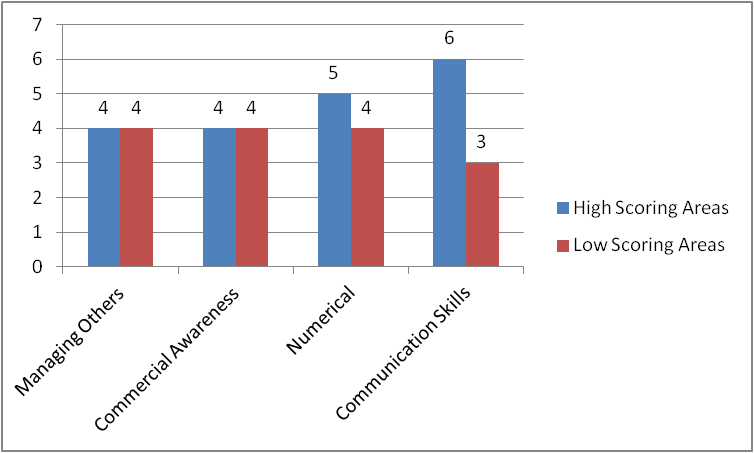
Action Plan for Skills Development

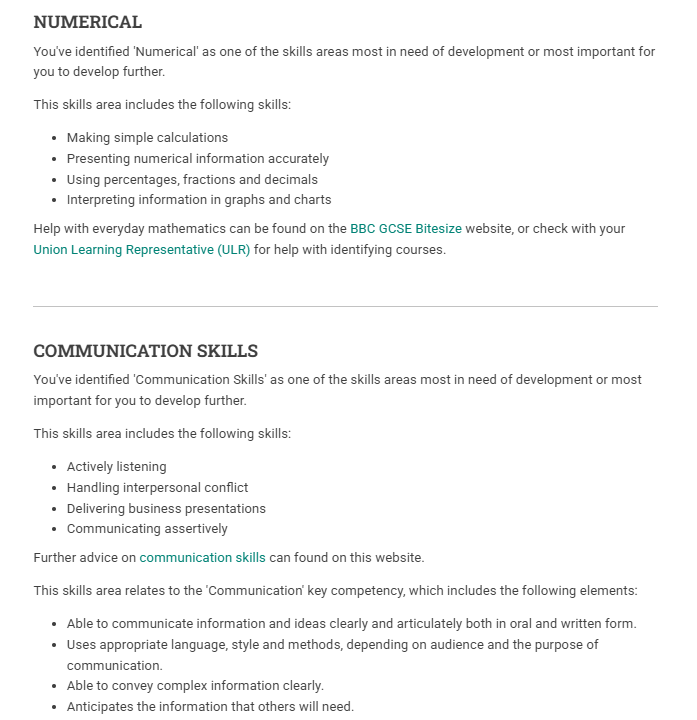
Chart
Key Skills for Development and SMART Goals
| Skill | SMART Goal |
|---|---|
| Research and Data Analysis | Complete an online course in data analysis within three months and apply learned skills to academic assignments. |
| Public Speaking and Confidence | Participate in at least three public speaking workshops within the next six months and practice by engaging in classroom presentations. |
| Stress Management and Resilience | Attend mindfulness and stress management training, implementing learned techniques in daily life over the next four months (Wolever, Finn and Shields, 2022). |
| Networking and Professional Engagement | Connect with at least five industry professionals on professional networking platforms and attend one career event each semester. |
Steps to Achieve These Goals
- Practical Experiences – Applying learned skills through placements, internships, and academic projects.
- Attending Workshops and Training – Register for workshops and training related to the job you are working on.
- Gaining guidance from professionals in the field seeking mentorship.
- Completing courses on online learning platforms, including research, communication, and digital literacy (Yu, 2022).
- Academic and Extracurricular Activities – Debates, group projects, and community service to improve confidence and teamwork.
Soft Skills for My Career
The health, well-being, and social care sector relies on soft skills for success because they aid professionals in communication, decision making and smooth delivery of services (Kitson et al., 2021). Communication is one of the most critical soft skills, by actively listening, clearly conveying of ideas as well as adapting communication styles toward different audiences. It also holds immense importance while working with patients, colleagues, and other professionals, and it assists in effective collaboration and patient-oriented care.
Empathy and emotional intelligence are equally important because of the need to understand and respond to the needs of people from all walks of life (Malau-Aduli et al., 2022). Showing compassion and sensitivity builds trust and goes toward better patient outcomes. In multidisciplinary environments, professionals should work together to provide comprehensive care; teamwork and collaboration are required. Working with a team of people one can cooperate with creates a positive work culture and helps solve problems more efficiently.
In addition, managing time well and being organized also contribute to managing multiple responsibilities, keeping up with deadlines, and managing the workload (Rohm, Stefl and Ward, 2021). Adaptive and problem-solving abilities help professionals react efficiently to new challenges in offering services to patients and responding to new policies and procedures.
Roles and Responsibilities as a Higher Education Student
My role as a higher education student is to take full part in my academic learning and engage in my personal development. This implies attending lectures in order to improve my knowledge regarding the subject or topics related to that, completing assignments to enhance my skills about it, and participating in discussions with my classmates about the same. Good critical thinking and problem-solving skills are developed to effectively apply theoretical concepts to real-world situations. I also have to learn management and should efficiently handle my time as I have to manage academics, placements, and extracurricular activities properly.
Five-Year Career Plan
| Year | Key Objectives | Actions to Achieve Goals |
|---|---|---|
| Year One (Current Year) | Build a strong academic foundation and gain initial industry exposure. | ● Successfully complete first-year studies. ● Engage in volunteering or part-time work in a healthcare or social care setting. ● Develop time management and organizational skills through coursework and extracurricular activities. ● Attend career development workshops focused on research, networking, and public speaking. |
| Year Two | Gain practical experience through placements and strengthen professional skills. | ● Secure a work placement or internship in a relevant health or social care organization. ● Improve research and data analysis skills by engaging in academic projects. ● Continue public speaking practice by actively participating in presentations and networking events. ● Begin pursuing industry-recognized certifications to enhance qualifications. |
| Year Three | Develop leadership skills and expand industry knowledge. | ● Take on leadership roles in university projects, student organizations, or professional settings. ● Gain deeper hands-on industry experience through extended placements or work shadowing (Shanks, 2024). ● Work on an independent research project related to health and social care. ● Expand professional network by attending industry events and engaging with mentors. |
| Year Four | Transition into the workforce and refine specialized skills. | ● Apply for graduate jobs or further training programs in the chosen career path. ● Complete a specialized training course or certification to enhance expertise. ● Strengthen leadership and communication skills by mentoring others or leading projects (Ghorbani, 2023). ● Develop a strong professional portfolio and refine job interview techniques. |
| Year Five | Establish a professional career and continue lifelong learning. | ● Secure a full-time role in the health and social care sector. ● Continue professional development through postgraduate studies or advanced training. ● Actively contribute to industry research or community initiatives. ● Stay updated with emerging trends and innovations to ensure career growth. |
Contextualising Development to Practice
When applied in real-world settings, developing professional skills is most effective (Rohm, Stefl and Ward, 2021). Office meetings and lined-up presentations will benefit from the ability to use public speaking and confidence skills. Research and data analysis skills will improve and be applied in evidence-based practice, policy development, or patient care planning (Kitson et al., 2021).
Conclusion
Personal development is a continuous process that includes self-assessment, goal setting, and practical application. This structured approach, in which academic learning sits alongside skill development and as those skills are practised, will help me to create a solid basis for achieving a career in health, wellbeing and social care. SWOT analysis of the five-year career plan indicates what needs to be done and what should be done to address skill gaps and increase professional competencies.
References
- Ames, M. and Greer, S. (2021). Renegotiating resilience, redefining resourcefulness. Research in Drama Education: The Journal of Applied Theatre and Performance, 26(1), pp.1–8. doi:https://doi.org/10.1080/13569783.2020.1863143.
- Fuller, M., Kamans, E., van Vuuren, M., Wolfensberger, M. and de Jong, M.D.T. (2021). Conceptualizing Empathy Competence: A Professional Communication Perspective. Journal of Business and Technical Communication, [online] 35(3). doi:https://doi.org/10.1177/10506519211001125.
- Ghorbani, A. (2023). A Review of Successful Construction Project Managers’ Competencies and Leadership Profile. Journal of Rehabilitation in Civil Engineering, [online] 11(1), pp.76–95. Available at: https://civiljournal.semnan.ac.ir/article_6409.html.
- Ikbar Pratama, Arifa Pratami, Mohd Idris Dalimunthe, Alistraja Dison Silalahi and Diny Atrizka (2024). ANALYSING THE IMPACTS OF CORPORATE GOVERNANCE ATTRIBUTES ON FINANCIAL REPORTING TIMELINES WITH A MODERATOR OF FOREIGN OWNERSHIP: EVIDENCE FROM INDONESIAN PLC. International Journal of Economics and Finance Studies, [online] 16(`1), pp.206–223. Available at: https://www.agbioforum.org/sobiad.org/menuscript/index.php/ijefs/article/view/1896 [Accessed 30 Jan. 2025].
- Kitson, A.L., Harvey, G., Gifford, W., Hunter, S.C., Kelly, J., Cummings, G.G., Ehrenberg, A., Kislov, R., Pettersson, L., Wallin, L. and Wilson, P. (2021). How nursing leaders promote evidence‐based practice implementation at point‐of‐care: A four‐country exploratory study. Journal of Advanced Nursing, [online] 77(5), pp.2447–2457. doi:https://doi.org/10.1111/jan.14773.
- Malau-Aduli, B.S., Jones, K., Alele, F., Adu, M.D., Drovandi, A., Knott, G., Young, L. and Jo, C. (2022). Readiness to enter the workforce: perceptions of health professions students at a regional Australian university. BMC Medical Education, 22(1). doi:https://doi.org/10.1186/s12909-022-03120-4.
- Ocloo, J., Garfield, S., Franklin, B.D. and Dawson, S. (2021). Exploring the theory, Barriers and Enablers for Patient and Public Involvement across health, Social Care and Patient safety: a Systematic Review of Reviews. Health Research Policy and Systems, [online] 19(1), pp.1–21. Available at: https://link.springer.com/article/10.1186/s12961-020-00644-3.
- Rohm, A.J., Stefl, M. and Ward, N. (2021). Future Proof and Real-World Ready: The Role of Live Project-Based Learning in Students’ Skill Development. Journal of Marketing Education, 43(2), pp.204–215. doi:https://doi.org/10.1177/02734753211001409.
- Sarbu, R. and Unwin, P. (2021). Complexities in Student Placements Under COVID-19 Moral and Practical Considerations. Frontiers in Education, 6. doi:https://doi.org/10.3389/feduc.2021.654843.
- Shanks, L. (2024). Accelerating Career Readiness: A Report on Career Innovations at APLU Institutions. [online] Association of Public and Land-grant Universities. Available at: https://eric.ed.gov/?id=ED662136 [Accessed 30 Jan. 2025].
- Tierney, S., Mahtani, K.R., Wong, G., Todd, J., Roberts, N., Akinyemi, O., Howes, S. and Turk, A. (2021). The role of volunteering in supporting well‐being – What might this mean for social prescribing? A best‐fit framework synthesis of qualitative research. Health & Social Care in the Community, [online] 30(2). doi:https://doi.org/10.1111/hsc.13516.
- Wolever, R.Q., Finn, M.T.M. and Shields, D. (2022). The Relative Contributions of Live and Recorded Online Mindfulness Training Programs to Lower Stress in the Workplace: Longitudinal Observational Study. Journal of Medical Internet Research, [online] 24(1), p.e31935. doi:https://doi.org/10.2196/31935.
- Xu, E., Wang, W. and Wang, Q. (2023). The effectiveness of collaborative problem solving in promoting students’ critical thinking: A meta-analysis based on empirical literature. Humanities and Social Sciences Communications, [online] 10(1), pp.1–11. doi:https://doi.org/10.1057/s41599-023-01508-1.
- Yu, Z. (2022). Sustaining Student Roles, Digital Literacy, Learning Achievements, and Motivation in Online Learning Environments during the COVID-19 Pandemic. Sustainability, 14(8), p.4388. doi:https://doi.org/10.3390/su14084388.