
Trade, Growth and Development Assessment 1 Sample
The rise of middle class in Brazil
- 92650+ Project Delivered
- 1500+ Experts 24x7 Online Help
- No AI Generated Content



- Introduction - Trade, Growth and Development Assessment
- Understanding the Middle-Class Boom
- Growth of middle class – 1990s to the present
- Key economic policies regarding the growth
- Social and Economic Impact of the Middle-Class Expansion
- Economic impact
- Social impact
- Challenges Facing Brazil’s Middle-Class Today
- Economic setbacks
- Social inequalities
- Political and structural barriers
- Future Outlook
- Future protections
- Policy recommendations
Introduction - Trade, Growth and Development Assessment
During the early 2000s nearly 40 million Brazilians have moved out of poverty and into the middle-class populations while transforming the nation’s social and economic landscape (Grigoryev and Starodubtseva, 2021). As addressed by the Getulio Vargas Foundation or FGV, the middle-class population of the nation has expanded from 38% of the population in the year 2003 to more than 56.22% by the end of 2014 (Neri, 2019). Such a significant shift has turned Brazil into one of the world’s largest consumer markets and fuelled the demand for housing, modern technology, and education.
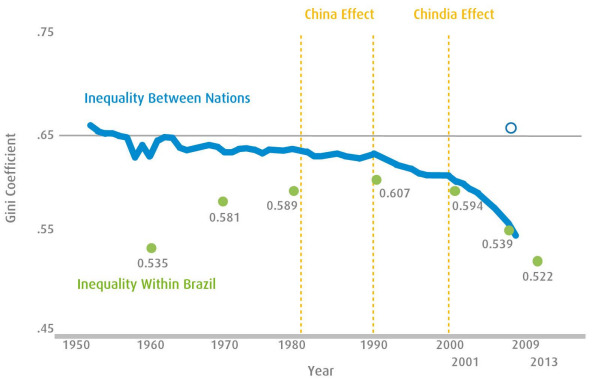
Figure 1: "Brazil and World Cross-Country Gini Coefficient"
The economic transformation of Brazil has been started with Plano Real 1994 that has stabilised the hyperinflation while paving the way for achieving a sustainable growth (Oreiro and Santos, 2023). The Lula Da Silva Administrations 2003 to 2011 has introduced different polices that can afford better living conditions, education and driving the economic mobility (Almeida, 2019).
By understanding the rise of Brazil’s middle-class population in the current scenario as some recent economic downturns, including the 2015-2016 recessions and the Covid-19 pandemic have threatened the gains.
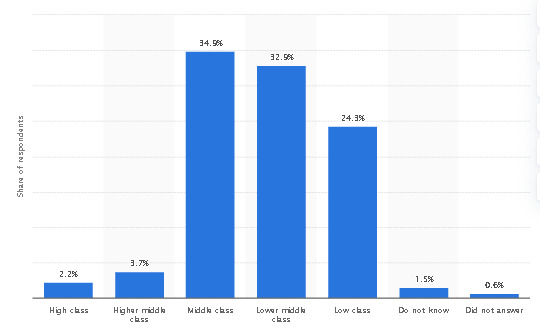
Figure 2: "Public perception of own social class in Brazil in 2023”
Understanding the Middle-Class Boom
The middle-class population of Brazil has been categorised as Class C and includes households that have earnings between R$1,900 and R$8,200 per month, i.e. around $380 to $1,600 USD according to the Brazilian Institute of geography and Statistics or the IBCE (Nes, 2020). Such a segment of society has been characterised by increased purchasing power, homeownership, and access to private healthcare services, including the ability to invest in higher education and technology.
Overwhelmed with multiple assignments? New Assignment Help offers reliable, affordable solutions that fit your budget and timeline. Quality work delivered right when you need it!
Growth of middle class – 1990s to the present
Between 2003 and 2014, the middle-class population of Brazil expanded from 38% to 55% of the entire population, while adding near about 40 million people to the ranks (Grigoryev and Starodubtseva, 2021). Such shift has been driven by several factors like; economic growth, declining poverty rates, and increased job opportunities. The recent economic downturn has reversed some of the gains, and by the end of 2021, middle -class population has shrunk to 47%, due to the high rates of inflation and unemployment (Moura Jr. and Portela, 2021).
Trade, growth, and development assignments examine comparative advantage and FDI flows; students use economics assignment help to apply Heckscher-Ohlin models and interpret trade data with academic precision.
Key economic policies regarding the growth
At Brazil, the Bolsa Família and Social Welfare Programs was launched in the year 2003, where Bolsa Familia has provided cash transfers to the low-income families, while assisting to reduce the extreme poverty (Paiva, Cotta and Barrientos, 2019). By the end of 2014, more than 14 million families have been benefitted from the program and ensure the improvement of education and healthcare facilities (Byers et al. 2018). On the other hand, before the year of 1994, Brazil have faced hyperinflation that exceeds to 2500% on annual basis (Byers et al. 2015). The Plano Real, has been introduced under the president Fernando Henrique Cardoso, for stabilising the inflation, with restoration of the investor confidence while enabling a sustained GDP Growth that averages as 4% per year from 2000 to 2010 (San Jose State University, 2022).
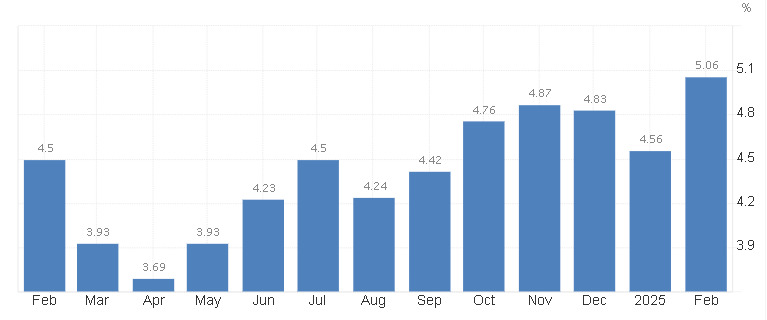
Figure 3: Brazil Inflation Rate
Also, the expansion of the formal labour markets, specifically in different services such as; retail sector has caused higher wages. The minimum wage has doubled on real-term basis between the year 2003 to 2014. This has boosted the disposable income of the middle-class population.
Social and Economic Impact of the Middle-Class Expansion
Economic impact
Increased consumer spending and business growth
The expansion of Brazil’s middle-class population has boosted domestic consumption, with household spending of 45% between 2003 and 2024 (Costa Filho and Rocha, 2022). The middle-class families have increased their expenditure on electronics, automobiles, traveling, and dining, the creation of a surge in demand across different areas. By the end of 2012, Brazil had become one of the world’s 3rd largest markets for beauty and personal care products, with the sales exceeding $42 billion (Statista, 2021).
Growth of retail, real estate and education sectors
Some of the large retailers such as; Magazine Luiza and Casas Bahia have managed to expand in an aggressive manner to cater to the middle-class demand for appliances, furniture, and clothing options. Between the time of 2003 to 2014, retail employment increased by 76% (PwC, 2025). On the other hand, the increased household income has caused a 58% rise in ownership between the years 2001 to 2014 (World Bank, 2023). This has been influenced by credit expansion and government programs, ly; Minha Casa, and Minha Vida. Also, the middle-class enrolment for the private universities has increased by 165% from the year 2003 to 2015. This has been supported by government financing programs such as; FIES and ProUni.
Social impact
Increased access to the education and healthcare
Literacy rates among young Brazilians (aged 15 years to 24 years) reached 99% in the year 2015, compared to 88% in the year 2000. The private health insurance coverage has expanded to 25% of the population by the end of 2014, as middle-class families sought to have better medical services beyond the public SUS system (World Bank, 2023). Also, millions of Brazilians have moved from the favelas to formal housing due to the increasing income levels. In Brazil cities like; São Paulo and Rio de Janeiro have observed 40% of declination in the informal housing between 2005 and 2015 (OECD, 2020).
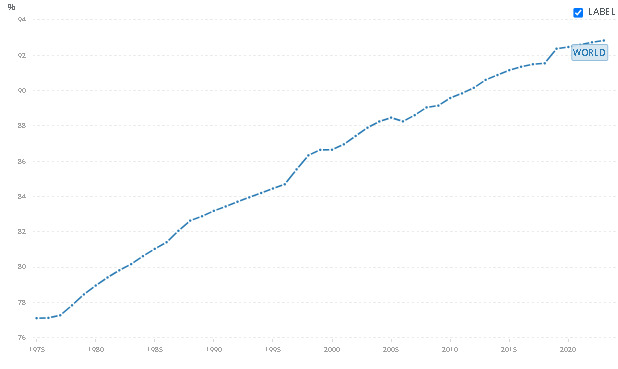
Figure 4: Literacy rate of youth in Brazil
Political implications – demand for government accessibility
Having a financially secure middle-class population has become politically engaged, while leading to the mass protests, such as; 2013 demonstrations against the corruptions and poor pubic services. Also, the demand for the accountability has been influenced by the policy debates and electoral outcomes, including the impeachment of the president Dilma Rousseff in the year 2016.
Challenges Facing Brazil’s Middle-Class Today
Despite of the major expansion in early 2000s, Brazil’s middle-class population have faced a rising economic and social challenges.
Economic setbacks
Impact of the economic recessions
The 2015-16 recessions have been noted as Brazil’s one of the worst economic crises, that have caused 3.8% GDP contraction in the year 2015, and another decline of 3.6% in 2016 (Vartanian and Garbe, 2019). The middle-class income has shrunk and around 1.5 million people has filled back into the poverty. The Covid-19 pandemic in the year 2020 has damaged the economy while causing 4.1% of GDP decline, while pushing 9.6 million of Brazilians into the financial instability (Sott, Bender and da Silva Baum, 2022). The information job sector of the country has grown while reducing the scrutiny of employment.
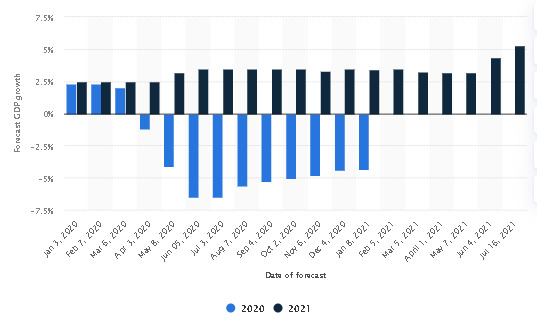
Figure 5: "Forecast impact of the novel coronavirus (COVID-19)"
Inflation and declination for purchasing power
The inflation has been peaked at 10.1% in the year 2021, while eroding the household income of people. The rising food, fuel and housing costs has disproportionately affected the middle-class and forcing many people to cut the discretionary spending options. Also, by the end of 2022, around 27% of the middle-class families has reported for major financial insecurity with having an increased reliance on the credit cards and loans (Elibrary, 2024).
Social inequalities
Growing disparity of wealth
As the middle-class population of Brazil has grown, 10% of the richest people still haven’t control of 58% of the national income, in comparison to the 43% of them in 2001 (OCED, 2025). The economic mobility of the nation has settled with having low wage growth and a limited job stability which prevents many from sustaining the status of the middle-class people.
Challenges in access to the quality healthcare and education
It can be seen that, the public healthcare system remains underfunded, with having 10 million people are waiting for the medical procedures in the year 2022. Many of the middle-class families are struggling to afford the private insurance that has become 30% of more expensive since the time of 2018.
Political and structural barriers
Corruptions and governance issues
The scandals related to the scandals, including Operation Car Wash or Lava Jato have weakened the public trust in the government and affected investor confidence. The economic instability has caused foreign direct investment to drop by 25% between the years of 2014 to 2017.
Job insecurity and governance issues
Automation and digitisation have threatened the middle-class population in different sectors such as; retail, banking, and manufacturing. In the year 2025, near about 30% of the Brazilian workforce expects to become affected by automation and AI. Also, the gig economy’s increase has caused more informed job roles with lower wages and no benefits (Lima et al. 2021).
Future Outlook
Future protections
Brazil’s middle-class population faces an uncertain future. The World bank in the year 2023 has projected around 2.2% GDP growth in the year 2024, and a rise of the inflation and job insecurity which has threatened the financial stability (Kalinin et al. 2024). Between the year of 2014 and 2021, around 9.6 million of Brazilians have fallen-out the middle-class people. If the economic reforms taken place, another 5million of people can drop back into the poverty by the end of 2025.
Policy recommendations
For the prevention of the declining and sustaining the growth of middle-class Brazilians the following actions can be taken into consideration:
- Government needs to strengthen the job security by making investment in the tech-driven industries and vocational training for countering the job losses.
- Controlling the inflation through the monetary policies can assist in stabilising the fuel and food prices.
- Brazilian government need to expand the access of education and healthcare services by increasing the funding for public universities and SUS healthcare system.
Conclusion
The middle-class population of Brazil played a crucial role in the nation’s economic development but has faced major challenges, including inflation, job insecurity, and declining public services. As the past policies in the nation, like; Bolsa Família and Plano Real have fuelled the growth, the economic downturns have made reversed progress for the millions of people. The future of the middle-class population is dependent on the policy reforms that promote the job stability, and ensure improvement of the education and healthcare services.
References
- Almeida, M.H.T. de (2019) ‘The social policies of Lula's administration’, Novos Estudos - CEBRAP, 1(se). Available at: http://socialsciences.scielo.org/scielo.php?script=sci_arttext&pid=S0101-33002005000100002 [Accessed 14 March 2025].
- Byers, E., Valliere, F.R., Houtrow, A.J. and National Academies of Sciences, Engineering, and Medicine (2018) ‘Health Care Programs and Services’, in Opportunities for Improving Programs and Services for Children with Disabilities. Washington, DC: National Academies Press (US). Available at: https://www.ncbi.nlm.nih.gov/books/NBK518928/
- Costa Filho, M.C. and Rocha, A.C. (2022) ‘Meanings and attitudes regarding education and household spending priorities of the new middle-class families in Brazil’, Journal of Consumer Culture, 22(1), pp. 183-206. Available at: https://journals.sagepub.com/doi/pdf/10.1177/1469540520926246
- Elibrary (2024) Brazil: 2024 Article IV Consultation-Press Release; Staff Report; and Statement by the Executive Director for Brazil. Available at: https://www.elibrary.imf.org/view/journals/002/2024/209/article-A001-en.xml [Accessed 16 March 2025].
- Grigoryev, L.M. and Starodubtseva, M.F. (2021) ‘Brazil in the 21st century: A difficult path’, Russian Journal of Economics, 7(3), pp. 225–268. Available at: https://rujec.org/article/78432/ [Accessed 14 March 2025].
- Kalinin, A., Rudnik, R., Tsvetov, A., Bondarenko, K. and Shuranova, A. (2024) Emerging Markets Decoded 2024. Available at SSRN 4862785. Available at: https://papers.ssrn.com/sol3/Delivery.cfm?abstractid=4862785
- Lima, Y., Strauch, J.C.M., Esteves, M.G.P., de Souza, J.M., Chaves, M.B. and Gomes, D.T. (2021) Exploring the future impact of automation in Brazil. Employee Relations: The International Journal, 43(5), pp.1052-1066. Available at: https://www.researchgate.net/publication/348690880_Exploring_the_future_impact_of_automation_in_Brazil
- Moura Jr., J. and Portela, F.F. (2021) ‘The Brazilian middle class and its illusory search for an elite identity’. Available at: https://revista.drclas.harvard.edu/the-brazilian-middle-class-and-its-illusory-search-for-an-elite-identity/#:~:text=Looking%20at%20the%20percentages%20of,Brazil%20in%20the%20year%202021 [Accessed 14 March 2025].
- Neri, M. (2019) Brazil's Middle Classes. Available at: https://www.cps.fgv.br/cps/bd/papers/ES106-Brazil's-Middle-Classes.pdf [Accessed 14 March 2025].
- Nes, E.F. (2020) ‘Social Classes in Brazil’. Available at: https://thebrazilbusiness.com/article/social-classes-in-brazil-1453802521 [Accessed 15 March 2025].
- OCED (2025), Building Trust in Public Institutions Drivers of Trust in Public Institutions in Brazil. Available at: https://www.oecd.org/content/dam/oecd/en/publications/reports/2023/12/drivers-of-trust-in-public-institutions-in-brazil_55a6fcbf/fb0e1896-en.pdf [Accessed 16 March 2025].
- OECD (2020). Water Resources Governance in Brazil. Available at: https://www.oecd.org/content/dam/oecd/en/publications/reports/2015/09/water-resources-governance-in-brazil_g1g5757c/9789264238121-en.pdf [Accessed 15 March 2025].
- Oreiro, J.L. and Santos, J.F.C. (2023) ‘The unfinished stabilization of the Real Plan: An analysis of the indexation of the Brazilian economy’, in Central Banks and Monetary Regimes in Emerging Countries. Edward Elgar Publishing, pp. 61–81. Available at: http://joseluisoreiro.com.br/site/link/26fa0eca2178dc9da95849daf0bcf0cb7b7baefc.pdf
- Paiva, L.H., Cotta, T.C. and Barrientos, A. (2019) ‘Brazil’s Bolsa Família Programme’, Great Policy Successes, pp. 21-41. Available at: https://library.oapen.org/bitstream/handle/20.500.12657/23594/1/9780198843719.pdf#page=36
- PwC (2025) The retail and consumer industry in Brazil – Navigating the downturn. Available at: https://www.pwc.com/gx/en/growth-markets-centre/publications/assets/The%20R%26C%20Industry%20in%20Brazil%20-%20Navigating%20the%20Downturn.pdf [Accessed 15 March 2025].
- San Jose State University (2022) The Hyperinflation in Brazil, 1980-1994. Available at: https://www.sjsu.edu/faculty/watkins/brazilinfl.htm [Accessed 15 March 2025].
- Sott, M.K., Bender, M.S. and da Silva Baum, K. (2022) Covid-19 outbreak in Brazil: Health, social, political, and economic implications. International Journal of Health Services, 52(4), pp.442-454. Available at: https://pmc.ncbi.nlm.nih.gov/articles/PMC9445630/pdf/10.1177_00207314221122658.pdf
- Statista (2021), Beauty and personal care market in Brazil – statistics & facts. Available at: https://www.statista.com/topics/5424/cosmetics-industry-in-brazil [Accessed 15 March 2025]
- Statista (2024). Public perception of own social class in Brazil in 2023. Available at: https://www.statista.com/statistics/782439/public-perception-own-social-class-brazil/#:~:text=During%20a%202023%20survey%2C%20around,part%20of%20the%20middle%20class. [Accessed 18 March 2025]
- Statista Research Department (2024), Forecast impact of the novel coronavirus (COVID-19) on gross domestic product (GDP) growth in Brazil in 2020 and 2021. Statista. Available at: https://www.statista.com/statistics/1105065/impact-coronavirus-gdp-brazil/ [Assessed on 16th March 2025]
- Trading Economics (2019) Brazil Inflation Rate. Available at: https://tradingeconomics.com/brazil/inflation-cpi [Accessed 15 March 2025].
- Vartanian, P.R. and Garbe, H.D.S. (2019). The Brazilian economic crisis during the period 2014-2016: Is there precedence of internal or external factors? Journal of International and Global Economic Studies, 12(1), pp.66-86. Available at: https://www.mackenzie.br/fileadmin/ARQUIVOS/Public/6-pos-graduacao/upm-higienopolis/mestrado-doutorado/economia_mercados/2020/Anais_de_Congresso/The_Brazilian_economic_crisis_during_the_period_2014-2016.pdf [Assessed on 16th March 2025]
- World Bank (2023) Brazil Poverty and Equity Assessment: Looking Ahead of Two Crises. Available at: https://documents1.worldbank.org/curated/en/099230007062256153/pdf/P1746910e33a8407d0b0850b8f0f5bcf18c.pdf [Accessed 15 March 2025].
- World Bank (2023) Literacy rate, youth total (% of people ages 15-24). Available at: https://data.worldbank.org/indicator/SE.ADT.1524.LT.ZS [Accessed 15 March 2025].