
ASSESSMENT ONE: Project Handbook Sample
The beauty and personal care sector is advancing because customers seek advanced, high-quality produ
- 92650+ Project Delivered
- 1500+ Experts 24x7 Online Help
- No AI Generated Content


- 1. Introduction
- Brief Introduction to the Business Idea
- Purpose of the Report
- Industry and Target Market Overview
- Importance of the Business Model Canvas
- 2. Business Idea
- a) Summary of Your Business Idea
- b) Pain Points and Proposed Solutions
- c) Business model canvas
- d) Minimum Viable Product (MVP)
- 3. Marketing Strategy
- a) Target Market Identification
- b) Campaign Planning
- 4. Financial Plan
- a) Investment and Funding Plan
- b) Financial Documents
- 5. Industry & Risk Analysis
- a) Industry Situation
- b) Risk Management
- 6. Conclusion & Recommendations
1. Introduction
Brief Introduction to the Business Idea
The beauty and personal care sector is advancing because customers seek advanced, high-quality products that enhance their looks and deliver nourishing care. The business venture operates as a premium lip care brand offering a complete collection of lip glosses, oils, scrubs and customisable hamper boxes suitable for daily routines and special events. The natural composition of each product delivers beneficial hydration while it repairs damage to ensure appealing aesthetics.
Holistic care for lips constitutes the main distinction which separates my brand since it considers both aesthetic enhancement and overall wellness (Ramirez et al., 2024). Current market brands primarily focus on visual appeal they supply products made from synthetic chemicals that might result in dry and irritated skin. My company stands for clean beauty by providing products without parabens, sulfates, or harsh chemicals, which include plant-based elements to develop lip health throughout the months. The business allows customers to choose products for customised hamper boxes that serve as perfect presents and unique occasion gifts. The brand combines sustainable practices with personalised solutions and natural-based care to serve demand from beauty-focused consumers who value ethical products with high-quality nourishment for their lips.
Struggling with tight deadlines? New Assignment Help is here to rescue you! Get expert assistance on essays, dissertations, and coursework from professionals who care about your academic excellence.
Purpose of the Report
This business report elaborates on a fully developed business plan to launch and expand my lip care brand. The document details crucial elements of this business initiative together with the following:
- Industry and Market Analysis: Evaluating trends and consumer demands in the lip care industry.
- Unique Selling Proposition (USP): Differentiating factors that set my brand apart.
- Marketing and Branding Strategy: A plan to effectively reach and engage my target audience.
- Financial Projections and Funding: Expected costs, pricing strategy, and revenue potential.
- Risk Assessment and Management: Identifying potential challenges and strategies to mitigate them.
Industry and Target Market Overview
Global lip care markets demonstrate consecutive expansion because consumers are showing rising interest in products without animal testing, which contain natural ingredients and are vegan.
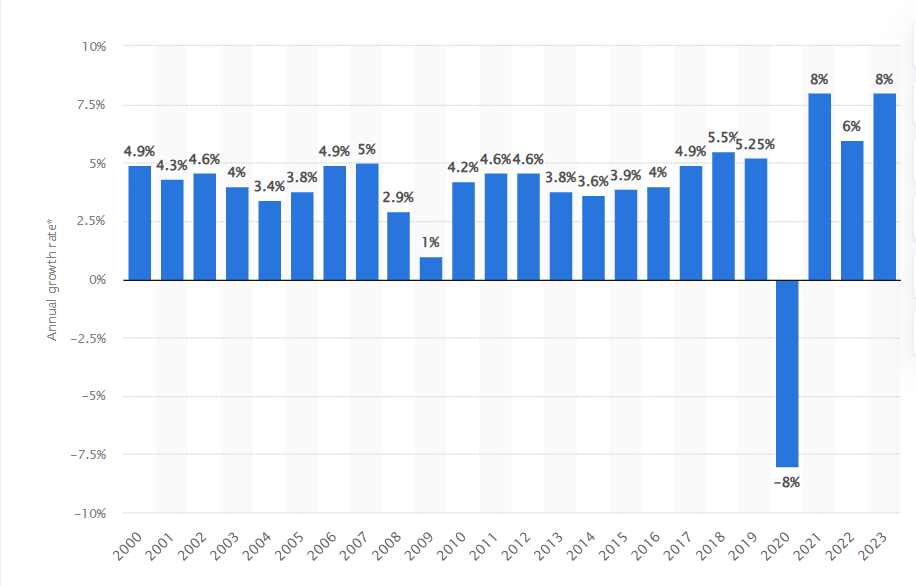
Figure 1: Growth rate of the global lip care market over the years
Seismic development indicates that the lip care market will achieve a $4.9 billion value by 2027 at a 5.9% Compound Annual Growth Rate (CAGR) (Statista, 2023). This market growth results from rising public awareness about lip care, clean beauty demand, and social media marketing trends.
The primary customer group for my brand encompasses:
- Young people between 16 and 35 view beauty alongside personal care and wellness as significant interests.
- People motivated by sustainability and ethical values seek beauty products that are environmentally friendly and do not use animal testing (Ramirez et al., 2024).
- Social media users actively track attractive beauty content and influencer endorsement trends.
- The target consumers are purchasers who plan to give and celebrate special moments with personalized lip care items for personal use and gift-giving purposes.
- My brand has a market opportunity due to customer demand for natural, property-based lip solutions that unite wellness benefits with sustainability standards.
Importance of the Business Model Canvas
A launch and expansion strategy for my lip care brand requires the Business Model Canvas (BMC) as an essential framework. My business model identifies essential business elements through
- Customer Segments – Understanding the demographics and behaviours of my target market.
- Value Proposition – Defining what makes my product unique and desirable.
- Revenue Streams – Mapping out different ways the business can generate income.
- Key Partnerships and Resources – Identifying suppliers, manufacturers, and distribution channels.
- Cost Structure – Estimating startup costs, production expenses, and operational costs.
2. Business Idea
a) Summary of Your Business Idea
People who purchase beauty and skincare products now seek items that simultaneously offer great appearance and skin nourishment. My business has established itself as a luxury lip care product brand that fills the market need with premium, natural, cruelty-free lip solutions. Customers can now acquire the entire range of lip care products, from lip glosses to lip oils and lip scrubs, together with customisable hamper boxes for comprehensive lip care (Debenedetti et al., 2024).
The company stands apart from competitors by delivering complete lip care solutions instead of limited colour and shine functions. The current market offers numerous products with synthetic substances, which can create dryness as a long-term effect. My product line upholds natural ingredients, including shea butter, jojoba oil, vitamin E, and coconut oil, to bring users hydration and repair benefits. All elements collaborate to build a lip care system that delivers beauty enhancement and complete lip well-being benefits (Martins and Marto, 2023). Shoppers can customise their purchases through selectable hamper boxes, which the brand offers along with nourishment. The company's customisable lip care sets make these products great choices as personalised presents for special events. Users who want personalised and heartfelt presents will find the brand more desirable because of its customisation features.
Integrating natural materials with effective moisturization and personalized options enables my brand to meet increasing market demand (Hossain et al., 2024). The brand addresses customers who care about beauty while focusing on clean, ethical ingredients by providing a new spa-like lip care solution.
b) Pain Points and Proposed Solutions
Traditional products have poor-quality ingredients, mainstream lip glosses don’t have enough hydration, and the product variety in the market is limited. Dry and chapped lips are one of the most common pain points caused by heavy synthetic formulas, which strip away moisture and do not deliver what your lips need (Hossain et al., 2024). Many conventional lip products give temporary hydrating and shine that sometimes must be applied incessantly throughout the day. In addition, this is neither always convenient nor addresses the cause of dryness.
The other major problem in the industry is the shortage of natural and vegan lip products. In pursuit of fewer animal-based, cruelty-free beauty brands, consumers find it difficult to find brands that meet their ethical values while producing high-performing results (Simão, Rohden and Pinto, 2022). Also, gifting is seeing a rising demand for customisable beauty experiences. Customers face many beauty brands that offer products themselves, making it challenging to build customised gift sets based on individual preferences or special occasions.
To address these challenges directly, my brand provides hydrating and nourishing lip care solutions beyond aesthetics. All the formulations are filled with high-quality natural oils and butter for long-lasting hydration and protect the lips whilst helping to keep the lips looking glossy and healthy (Sharma et al., 2023). The brand’s non-sticky, lightweight formula also differs from traditional lip glosses, which fade quickly and must be reapplied frequently. The brand appeals to ethically conscious consumers because it keeps 100% natural, cruelty-free ingredients.
c) Business model canvas
| Business Model Canvas | Description |
| Customer Segments | • Young people aged 16-35 • Ethically and sustainably conscious consumers • Social media-active users • Gift buyers seeking personalised experiences |
| Value Proposition | • Premium lip care solutions combining aesthetics with nourishment • Natural, vegan, cruelty-free ingredients • Personalised lip care hampers • Holistic approach to lip wellness |
| Channels | • E-commerce (direct website sales) • Social media platforms (Instagram, TikTok) • Influencer partnerships • Pop-up shops and beauty events |
| Customer Relationships | • Personalised customer service • Active social media engagement • Influencer community interactions • Loyalty and reward programs |
| Revenue Streams | • Sales of lip glosses, oils, scrubs • Customisable lip care hampers • Gift-box options • Collaborations or limited-edition collections |
| Key Resources | • Natural, sustainable ingredients (shea butter, jojoba oil, coconut oil) • Online store infrastructure • Packaging suppliers (eco-friendly materials) • Marketing and branding specialists |
| Key Activities | • Product formulation and testing • Marketing campaigns and social media management • Inventory management and logistics • Customer service and experience enhancement |
| Key Partnerships | • Ethical suppliers of raw materials • Packaging suppliers (sustainable packaging) • Influencers and beauty content creators • Logistics and delivery companies |
| Cost Structure | • Raw material and ingredient procurement • Manufacturing and production costs • Marketing, advertising, and branding expenses • Operational and logistics costs (packaging, shipping, warehousing) • Website development and maintenance |
Customer Segments
The lip care brand strategically targets young adults (aged 16-35), ethically conscious consumers, social media-driven beauty enthusiasts, and those searching for a personalised gifting experience (Valls and Gibert, 2022). This targeted segmentation capitalises on growing consumer demand for sustainable, ethical beauty that meets aesthetic and wellness needs.
Value Proposition
The brand offers holistic lip care solutions, blending premium aesthetics with nourishing, vegan, and cruelty-free ingredients. Its distinctive strength lies in product customisation with custom hampers, catering to consumer demand for wellness-oriented care and unique gifting needs (Valls and Gibert, 2022).
Channels
They will sell their products through a dedicated e-commerce platform online and support this with robust social media marketing and influencer collaborations. Furthermore, the direct engagement consumers will enjoy with the brand through pop-up events will strengthen their brand visibility and relationships with them (Paruthi et al., 2022).
Customer Relationships
Personalisation, responsive social media, and influencer-driven community building are the central relationships the business fosters. Customer loyalty programmes also help promote repeat purchases and brand advocacy.
Revenue Streams
The company's primary revenue sources are direct sales of lip care products and customisable hampers. There are further revenue opportunities in premium gift box, opportunities for partnerships or limited editions.
Key Resources
Our business's critical resource bases are efficient sourcing of natural ingredients, robust online sales infrastructure, eco-friendly packaging materials, and the commitment to getting targeted marketing expertise so that our brand is visible and sustains company visibility and growth (Paruthi et al., 2022).
Key Activities
The product formulation is innovated with central business activities related to social and marketing campaigns and inventories (Wichmann et al., 2022). Logistics are managed efficiently, and customer support is rendered to please the consumer.
Key Partnerships
Strategic alliances with ethical suppliers, sustainable packaging partners, critical social media beauty creators, and trusted logistics partners will be established. These relationships will assure the sustained quality of the product, strengthen brand credibility, and streamline operations (Wichmann et al., 2022).
Cost Structure
Primary costs include raw material procurement, product manufacturing, marketing and branding expenditures, eco-friendly packaging and shipping, and website management. Reasonable cost control can be a key to profitability and sustainable growth (LI, LARIMO and LEONIDOU, 2022).
d) Minimum Viable Product (MVP)
MVP:
- One Lip Gloss: Clear shade, hydrating, natural formula (jojoba oil, vitamin E).
- One Lip Oil: Moisturizing, lightweight, coconut oil-based.
- One Lip Scrub: Gentle exfoliation, shea butter, and sugar-based.
- Basic Customisable Mini Hamper: Simple eco-friendly packaging allows customers to combine these three core products.
Test Before Launch:
Pre-Launch Online Survey:
Conduct targeted social media surveys or polls with your intended audience to gauge initial interest.
Social Media Engagement and Feedback:
Share teaser images or videos of products on platforms like Instagram and TikTok.
Monitor user reactions, comments, and direct messages to gather qualitative insights.
Limited Pre-Order Campaign:
Run a small-scale pre-order or crowdfunding campaign offering early access at promotional pricing (Dong, Wang and Qin, 2023).
Track the number of pre-orders to measure actual market demand.
Influencer Product Sampling:
Distribute MVP samples to selected micro-influencers for honest reviews and early exposure.
Pop-Up Market Testing:
Host temporary stalls or events to sell products directly to consumers, collecting immediate feedback and observing real-time consumer reactions (Dong, Wang and Qin, 2023).
3. Marketing Strategy
a) Target Market Identification
Strategically positioning and marketing my premium lip care brand requires identifying the target market accurately. The most likely consumer segment is among young adults in their 16 to 35 age bracket who are well known to impact beauty industry trends heavily. As per Statista (2023), 73% of this age group of beauty consumers consider personal care routines that include several skincare and beauty products most important. The members of this group are more willing to invest in premium, ethically developed beauty products that tout the aesthetic and wellness benefits.
In addition, more and more consumers are moving towards ethical and eco-beauty products. According to Mintel's (2023) study, 65% of the beauty buyers in this set base actively search for cruelty-free and vegan products, while about 56% would buy from brands that are transparent about using natural ingredients. These preferences align with the targets, specifically those aware of and responsible for ethical consumption. The Interested segment often spends much time with brands that espouse many values, including sustainability, environmental responsibility, and animal welfare.
Additionally, it offers great insight into the behaviour of the target audience. According to Deloitte (2025), about 82 per cent of consumers aged 16 to 35 are discovered to find new beauty products through social media, including the likes of Instagram, TikTok and YouTube. This audience makes substantial purchasing decisions based on influencer endorsements, to the extent of 74% who agreed that they bought products endorsed by influencers or other trusted content creators on social media (Deloitte, 2025).
Gift-giving behaviour in the beauty industry is also part of this demographic. NIQ (2023) data indicates that 60% of young people aged 16 to 35 are swayed to acquire beauty products, exceptionally personalized or personalized prep work arrangements, and generous or significant presents for loved ones or exceptional occasions. In line with my brand’s product offer of customisable hamper boxes, the business is set to benefit from gift-buying occasions and personalised gifting trends.
Geographical data also signals tremendous opportunities within urban markets, where the younger consumer enjoys a more significant disposable income and is open to new beauty brands. As Euromonitor states (2024), the metropolitan areas of London, Manchester, and Birmingham have an increased requirement for premium natural beauty products due to trends, affluence, and campaigns promoting sustainability (Villena and Hood, 2024).
b) Campaign Planning
For top promotion of my lip care brand and to reach out to the target audience, I shall strategically harness several interconnected marketing approaches: Social Media Marketing, Influencer Collaborations, Website & E-commerce platform having a solid foundation, a pricing strategy with a kind of essence and branding strategy involving aesthetic way as a differentiating factor (Tolstoy et al., 2020). It is made up of these elements that look to create brand awareness, boost sales, and foster customer loyalty.
I will promote Social Media Marketing, which would mainly be on Instagram, TikTok, and Facebook. According to 82% of consumers (aged 16 to 35) who’ve adopted social media as a primary channel for discovering new beauty brands, products, and raves, they regularly use it (NIQ, 2024). For example, both Instagram and TikTok show incredibly high engagement with beauty content,t averaging 2.5 times more interaction than the average ad. My social media strategy will involve visually pleasing and informative content like short-form videos, tutorials on product usage, and behind-the-scenes content of product creation. Also, the audience will participate through polls, interactive stories, and constant Q&A sessions, increasing their visibility and participation (Deloitte, 2025). Weekly, the metrics that will be tracked to track success will be follower growth, post reach, engagement rates, and conversion rates from social channels.
Influencer Collaborations form another significant aspect of the campaign. Over 70% of young consumers trust recommendations from influencers, and they strongly influence purchasing decisions. Aware of this trend, my brand will start working with certain beauty micro-influencers (with an audience of around 10k – 50k followers) to capitalise on this trend. Honest reviews on authentic products, the real live demonstration and the actual video of unboxing these products will help these influencers authentically promote my products (Deloitte, 2025). With this strategy, we can create organic brand awareness, credibility, and customer trust. Referral traffic and sales from affiliate links and influencer promotional codes shall be tracked to evaluate mutual campaign effectiveness.
Website & E-commerce will be able to offer a hassle-free online shopping experience,, which is necessary as about 75% of young adults prefer to purchase their beauty products online (Deloitte, 2025). Intuitive navigation, clear product descriptions, customer reviews, high-quality visuals and simple checkout processes are some of the other things that will be present on the website. The other part of customer convenience and retention would be introducing an integrated subscription option for regular deliveries of beauty products, targeting approximately 40% of the beauty buyers who love the subscription models (Deloitte, 2025). Environmental factors related to the website, such as boost abandonment rates, order value, conversion rate, and website visits, will be tracked and continuously optimised by data analytics tools.
The pricing strategy will consequently position the brand as an affordable luxury. The price will reflect value but not at the expense of perceived quality since data has shown that about 60% of consumers aged 16 to 35 are willing to pay slightly more for premium quality skincare products (Mintel, 2023). Strategically, it will use regular promotions, bundle discounts, and seasonal sales across festive periods and gifting seasons to have higher purchase volumes, as well as to try to lure in some first-time trials.
Also, the Branding Strategy adopts aesthetic appeal, minimalistic design, and eco-conscious packaging to be in line with the needs of ethically conscious consumers. Research shows that around 65 percent of young buyers are looking for brands that have adopted sustainable practices, and packaging also plays a huge role in deciding 72 percent of such purchases in the beauty sector (Mintel, 2023).
4. Financial Plan
a) Investment and Funding Plan
To support sufficient funding in the budget to cover main startup costs and first operational costs, a premium lip care brand has to be planned financially very carefully. I expect an outlay of £15,000 to successfully launch my brand in the market. This funding is going to primarily fund these early key startup activities, including product formulation and development, packaging design and branding, marketing campaign, and the procurement of initial stock.
I have intentionally used multiple funding sources to meet this initial investment requirement. I will invest the first £5,000 from a couple of years' personal savings just to prove to myself that I am serious about this business and that I believe in this business enough to put my money on the line. Establishing personal investment helps create credibility, which shows that I’m investing personal money in helping make the company succeed (Nachyła and Justo, 2024).
To get the capital required of £10,000, they’ll combine angel investors and a targeted crowdfunding campaign. The beauty startups will also approach angel investors willing to support these innovative and sustainable beauty startups with capital, in this case, for a share of small equity (about 10-20 percent). Besides necessary capital, angel investment provides the needed capital and delivers invaluable business mentorship, industry insights and strategic guidance (Fernandez, 2025).
In addition, a crowdfunding campaign will be heralded using one of the established platforms like Kickstarter or Indiegogo, focused on the ethically conscious consumers and beauty connoisseurs who echo the brand’s ethos and adoption of sustainable praisings. With crowdfunding before any full-scale production and before the hard part of marketing, we can validate consumer demand and get brand awareness through backer engagement. Potential backers will be willing to financially support the venture with rewards-based crowdfunding such as early product access, personalised hamper boxes and exclusive discounts (Hoque, 2024).
The investment breakdown will be allocated as follows:
- Product Development & Formulation: £3,500
- Branding & Packaging Design: £3,000
- Initial Stock & Inventory: £4,500
- Marketing & Social Media Campaigns: £3,000
- Website Development & Maintenance: £1,000
b) Financial Documents
Cash Flow Forecast (First 6 Months)
The following table outlines the estimated cash inflows and outflows for the initial six-month period post-launch:
| Month | Sales (£) | Personal Investment (£) | Angel/Crowdfunding (£) | Total Inflow (£) | Expenses (£) | Net Cash Flow (£) |
| Month 1 | 800 | 5,000 | 10,000 | 15,800 | 6,000 | 9,800 |
| Month 2 | 1,000 | - | - | 1,000 | 2,500 | -1,500 |
| Month 3 | 1,500 | - | - | 1,500 | 2,000 | -500 |
| Month 4 | 2,000 | - | - | 2,000 | 2,000 | 0 |
| Month 5 | 2,500 | - | - | 2,500 | 2,000 | 500 |
| Month 6 | 3,000 | - | - | 3,000 | 2,000 | 1,000 |
| Total | 10,800 | 5,000 | 10,000 | 25,800 | 16,500 | 9,300 |
Profit and Loss Statement (Year 1)
The projected profit and loss statement below highlights expected annual revenue, costs, and profit:
| Items | Amount (£) |
| Revenue | |
| Product Sales | 30,000 |
| Custom Hampers & Gift Sets | 6,000 |
| Total Revenue | 36,000 |
| Costs & Expenses | |
| Cost of Goods Sold (COGS) | 14,000 |
| Marketing & Advertising | 5,000 |
| Packaging & Branding | 3,000 |
| Website & Online Maintenance | 2,000 |
| Operating Expenses (Utilities, Supplies) | 3,000 |
| Total Expenses | 27,000 |
| Net Profit (Year 1) | 9,000 |
Break-even Analysis
This table calculates the point at which my business becomes profitable, covering fixed and variable costs through revenue:
| Items | Amount (£) |
| Fixed Costs (annual total) | 13,000 |
| Average Price per Unit | 15 |
| Variable Cost per Unit | 5 |
| Contribution Margin per Unit (Price - Variable Cost) | 10 |
| Break-even Point (Fixed Costs ÷ Contribution Margin) | 1,300 units |
5. Industry & Risk Analysis
a) Industry Situation
PESTLE Analysis
| Factor | Description and Impact on Lip Care Brand |
| Political | Regulations on cosmetic ingredients and animal testing influence selection and market entry (Vieira et al., 2024). Compliance with cruelty-free regulations provides opportunities for ethical brand positioning. |
| Economic | Rising disposable income, especially among young adults, boosts purchasing power and willingness to spend on premium beauty products, creating favourable conditions for brand growth (Gomes, Lopes and Nogueira, 2023). |
| Social | Increasing consumer demand for natural, cruelty-free, and ethically sourced beauty products aligns with brand values and offerings, enhancing brand appeal and consumer acceptance (Gomes, Lopes and Nogueira, 2023). |
| Technological | Innovations in lip-care product formulations allow the development of superior, effective natural products, providing a competitive advantage through enhanced product quality and efficacy (Mawazi et al., 2022). |
| Legal | Strict FDA and EU cosmetic regulations require rigorous compliance in labelling, ingredients, and product safety testing (U.S. Food and Drug Administration, 2022). Adhering carefully to these standards mitigates legal risks and builds consumer trust. |
| Environmental | Consumer preference shifting towards sustainable, eco-friendly packaging necessitates adopting recyclable and biodegradable packaging solutions, aligning with sustainability values to attract eco-conscious buyers (Saveth, 2023). |
#BBD0E0 »
SWOT analysis exposes some of the best factors determining the scope of my lip brand market. In terms of strengths, the brand offers unique, cruelty-free product formulations and sustainable packaging, and it is in line with a growing consumer demand for ethical beauty products. However, the products face competition from established brands, high initial marketing spending and a lack of brand awareness on launch (Özturan, Deleersnyder and Özsomer, 2023). Strategic influencer partnerships, the implementation of subscription models and the rising demand for personalised gifting options offer opportunities to mitigate these weaknesses. At the same time, business growth and maintaining a market position are to be sustained through proactive management of external threats such as market saturation, regulatory compliance issues and potential supply chain disruptions.
b) Risk Management
Competition is extremely stiff in the beauty and cosmetics industry, as these are already monopolies characterised by high competition in the market, with established brands having already monopolised market share (Özturan, Deleersnyder and Özsomer, 2023). To tackle this, I will highlight how I will differentiate through high-quality natural ingredients, cruelty-free formulations, and strong branding that communicates my brand’s unique value proposition. Regularly emphasizing these differences in the context of marketing campaigns and product messaging will allow my brand to position itself as a desirable alternative to other companies in the market. In addition, using influencer partnerships and engaging with consumers on social media platforms will help to strengthen brand visibility and credibility and provide a competitive advantage and brand loyalty (Eslami, Ghasemaghaei and Hassanein, 2022).
Regulatory compliance, primarily related to safety standards for cosmetics enforced by the EU and FDA, is another significant risk. If the product is non-compliant, the manufacturer risks fines, recalls of the product or damage to brand reputation. To mitigate this risk, my brand will filter, assess, test, and audit with absolute rigour regarding legal guidelines, ensuring the ingredient labelling will always be accurate, the product has been thoroughly tested for safety, and the product manufacturing processes will undergo regular review by auditors (Singh, Chakraborty and Sehgal, 2023). Furthermore, they will work with qualified industry experts to continue the brand to ensure ongoing compliance and to monitor the regulatory changes to protect the brand further. A trust factor will be developed between the company and the customers through transparent communication about the safety standards and compliance measures (Gamerdinger, Just and Valiant, 2023).
Another potential risk is market acceptance, which could be high for a new entrant in a highly competitive industry, such as the beauty industry. The customer adoption and positive perception of my product determine the success of my products (Reddy, 2023). Strong and targeted marketing efforts will be deployed, such as pre-launch market testing, active engagement with consumers on Social media, and continuous improvements based on consumer feedback on product offerings. Introducing additional introductory promotions, attractive packaging, and a focus on ethical and sustainability values will further aid trial and adoption by the consuming public.
Finally, production delays caused by supplier disruption or manufacturing problems can make the brand unreliable and unsatisfied with customers. Therefore, my business will only form partnerships with manufacturers that are reliable and proven providers of timely production and delivery (Reddy, 2023).
6. Conclusion & Recommendations
Thus, the strategic alignment with the launch of this premium lip care brand is in line with the emerging market opportunities that stem from consumer awareness of ethical beauty, sustainability and holistic wellness. The detailed industry and market analysis points to potential growth in targeted customer segments (mainly 16–35-year-olds seeking cruelty-free natural beauty products). With a well-defined marketing strategy involving social media marketing, influencer partnership, strong branding and an efficient pricing strategy, the brand would be uplifted enough on the darker side of the beauty market's competitive industry.
Financial projections show a realistic growth potential, with profitability coming up within the first year and initial funding managed through personal savings, angel investors, and crowdfunding. Despite these risks, high competition, which among many may pose the greatest threat, regulatory compliance challenges, market acceptance and production delays make risk management a must-do, hence the need for differentiation to help overcome the risks, strict compliance practices, active consumer engagement and robust supply chain planning.
Recommendations:
- Maximise Digital Presence:
- Keep investing strategically in social media marketing to enhance brand value, utilize a network of influencers, and create content appealing to people, such as tutorials, user reviews, and interactive customer communication (Guerrero, 2023).
- Emphasise Ethical Branding:
- Establish clear and communicated ethics and sustainability standards through packaging, marketing materials, and online channels to increase consumer trust and brand credibility.
- Expand Product Range Strategically:
- Depending on consumer insights and feedback, bring out more complementary lip care products, new shades, and limited editions around the seasons, keeping this relevant and maintaining customers' interest (Ofoedu et al., 2021).
References
- Debenedetti, A., Philippe, D. and Dion, D. (2024). Balancing exclusivity and inclusivity through the strategic domestication of the luxury retail experience. International journal of research in marketing. [online] doi:https://doi.org/10.1016/j.ijresmar.2024.05.001.
- Deloitte (2025). India’s changing discretionary spending: Key insights for brands. [online] Available at: https://www2.deloitte.com/content/dam/Deloitte/in/Documents/consumer-business/in-cb-indias-discretionary-noexp.pdf [Accessed 20 Mar. 2025].
- Dong, W., Wang, Y. and Qin, J. (2023). An empirical study on impulse consumption intention of livestreaming e-commerce: The mediating effect of flow experience and the moderating effect of time pressure. Frontiers in Psychology, 13. doi:https://doi.org/10.3389/fpsyg.2022.1019024.
- Eslami, S.P., Ghasemaghaei, M. and Hassanein, K. (2022). Understanding consumer engagement in social media: The role of product lifecycle. Decision Support Systems, [online] 162(0167-9236), p.113707. doi:https://doi.org/10.1016/j.dss.2021.113707.
- Fernandez, V. (2025). Angel investments of small family business entrepreneurs: cross-country evidence. Financial Innovation, 11(1). doi:https://doi.org/10.1186/s40854-024-00700-9.
- Gamerdinger, A., Just, S.N. and Valiant, M. (2023). Healthy transparency: Dynamic interrelations between credibility, transparency, and trust in the context of Danish public authorities’ COVID-19 communication. Social Sciences & Humanities Open, 8(1), pp.100688–100688. doi:https://doi.org/10.1016/j.ssaho.2023.100688.
- Gomes, S., Lopes, J.M. and Nogueira, S. (2023). Willingness to Pay More for Green products: a Critical Challenge for Gen Z. Journal of Cleaner Production, [online] 390(136092). doi:https://doi.org/10.1016/j.jclepro.2023.136092.
- Guerrero, K. (2023). An Analysis of TikTok’s Digital Marketing Cap an Analysis of TikTok’s Digital Marketing Cap. [online] Available at: https://digitalcommons.lindenwood.edu/cgi/viewcontent.cgi?article=1532&context=theses [Accessed 20 Mar. 2025].
- Hoque, Md.M. (2024). Crowdfunding for innovation: a comprehensive empirical review. Future Business Journal, 10(1). doi:https://doi.org/10.1186/s43093-024-00387-5.
- Hossain, M.T., Shahid, M.A., Limon, M.G.M., Hossain, I. and Mahmud, N. (2024). Techniques, applications, and challenges in textiles for a sustainable future. Journal of Open Innovation: Technology, Market, and Complexity, [online] 10(1), p.100230. doi:https://doi.org/10.1016/j.joitmc.2024.100230.
- LI, F., LARIMO, J. and LEONIDOU, L.C. (2022). Social Media in Marketing research: Theoretical bases, Methodological aspects, and Thematic Focus. Psychology & Marketing, 40(1), pp.124–145. doi:https://onlinelibrary.wiley.com/doi/full/10.1002/mar.21746.
- Martins, A.M. and Marto, J.M. (2023). A sustainable life cycle for cosmetics: From design and development to post-use phase. Sustainable Chemistry and Pharmacy, [online] 35(35), p.101178. doi:https://doi.org/10.1016/j.scp.2023.101178.
- Mawazi, S.M., Azreen Redzal, N.A.B., Othman, N. and Alolayan, S.O. (2022). Lipsticks History, Formulations, and Production: A Narrative Review. Cosmetics, 9(1), p.25. doi:https://doi.org/10.3390/cosmetics9010025.
- Mintel (2023). How can beauty companies make the most of veganisms rising popularity? | Mintel. [online] www.mintel.com. Available at: https://www.mintel.com/insights/beauty-and-personal-care/how-can-beauty-companies-make-the-most-of-veganisms-rising-popularity/ [Accessed 20 Mar. 2025].
- Nachyła, P. and Justo, R. (2024). How do impact investors leverage non-financial strategies to create value? An impact-oriented value framework. Journal of Business Venturing Insights, 21, pp.e00435–e00435. doi:https://doi.org/10.1016/j.jbvi.2023.e00435.
- NIQ (2024). Navigating beauty trends across generations: A glimpse into our latest report. [online] NIQ. Available at: https://nielseniq.com/global/en/insights/commentary/2024/navigating-beauty-trends-across-generations-a-glimpse-into-our-latest-report/ [Accessed 20 Mar. 2025].
- Ofoedu, C.E., Iwouno, J.O., Ofoedu, E.O., Ogueke, C.C., Igwe, V.S., Agunwah, I.M., Ofoedum, A.F., Chacha, J.S., Muobike, O.P., Agunbiade, A.O., Njoku, N.E., Nwakaudu, A.A., Odimegwu, N.E., Ndukauba, O.E., Ogbonna, C.U., Naibaho, J., Korus, M. and Okpala, C.O.R. (2021). Revisiting food-sourced vitamins for consumer diet and health needs: a perspective review, from vitamin classification, metabolic functions, absorption, utilization, to balancing nutritional requirements. PeerJ, [online] 9, p.e11940. doi:https://doi.org/10.7717/peerj.11940.
- Özturan, P., Deleersnyder, B. and Özsomer, A. (2023). Brand advertising competition across economic cycles. International Journal of Research in Marketing, [online] 41(2). doi:https://doi.org/10.1016/j.ijresmar.2023.11.001.
- Paruthi, M., Kaur, H., Islam, J.U., Rasool, A. and Thomas, G. (2022). Engaging consumers via online brand communities to achieve brand love and positive recommendations. Spanish Journal of Marketing - ESIC, 27(2). doi:https://doi.org/10.1108/sjme-07-2022-0160.
- Ramirez, S., Cullen, C., Ahdoot, R. and Scherz, G. (2024). The Primacy of Ethics in Aesthetic Medicine: A Review. Plastic and Reconstructive Surgery – Global Open, [online] 12(6), p.e5935. doi:https://doi.org/10.1097/GOX.0000000000005935.
- Reddy, K.Pradeep. (2023). Consumers perception on green marketing towards eco-friendly fast moving consumer goods. International journal of engineering business management, [online] 15(15). Available at: https://journals.sagepub.com/doi/10.1177/18479790231170962.
- Saveth, B. (2023). Embracing Sustainability: the Rise of Eco-Friendly Packaging Solutions. Forbes. [online] Available at: https://www.forbes.com/councils/forbesbusinesscouncil/2023/06/23/embracing-sustainability-the-rise-of-eco-friendly-packaging-solutions/ [Accessed 20 Mar. 2025].
- Sharma, A., Agarwal, P., Sebghatollahi, Z. and Mahato, N. (2023). Functional Nanostructured Materials in the Cosmetics Industry: A Review. ChemEngineering, [online] 7(4), p.66. doi:https://doi.org/10.3390/chemengineering7040066.
- Simão, S.A.V., Rohden, S.F. and Pinto, D.C. (2022). Natural claims and sustainability: The role of perceived efficacy and sensorial expectations. Sustainable Production and Consumption, [online] 34, pp.505–517. doi:https://doi.org/10.1016/j.spc.2022.09.026.
- Singh, B.J., Chakraborty, A. and Sehgal, R. (2023). A systematic review of industrial wastewater management: Evaluating challenges and enablers. Journal of Environmental Management, [online] 348, p.119230. Available at: https://www.sciencedirect.com/science/article/pii/S0301479723020182.
- Statista (2023). Annual growth rate of the cosmetics market worldwide | Statistic. [online] Statista. Available at: https://www.statista.com/statistics/297070/growth-rate-of-the-global-cosmetics-market/ [Accessed 18 Mar. 2025].
- Tolstoy, D., Nordman, E.R., Hånell, S.M. and Özbek, N. (2020). The development of international e-commerce in retail SMEs: An effectuation perspective. Journal of World Business, [online] 56(3), p.101165. doi:https://doi.org/10.1016/j.jwb.2020.101165.
- U.S. Food and Drug Administration (2022). FDA authority over cosmetics: how cosmetics are not FDA-approved. [online] U.S. Food and Drug Administration. Available at: https://www.fda.gov/cosmetics/cosmetics-laws-regulations/fda-authority-over-cosmetics-how-cosmetics-are-not-fda-approved-are-fda-regulated [Accessed 20 Mar. 2025].
- Valls, A. and Gibert, K. (2022). Women in Artificial Intelligence. Applied Sciences, 12(19), p.9639. doi:https://doi.org/10.3390/app12199639.
- Vieira, D., Duarte, J., Vieira, P., Beatriz, M., Figueiras, A., Lohani, A., Veiga, F. and Mascarenhas-Melo, F. (2024). Regulation and Safety of Cosmetics: Pre- and Post-Market Considerations for Adverse Events and Environmental Impacts. Cosmetics, [online] 11(6), pp.184–184. doi:https://doi.org/10.3390/cosmetics11060184.
- Villena, K. and Hood, E. (2024). Top Trends Shaping the Beauty and Personal Care Industry in 2024. [online] Euromonitor. Available at: https://www.euromonitor.com/article/top-trends-shaping-the-beauty-and-personal-care-industry-in-2024 [Accessed 20 Mar. 2025].
- Wichmann, J.R.K., Uppal, A., Sharma, A. and Dekimpe, M.G. (2022). A Global Perspective on the Marketing Mix across Time and Space. International Journal of Research in Marketing, [online] 39(2), pp.502–521. doi:https://doi.org/10.1016/j.ijresmar.2021.09.001.