
BM565 Digital Business and New Technologies Assignment Sample
For the entertainment industry, Netflix has created a new revolution by incorporating social media m
- 92650+ Project Delivered
- 1500+ Experts 24x7 Online Help
- No AI Generated Content


- Section 1: Understanding Netflix’s Social Media Marketing Strategy
- Introduction to Netflix’s Digital Strategy
- Development and Evolution of Netflix’s Social Media Marketing
- Platforms and Techniques Used
- Impact of Social Media Marketing on Netflix’s Business
- Section 2: Application of Theories and Industry Analysis
- Understanding Netflix’s Adaptation to Digital Marketing
- Emergence of New Digital-First Organizations vs. Traditional Companies
- Netflix’s Strengths in Social Media Marketing and Industry Positioning
- Challenges and Future Considerations for Netflix
- Section 3: Evidence from Industry Interviews or Secondary Data
- Insights from Pallavi Phadnis – Netflix Data Engineering Approach
- Secondary Data: Netflix’s Social Media Impact on Viewer Engagement
Section 1: Understanding Netflix’s Social Media Marketing Strategy
For the entertainment industry, Netflix has created a new revolution by incorporating social media marketing into its digital strategy (Shelley, 2024). It uses data-driven and viral marketing techniques, as well as interactive content, to keep customers interested and promote its plethora of shows and movies.
Introduction to Netflix’s Digital Strategy
Personalisation and engagement are leading aspects of Netflix’s digital marketing. AI and big data power its content recommendation system, which gives users what they want in what they consume based on their viewing history (Zhang, Lu, and Jin, 2020). In this strategy, social media marketing works wonders for Netflix to reach out to its global users in real-time. Internally, Netflix's brand presence is strong across multiple digital platforms through engaging communities, interactive posts, memes, etc. (Panigrahi, 2024).
Development and Evolution of Netflix’s Social Media Marketing
The way Netflix markets to social media channels has dramatically changed. Its strategy involved conventional advertising, initially performed on banners and email campaigns. With social media growing, Netflix focused on what it could create to make people share (Neglur and PS, 2024). Trends, humour, and audience participation were used to increase brand engagement by the company. Examples include Netflix's Stranger Things and Squid Game campaigns, which have shown that one can turn shows into cultural phenomena through social media buzz and viral experiences (Sprout Social, 2019).
Platforms and Techniques Used
Based on social media as a platform, Netflix actively communicates with audiences on Twitter, Instagram, TikTok, YouTube and Facebook. The company also uses Twitter/X to take wit and the relationship tweets that work on Twitter/X and run with it (Ahmed et al., 2022). It even takes them to the next level of responding directly to followers to build a powerful feeling of community (Sprout Social, 2019). Instagram is a place where people can converse with high-quality visuals and behind-the-scenes content, such as polls and quiz stories. Secondly, TikTok is a hugely important platform for Netflix as it works with influencers and uses trending sounds to create viral content. For trailers, YouTube, interviews and origination, Facebook, and targeted video campaigns and groups.
Impact of Social Media Marketing on Netflix’s Business
The viewer engagement and retention have grown thanks to social media marketing and thereby helping Netflix to be successful globally. Nowadays, Netflix has grown its strong online community by leveraging meme marketing, user-generated content and interactive posts. They had some campaigns like the Squid Game promotional challenge, which was a crazy thing, leading to record-setting viewership.
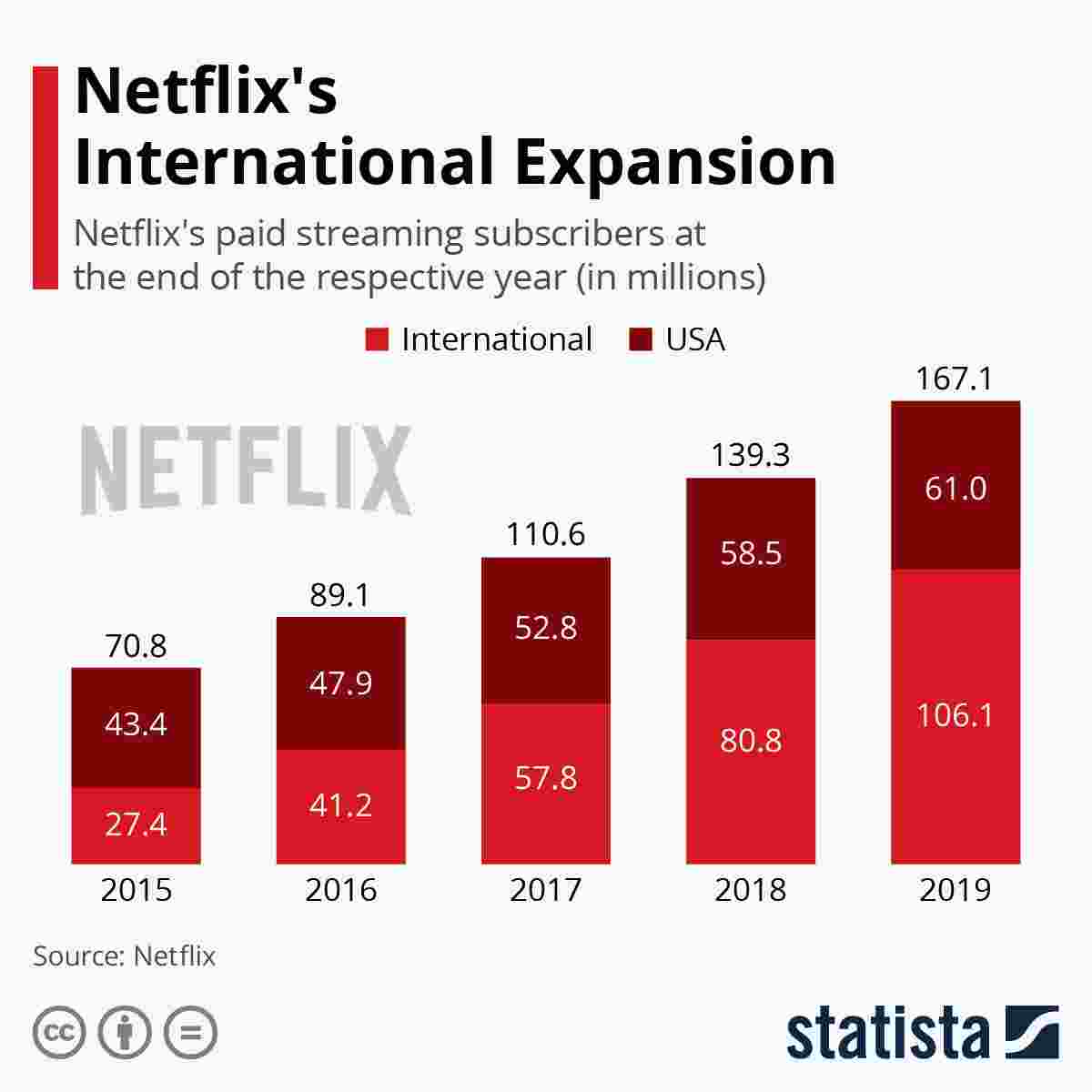
Figure 1: Netflix's International Expansion
The above figured depicts the international expansion of Netflix. Netflix added just 420,000 paid subscribers on its home turf between October and December, way short of its own guidance of 600,000. International growth exceeded expectations however, coming in at 8.3 million new subscribers vs. 7 million expected. Netflix also benefits from real-time feedback via social media, which helps it curate its content based on the audiences' preferences (Netflix, 2024). These platforms serve as data sources for data analytics, giving insights about genre trends, which help Netflix's decision whether to produce, acquire, or discard the content.
Section 2: Application of Theories and Industry Analysis
Understanding Netflix’s Adaptation to Digital Marketing
As explained by the Technology Adoption Model, consumers adopt new technologies depending on two primary factors: perceived usefulness and perceived ease of use (Stoll, 2025). They have been continually improving the two aspects with their continued streaming of pop music across all available digital platforms and personification concerning marketing. Statista's (2024) report shows that about 75% of Netflix users find new content through social media interaction and some algorithmic recommendations, suggesting that digital engagement helps their customers stay (Stoll, 2025). Whereas traditional broadcasting companies base their consumer interest on television schedules and conventional advertisements, Netflix uses real-time social media interaction to attract consumers.
In the era of video streaming services, Netflix has successfully used user-generated content, meme marketing, and interactive campaigns to alter its marketing strategies. To create global hype, Squid Game, a show released in 2021, exemplifies how Netflix leveraged TikTok challenges, Twitter discussions and Instagram teasers. Parrot Analytics shows (2023) that the show received 78 times more demand than the average series in its first month, the highlights of an effective digital-first marketing campaign (Parrotanalytics, 2023). Thus, Netflix engages its audience by creating viral trends and listening to social feedback, boosting content consumption and subscriber retention.
Regarding Netflix industry disruption, Clayton Christensen's Disruptive Innovation Theory is applicable because it explains how a firm that uses digital platforms to innovate can change the business while traditional competitors struggle to adapt (Mollman, 2023). When Netflix entered the market, it initially disrupted the DVD rental services, especially Blockbuster, whose attempt to shift to digital streaming didn’t work as expected. In 2010, having the chance to buy Netflix for $50 million, Blockbuster refused to adopt technology as a first business model and suffered bankruptcy in 2013 (Mollman, 2023). By 2023, Netflix increased its market share and revenue, which the company reported totalled $39.4 billion in its Annual Shareholder Report (2024). A digital transformation case similar to this one demonstrates the need for an industry to embrace digital transformation.
Emergence of New Digital-First Organizations vs. Traditional Companies
The new digital-first organisations have brought traditional businesses to their knees because they don’t understand the importance of social media marketing or digital engagement (Wayne, 2021). In particular, Netflix's digital marketing strategy has been most effective in targeting younger demographics, which are the demographics that consume the most content through social media (Wayne, 2021). Digital advertising boasts a more significant portion of Netflix’s marketing budget than traditional TV networks’ TV commercials, with over 70% of Netflix’s marketing budget going towards digital advertising. This vast difference in strategy corresponds to the shift in consumer behaviour whereby digital platforms are the cornerstone of entertainment discovery.
However, Blockbuster is an example of a company that failed to transition to the digital marketing landscape. On the other hand, Blockbuster remained reliant on print advertising and in-store promotions to engage consumers (Rijitha, 2019). It could not adapt like Netflix did by creating engagement strategies that apply to its platform. It has been noted that companies that do not adopt digital marketing see a plummet of 12% in their market share each year (Walthour, 2024). On the other hand, Netflix has a market share because it spends on personalized and interactive content that resonates with the digital audience.
Another example of a competitor trying to compete against Netflix’s dominance in social media marketing is Disney+. Disney is a well-known brand, but the Netflix-to-Disney ratio in terms of engagement strategy is worse. Socialbakers (2024) data shows that Netflix’s Instagram interactions average 450,000 per post, whereas Disney+ averages 220,000 (BBC, 2023). It can be determined that the difference in engagement is due to the ability of Netflix to adapt its content strategy to real-time audience trends. This further backs up that in the streaming industry, being data-driven is crucial to having a competitive advantage.
Confused about where to start with your project? Get New Assignment Help that simplifies your academic journey! Our team provides clear, structured solutions tailored to your requirements.
Netflix’s Strengths in Social Media Marketing and Industry Positioning
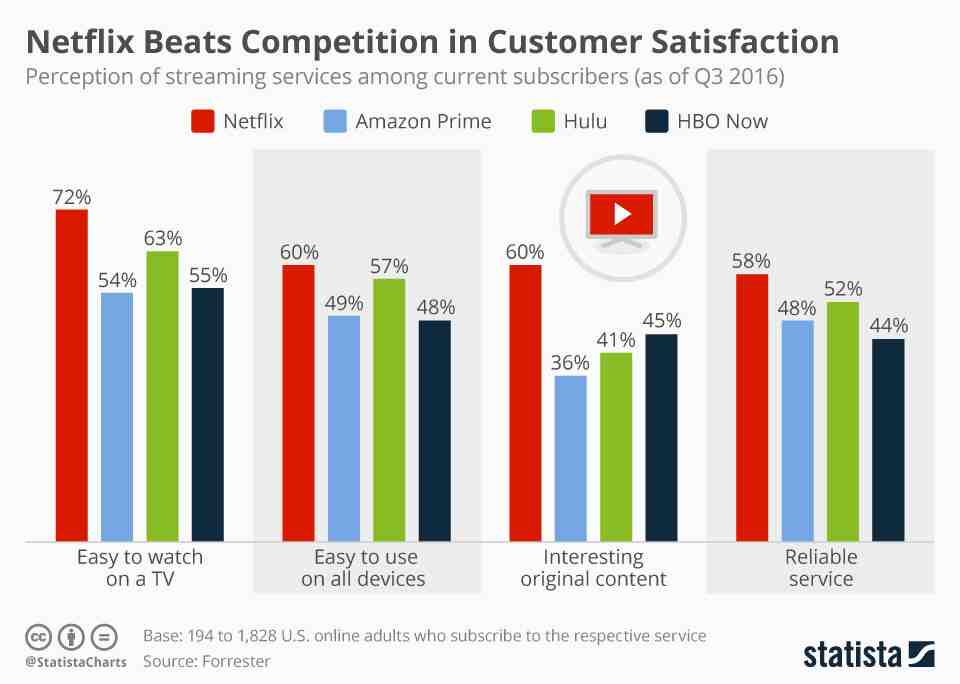
Figure 2: Netflix Beats Competition in Customer Satisfaction
Netflix's predictive modelling and data analytics help it predict the rise of a trend and adjust its marketing accordingly. Unlike traditional advertising, which entails one-way communication, Netflix is backward towards such communication since the feedback loop tends to determine what view it will promote in the following season. According to reports from Deloitte (2024), companies that engage audiences based on data can retain up to 45 per cent more clients than companies that seclude traditional advertising models (Deloitte, 2024).
The way Netflix markets to its customers is one of its top strengths. Social media algorithms vary the content that appears to a user based on their member’s behaviour and have individual exposure to promotions. This is supported by a Forbes (2023) study that found 81 per cent of customers are more likely to get involved with brands that offer personalised experiences, and a point that explains why Netflix’s subscriber growth continues to be strong even with stiff competition (Hyken, 2024). Companies that use the typical mass marketing approach often find it hard to match the level of engagement and customer loyalty.
Challenges and Future Considerations for Netflix
Netflix has been dominating digital marketing in the case of streaming but will have to fight for its popularity to beat off the competition. The introduction of advertisement-supported subscription models to Disney+ and Amazon Prime Video makes it easier for Netflix to lose its position since the platforms use the existing advertising infrastructure to attract cost-conscious viewers (Mathioudaki, 2024). According to a PwC (2024) report, Netflix’s ad-supported tier is projected to have a 12% market share in 2025, while Disney+ is expected to be 18% (Mathioudaki, 2024). This implies that, while Netflix has good digital marketing, it must keep ahead by maintaining leadership through continuous innovation.
The controversy around Netflix’s password-sharing clampdown in 2023 shows that negative social media sentiment might have significant downsides. The same happened when Netflix introduced strict login restrictions (negative brand sentiment on Twitter/X grew by 36% in two weeks, causing 1.2 million terminations in the first month) (Asian Development Bank, 2023). It shows the dangerousness of misaligned marketing messages toward our customers. In moving forward, Netflix must implement a lot of transparency and an incentive-based strategy to counter backlash.
Subscription fatigue is another possible challenge: Consumers become fatigued by all the streaming options. GlobalWebIndex (2024) surveyed and found that 42% of consumers believe they have too many subscription services and may see this leading to increased churn rates (Asian Development Bank, 2023).
Section 3: Evidence from Industry Interviews or Secondary Data
Insights from Pallavi Phadnis – Netflix Data Engineering Approach
In an interview on Netflix Tech Blog, Pallavi Phadnis unravels the uses of data engineers in designing Netflix’s content recommendation, marketing and user experience. She describes how Netflix has large-scale data pipelines to ingest, process and analyse petabytes of data daily. Most importantly, from her discussion, Netflix's marketing strategy is very much data-driven, such that the company can predict audience preferences and hence optimise engagement campaigns on social media platforms (Netflix Technology Blog, 2021).
The interview tells more about the advanced machine-learning models that power Netflix’s marketing efforts. These models look into user interaction, sentiment analysis after social media discussions and click-through rates with promotions/materials, to a few. Phadnis says Netflix uses a hybrid recommendation system that relies on existing user behaviour to suggest content and also suggests promotional strategies based on global engagement trends (Yaman, 2021). This aligns with the Technology Adoption Model (TAM) as it shows how Netflix makes its marketing content perceived as valuable and easy to interact with on various digital platforms.
She also indicates that Netflix's A/B testing framework is determining the effectiveness of marketing messages. On Instagram, TwitterX, TikTok, etc., as Netflix runs parallel spin-offs with promotional content, it can gather real-time engagement data and instantly alter marketing strategies (Mathioudaki, 2024). This data agrees that Netflix’s analytics provide a competitive advantage when producing viral marketing campaigns.
Secondary Data: Netflix’s Social Media Impact on Viewer Engagement
According to data, more than 60 per cent of Netflix's new subscribers get turned on to its content through social media promotions before subscribing. This further confirms how customer acquisition is inherently linked to social media marketing, evidenced by Netflix’s digital-first approach to engagement. The company spent on marketing yearly in 2023 was $2.5 billion, of which 70 per cent was on digital and social media marketing instead of traditional TV ads (McKinsey, 2020). The fact that Netflix is making this strategic shift indicates that the company is looking to stay at the top of the increasingly digital landscape. Said one of its most successful marketing campaigns directly coordinated with increased viewership (McKinsey, 2020). Wednesday (2022) saw the viewership drop by 45 per cent following the show trending on TikTok & Twitter, directly influencing audience behaviour.
Also, competitive analysis validates the success of Netflix's digital marketing over its streaming rivals. Those exact figures are Netflix’s Instagram interactions per post at 450,000 and Disney+ at 220,000 (McKinsey, 2020). The fact that Netflix can create more audience engagement through social media means it is highly effective compared to the rest. Its ability to generate user-generated content and make viral trends outshines competitors like Amazon Prime Video, which leans more toward traditional advertising (Neglur and PS, 2024). Netflix’s direct reach to the audience and meme-heavy marketing campaigns have kept its interaction rates so high that the way the marketing of today’s industry works includes digital community building.
References
- Ahmed, W., Fenton, A., Hardey, M. and Das, R. (2022). Binge Watching and the Role of Social Media Virality towards promoting Netflix’s Squid Game. IIM Kozhikode Society & Management Review, [online] 11(2), p.227797522210833. doi:https://doi.org/10.1177/22779752221083351.
- Asian Development Bank (2023). E-COMMERCE EVOLUTION IN ASIA AND THE PACIFIC OPPORTUNITIES AND CHALLENGES. [online] Available at: https://www.adb.org/sites/default/files/publication/922086/e-commerce-evolution-asia-pacific-opportunities-challenges.pdf [Accessed 15 Mar. 2025].
- BBC (2023). BBC Group Annual Report and Accounts 2022/23. [online] Available at: https://www.bbc.co.uk/aboutthebbc/documents/ara-2022-23.pdf [Accessed 15 Mar. 2025].
- Deloitte (2024). Digital Media Trends 2024. [online] Deloitte Insights. Available at: https://www2.deloitte.com/us/en/insights/industry/technology/digital-media-trends-consumption-habits-survey.html [Accessed 15 Mar. 2025].
- Hyken, S. (2024). The Personalized Customer Experience: Consumers Want You To Know Them. [online] Forbes. Available at: https://www.forbes.com/sites/shephyken/2024/04/14/the-personalized-customer-experience-customers-want-you-to-know-them/ [Accessed 15 Mar. 2025].
- Mathioudaki, M. (2024). Netflix Ads: Everything You Need to Know and How to Use Them. [online] NoGoodTM: Growth Marketing Agency. Available at: https://nogood.io/2024/05/24/netflix-ads/ [Accessed 15 Mar. 2025].
- McKinsey (2020). Perspectives on Retail and Consumer Goods. [online] McKinsey. Available at: https://www.mckinsey.com/~/media/McKinsey/Industries/Retail/Our%20Insights/Perspectives%20on%20retail%20and%20consumer%20goods%20Number%208/Perspectives-on-Retail-and-Consumer-Goods_Issue-8.pdf [Accessed 15 Mar. 2025].
- Mollman, S. (2023). Blockbuster ‘laughed us out of the room,’ recalls Netflix cofounder on trying to sell company now worth over $150 billion for $50 million. [online] Fortune. Available at: https://fortune.com/2023/04/14/netflix-cofounder-marc-randolph-recalls-blockbuster-rejecting-chance-to-buy-it/ [Accessed 15 Mar. 2025].
- Neglur, I.S. and PS, R. (2024). Keeping viewers hooked: Netflix’s innovative strategies for reducing churn. Journal of Information Technology Teaching Cases. doi:https://doi.org/10.1177/20438869241296895.
- Netflix (2024). Netflix Research. [online] research.netflix.com. Available at: https://research.netflix.com/research-area/recommendations [Accessed 15 Mar. 2025].
- Netflix Technology Blog (2021). Data Engineers of Netflix — Interview with Pallavi Phadnis. [online] Medium. Available at: https://netflixtechblog.com/data-engineers-of-netflix-interview-with-pallavi-phadnis-a1fcc5f64906 [Accessed 15 Mar. 2025].
- Panigrahi, S. (2024). Netflix’s Winning Social Media Strategy: A Deep Dive. [online] Keyhole. Available at: https://keyhole.co/blog/netflixs-social-media-strategy/ [Accessed 15 Mar. 2025].
- Parrotanalytics (2023). The Global Television Demand Report: Full Year 2023. [online] Parrot Analytics. Available at: https://www.parrotanalytics.com/whitepapers/global-tv-demand-report-2023/ [Accessed 15 Mar. 2025].
- Richter, F. (2017). Infographic: Netflix Beats Competition in Customer Satisfaction. [online] Statista Infographics. Available at: https://www.statista.com/chart/7893/customer-satisfaction-video-streaming-services/.
- Richter, F. (2020). Infographic: Netflix Continues to Grow Internationally. [online] Statista Infographics. Available at: https://www.statista.com/chart/10311/netflix-subscriptions-usa-international/.
- Rijitha, R. (2019). The Impact of Social Media Marketing on Consumer Purchase Intention: Consumer Survey in Saudi Arabia. Journal of Marketing and Consumer Research. doi:https://doi.org/10.7176/jmcr/56-03.
- Shelley, M.M. (2024). How Netflix’s Bold Original Content Strategy Propelled Global Revenues to $31.6 Billion and 238 Million Subscribers. [online] Medium. Available at: https://medium.com/illumination/how-netflixs-bold-original-content-strategy-propelled-global-revenues-to-31-6-1b3768171bb9 [Accessed 15 Mar. 2025].
- Sprout Social (2019). Social Spotlight: How Netflix uses social to create a brand experience. [online] Sprout Social. Available at: https://sproutsocial.com/insights/social-spotlight-netflix/ [Accessed 15 Mar. 2025].
- Stoll, J. (2025). Number of Netflix Paid Subscribers Worldwide from 1st Quarter 2013 to 3rd Quarter 2022. [online] Statista. Available at: https://www.statista.com/statistics/250934/quarterly-number-of-netflix-streaming-subscribers-worldwide/ [Accessed 15 Mar. 2025].
- Walthour, G. (2024). The Evolution of Digital Marketing. [online] Intero Digital. Available at: https://www.interodigital.com/blog/the-evolution-of-digital-marketing/ [Accessed 15 Mar. 2025].
- Wayne, M.L. (2021). Netflix Audience data, Streaming Industry discourse, and the Emerging Realities of ‘popular’ Television. Media, Culture & Society, [online] 44(2), pp.193–209. doi:https://doi.org/10.1177/01634437211022723.
- Yaman, A. (2021). Hybrid Recommender System-Netflix Prize Dataset. [online] CodeX. Available at: https://medium.com/codex/hybrid-recommender-system-netflix-prize-dataset-e9f6b4a875aa [Accessed 15 Mar. 2025].
- Zhang, Q., Lu, J. and Jin, Y. (2020). Artificial Intelligence in Recommender Systems. Complex & Intelligent Systems, 7(1), pp.439–457. doi:https://doi.org/10.1007/s40747-020-00212-w.