
CBB550 Disease and Immunity Case Study
Develop your understanding of how infectious agents interact with the immune system through realistic case studies that link disease mechanisms, host responses, diagnosis and treatment.
- 92650+ Project Delivered
- 1500+ Experts 24x7 Online Help
- No AI Generated Content


- Q5. Case Study Analysis
- Case Study 1 MMR Vaccine
- Mechanism of Immunity
- Significance of MMR
- Concern of Sayeed
- Case Study 2 Chickenpox Outbreak
- Mechanism of Immunity
- Reason of not being reinfected
- Case Study 3 Influenza Vaccine
- Mechanism of Immunity
- Efficiency for the baby
- Q6. Comparison of Huntington’s disease with Cystic Fibrosis
- Q7. Description of Inheritance of Genetic Disorder
Q5. Case Study Analysis
Case Study 1 MMR Vaccine
The immunity attained when one is immunized with MMR is actual and acquired. This is so because the vaccine causes the production of an immune response within the body by injecting it with weakened forms of the measles, mumps, and rubella viruses. These are viruses whose localized impact is subclinical but sufficient to trigger the adaptive immune response.
Experience stress-free academics with our reliable Assignment Helper team! We combine expertise, dedication, and timely delivery to ensure your complete satisfaction and academic growth.
Mechanism of Immunity
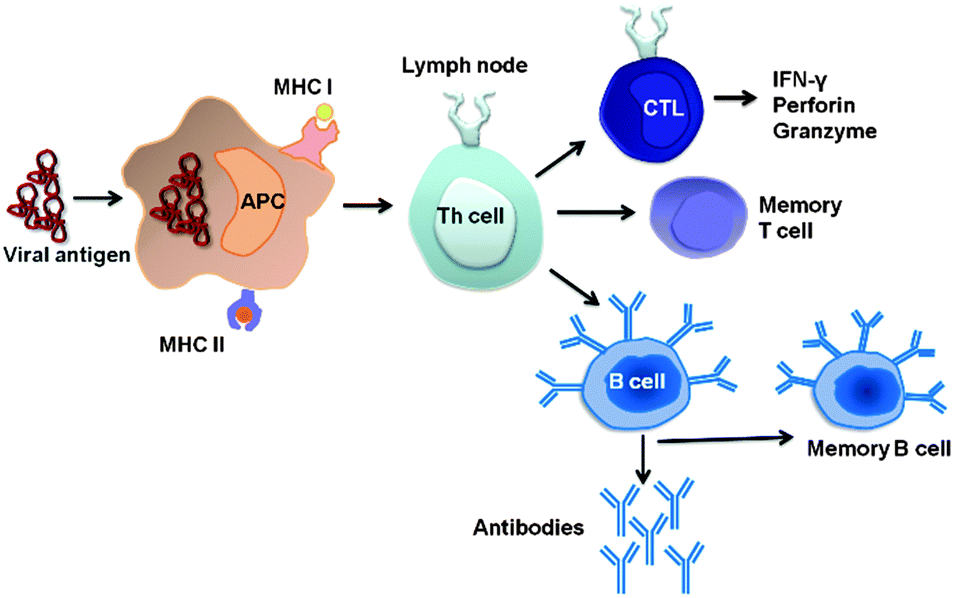
Figure 1: The Mechanism of MMR Vaccine
(Source: https://www.ivoryresearch.com/wp-content/uploads/2021/11/137.gif)
After vaccination, the antigen presenting cells; dendritic cells, among others, are able to recognize the attenuated viruses for processing. These APCs give viral antigen to helper T cells (CD4 + T cells) which activate cytotoxic T cells (CD8 + T cell) and B-Cells to produce specific antibodies.
Significance of MMR
The vaccine of MMR is able to protect against the three diseases including measles (complications with encephalitis and death), mumps (complications with sterility) and rubella which results in congenital rubella syndrome among unborn babies (Soodejani et al. 2021). Outbreaks are best controlled by herd immunity, whereby a large number of people have been vaccinated. The efficacy was clearly defined by research showing that the vaccine has had a 97% effectiveness in instances of measles, after two doses.
Concern of Sayeed
When the viruses are alive they are weakened and do not produce the disease in healthy persons (Xu et al. 2021) The vaccine is very much put through experimental tests both for safety and its effectiveness. Without it, the baby could suffer grievous consequences from these diseases, especially measles.
Case Study 2 Chickenpox Outbreak
The immunity shown by kids who had the disease early is good and uncomplicated. This is because the immune system of a human produces a memory response during their first time of getting infected with the virus.
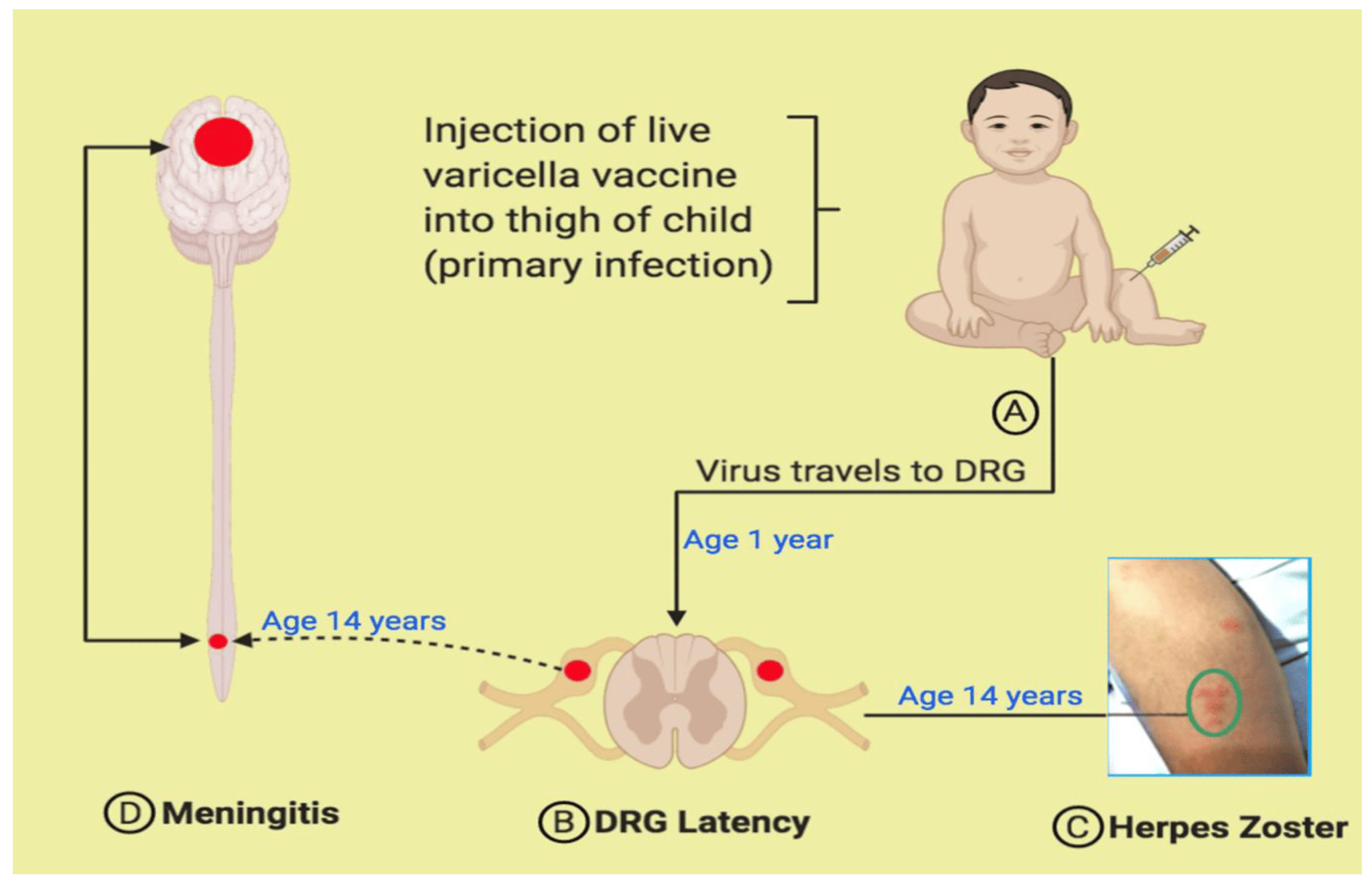
Figure 2: The mechanism of VZV
(Source: https://www.mdpi.com/viruses/viruses-12-01078/article_deploy/html/images/viruses-12-01078-g004.png)
Mechanism of Immunity
When a child got infected with VZV, the natural immune system reacted to the antigen, then the specific immune reaction followed. APCs indirectly interacting with helper T-cells, cytotoxic T-cells were activated to eliminate infected cells and B-cells were stimulated to synthesize antibodies against VZV. B and T lymphocytes were produced, so if the host gets infected by the virus again, it is easier and faster and stronger to fight the disease.
Reason of not being reinfected
Memory cells identified the virus and mobilized the immune response system to counter the associated active infection. This experience points to the fact that long-term immunity is known to be the duty of adaptive immunity. Those people who were never infected or administered a vaccine are in a helpless position since they do not have memory cells.
Case Study 3 Influenza Vaccine
The protection that the baby gets through Jo’s influenza vaccination is animate or passive immunity. Natural immunity is when one individual is protected from an invading pathogen, through the transfer of antibodies, from the other in this context from the mother to the baby through the placenta.
Mechanism of Immunity
When Jo takes the influenza vaccine it forms antibodies against the virus within her body’s immune system (Trombetta et al. 2022). These antibodies are passed on to her baby through the placenta during pregnancy and the baby is then provided with only a temporary immune system. The baby cannot communicate with its own immune system to produce antibodies against influenza in the first six months.
Efficiency for the baby
The antibodies taken from the mother help the baby avoid influenza and its potentially dangerous impacts, including pneumonia. Scientific research indicates that pregnant women vaccination reduces incidence of influenza and hospitalization of the affected infants by about 63%. This protection is necessary until the baby is in a position to get its vaccines. It also deteriorates Jo’s risk for contracting influenza that may result in complications such as preterm labor in the course of pregnancy if she were to be infected severely.
Q6. Comparison of Huntington’s disease with Cystic Fibrosis
Huntington’s disease and cystic diseases are genetically inherited diseases; they differ in causes and manifestations. HD is an autosomal dominant disorder, where the gene is located on chromosome 4, more specifically, the HTT gene, wherein, specific gene mutations include abnormally repeated CAG sequences. These include gradual neuronal loss and related disorders of movement, intellect and psychiatric state; pathology is generally observed between middle-age years. CF, on the other hand is an autosomal recessive disorder that is resulted from an outbreak in the CFTR gene on chromosome 7 and hampering the movement of chloride ions. This culminates to production of thick mucus that causes respiratory infections as well as pancreatic dysfunction as well as digestive complications starting from childhood (Phillips et al. 2022). Although, HD is neurodegenerative, the main organ affected in CF is the respiratory and digestive systems thus pointing towards dissimilar genetic and phenotypic expressions.
Q7. Description of Inheritance of Genetic Disorder
The inheritance patterns of the genetic diseases like cystic fibrosis and Huntington’s are depending on the genetic sequence of Maria and her husband.
HD is an autosomal dominant disorder, which means that an individual receiving one copy of the mutated HTT gene from one parent will have the disease. It is usual that in the cases when one of the partners; Maria in this case, has the mutation, or her husband, there is a 50 percent likelihood that the baby will be born with the disorder. If both partners are negative, the baby cannot have HD because the mutation exists in only one parent at the most.
| H | h | |
| h | Hh (Affected) | hh (Unaffected) |
| h | Hh (Affected) | hh (Unaffected) |
Table 1: Punnett Square diagrams for HD
(Source: Self-Created in Word)
The pathology underlying CF is an autosomal recessive condition and hence for the baby to be born with the disease the parents should both be carriers of the mutated CFTR gene (Christensen et al. 2022). If both Maria and her husband are carriers the probability of having a baby inheriting CF is 25%, having a baby who is a carrier for CF is 50% and 25% of having a baby who does not have CF or is a carrier.
| F | f | |
| F | FF (Healthy) | Ff (Carrier) |
| f | Ff (Carrier) | ff (Affected) |
Table 2: Punnett Square diagrams for Cystic Fibrosis
(Source: Self-Created in Word)
Heterozygous parents can be a source of the disease if only one is a carrier, then the baby cannot have CF, however, the baby can be a carrier. Genetic counselling and genetic testing would help in explaining the parents’ genetic situation and a detailed prognosis with regard to their baby and give direction in pregnancy.
Reference List
Journals
- Christensen, A.A., Parker, P.B., Hersh, A.R., Caughey, A.B. and Krieg, S.A., 2022. In vitro fertilization with preimplantation genetic testing for monogenetic diseases versus unassisted conception with prenatal diagnosis for Huntington disease: a cost-effectiveness analysis. Fertility and sterility, 118(1), pp.56-64.
- Phillips, G.R., Saville, J.T., Hancock, S.E., Brown, S.H., Jenner, A.M., McLean, C., Fuller, M., Newell, K.A. and Mitchell, T.W., 2022. The long and the short of Huntington’s disease: how the sphingolipid profile is shifted in the caudate of advanced clinical cases. Brain Communications, 4(1), p.fcab303.
- Sheth, J., Nair, A., Sheth, F., Ajagekar, M., Dhondekar, T., Panigrahi, I., Bavdekar, A., Nampoothiri, S., Datar, C., Gandhi, A. and Muranjan, M., 2024. Burden of rare genetic disorders in India: twenty-two years’ experience of a tertiary centre. Orphanet Journal of Rare Diseases, 19(1), p.295.
- Soodejani, M.T., Basti, M., Tabatabaei, S.M. and Rajabkhah, K., 2021. Measles, mumps, and rubella (MMR) vaccine and COVID-19: a systematic review. International journal of molecular epidemiology and genetics, 12(3), p.35.
- Trombetta, C.M., Kistner, O., Montomoli, E., Viviani, S. and Marchi, S., 2022. Influenza viruses and vaccines: the role of vaccine effectiveness studies for evaluation of the benefits of influenza vaccines. Vaccines, 10(5), p.714.
- Xu, J., Doyon-Plourde, P., Tunis, M. and Quach, C., 2021. Effect of early measles vaccination on long-term protection: A systematic review. Vaccine, 39(22), pp.2929-2937.
Q5. Case Study Analysis
Case Study 1 MMR Vaccine
The immunity attained when one is immunized with MMR is actual and acquired. This is so because the vaccine causes the production of an immune response within the body by injecting it with weakened forms of the measles, mumps, and rubella viruses. These are viruses whose localized impact is subclinical but sufficient to trigger the adaptive immune response.
Experience stress-free academics with our reliable Assignment Helper team! We combine expertise, dedication, and timely delivery to ensure your complete satisfaction and academic growth.
Mechanism of Immunity
Figure 1: The Mechanism of MMR Vaccine
(Source: https://www.ivoryresearch.com/wp-content/uploads/2021/11/137.gif)
After vaccination, the antigen presenting cells; dendritic cells, among others, are able to recognize the attenuated viruses for processing. These APCs give viral antigen to helper T cells (CD4 + T cells) which activate cytotoxic T cells (CD8 + T cell) and B-Cells to produce specific antibodies.
Significance of MMR
The vaccine of MMR is able to protect against the three diseases including measles (complications with encephalitis and death), mumps (complications with sterility) and rubella which results in congenital rubella syndrome among unborn babies (Soodejani et al. 2021). Outbreaks are best controlled by herd immunity, whereby a large number of people have been vaccinated. The efficacy was clearly defined by research showing that the vaccine has had a 97% effectiveness in instances of measles, after two doses.
Concern of Sayeed
When the viruses are alive they are weakened and do not produce the disease in healthy persons (Xu et al. 2021) The vaccine is very much put through experimental tests both for safety and its effectiveness. Without it, the baby could suffer grievous consequences from these diseases, especially measles.
Case Study 2 Chickenpox Outbreak
The immunity shown by kids who had the disease early is good and uncomplicated. This is because the immune system of a human produces a memory response during their first time of getting infected with the virus.
Figure 2: The mechanism of VZV
(Source: https://www.mdpi.com/viruses/viruses-12-01078/article_deploy/html/images/viruses-12-01078-g004.png)
Mechanism of Immunity
When a child got infected with VZV, the natural immune system reacted to the antigen, then the specific immune reaction followed. APCs indirectly interacting with helper T-cells, cytotoxic T-cells were activated to eliminate infected cells and B-cells were stimulated to synthesize antibodies against VZV. B and T lymphocytes were produced, so if the host gets infected by the virus again, it is easier and faster and stronger to fight the disease.
Reason of not being reinfected
Memory cells identified the virus and mobilized the immune response system to counter the associated active infection. This experience points to the fact that long-term immunity is known to be the duty of adaptive immunity. Those people who were never infected or administered a vaccine are in a helpless position since they do not have memory cells.
Case Study 3 Influenza Vaccine
The protection that the baby gets through Jo’s influenza vaccination is animate or passive immunity. Natural immunity is when one individual is protected from an invading pathogen, through the transfer of antibodies, from the other in this context from the mother to the baby through the placenta.
Mechanism of Immunity
When Jo takes the influenza vaccine it forms antibodies against the virus within her body’s immune system (Trombetta et al. 2022). These antibodies are passed on to her baby through the placenta during pregnancy and the baby is then provided with only a temporary immune system. The baby cannot communicate with its own immune system to produce antibodies against influenza in the first six months.
Efficiency for the baby
The antibodies taken from the mother help the baby avoid influenza and its potentially dangerous impacts, including pneumonia. Scientific research indicates that pregnant women vaccination reduces incidence of influenza and hospitalization of the affected infants by about 63%. This protection is necessary until the baby is in a position to get its vaccines. It also deteriorates Jo’s risk for contracting influenza that may result in complications such as preterm labor in the course of pregnancy if she were to be infected severely.
Q6. Comparison of Huntington’s disease with Cystic Fibrosis
Huntington’s disease and cystic diseases are genetically inherited diseases; they differ in causes and manifestations. HD is an autosomal dominant disorder, where the gene is located on chromosome 4, more specifically, the HTT gene, wherein, specific gene mutations include abnormally repeated CAG sequences. These include gradual neuronal loss and related disorders of movement, intellect and psychiatric state; pathology is generally observed between middle-age years. CF, on the other hand is an autosomal recessive disorder that is resulted from an outbreak in the CFTR gene on chromosome 7 and hampering the movement of chloride ions. This culminates to production of thick mucus that causes respiratory infections as well as pancreatic dysfunction as well as digestive complications starting from childhood (Phillips et al. 2022). Although, HD is neurodegenerative, the main organ affected in CF is the respiratory and digestive systems thus pointing towards dissimilar genetic and phenotypic expressions.
Q7. Description of Inheritance of Genetic Disorder
The inheritance patterns of the genetic diseases like cystic fibrosis and Huntington’s are depending on the genetic sequence of Maria and her husband.
HD is an autosomal dominant disorder, which means that an individual receiving one copy of the mutated HTT gene from one parent will have the disease. It is usual that in the cases when one of the partners; Maria in this case, has the mutation, or her husband, there is a 50 percent likelihood that the baby will be born with the disorder. If both partners are negative, the baby cannot have HD because the mutation exists in only one parent at the most.
| H | h | |
| h | Hh (Affected) | hh (Unaffected) |
| h | Hh (Affected) | hh (Unaffected) |
Table 1: Punnett Square diagrams for HD
(Source: Self-Created in Word)
The pathology underlying CF is an autosomal recessive condition and hence for the baby to be born with the disease the parents should both be carriers of the mutated CFTR gene (Christensen et al. 2022). If both Maria and her husband are carriers the probability of having a baby inheriting CF is 25%, having a baby who is a carrier for CF is 50% and 25% of having a baby who does not have CF or is a carrier.
| F | f | |
| F | FF (Healthy) | Ff (Carrier) |
| f | Ff (Carrier) | ff (Affected) |
Table 2: Punnett Square diagrams for Cystic Fibrosis
(Source: Self-Created in Word)
Heterozygous parents can be a source of the disease if only one is a carrier, then the baby cannot have CF, however, the baby can be a carrier. Genetic counselling and genetic testing would help in explaining the parents’ genetic situation and a detailed prognosis with regard to their baby and give direction in pregnancy.
Reference List
Journals
- Christensen, A.A., Parker, P.B., Hersh, A.R., Caughey, A.B. and Krieg, S.A., 2022. In vitro fertilization with preimplantation genetic testing for monogenetic diseases versus unassisted conception with prenatal diagnosis for Huntington disease: a cost-effectiveness analysis. Fertility and sterility, 118(1), pp.56-64.
- Phillips, G.R., Saville, J.T., Hancock, S.E., Brown, S.H., Jenner, A.M., McLean, C., Fuller, M., Newell, K.A. and Mitchell, T.W., 2022. The long and the short of Huntington’s disease: how the sphingolipid profile is shifted in the caudate of advanced clinical cases. Brain Communications, 4(1), p.fcab303.
- Sheth, J., Nair, A., Sheth, F., Ajagekar, M., Dhondekar, T., Panigrahi, I., Bavdekar, A., Nampoothiri, S., Datar, C., Gandhi, A. and Muranjan, M., 2024. Burden of rare genetic disorders in India: twenty-two years’ experience of a tertiary centre. Orphanet Journal of Rare Diseases, 19(1), p.295.
- Soodejani, M.T., Basti, M., Tabatabaei, S.M. and Rajabkhah, K., 2021. Measles, mumps, and rubella (MMR) vaccine and COVID-19: a systematic review. International journal of molecular epidemiology and genetics, 12(3), p.35.
- Trombetta, C.M., Kistner, O., Montomoli, E., Viviani, S. and Marchi, S., 2022. Influenza viruses and vaccines: the role of vaccine effectiveness studies for evaluation of the benefits of influenza vaccines. Vaccines, 10(5), p.714.
- Xu, J., Doyon-Plourde, P., Tunis, M. and Quach, C., 2021. Effect of early measles vaccination on long-term protection: A systematic review. Vaccine, 39(22), pp.2929-2937.