
Executing Business Strategy Coursework Assignment
This sample coursework evaluates Asterisik Shoes’ strategy and performance.
- 92650+ Project Delivered
- 1500+ Experts 24x7 Online Help
- No AI Generated Content


- Introduction
- 1.1 TASK 1
- 1. Analysis of the strategic management of the company
- 1.1.2 Application of the Balanced Scorecard to assess the company’s performance
- 1.1.3 Analysis of the outcome of four strategic decisions
- 1.1.3.2 Decision 2: Marketing
- 1.1.3.3 Decision 3: Staff training
- 1.1.3.4 Decision 4: Warehouse
- 2.1. TASK 2
- 1. Analysis of the implications of shifting trends emerging of risk of a company
Introduction
Strategy is the creation of a unique and valuable position, involving a different set of activities (Porter,2011). Therefore, this report provides a detailed analysis of the strategic management of Asterisik Shoes, with a focus on the company’s mission, vision, values, objectives, competitive strategy, and business model. In the highly competitive global athletic footwear market, strategic management plays a crucial role in driving growth, enhancing brand recognition, and achieving long-term success. Asterisik Shoes, committed to product leadership and customer intimacy, has aimed to carve a distinctive niche in the market through innovation, quality, and customer engagement.
The first section of this report explores Asterisik Shoes' mission, vision, and strategic objectives. It discusses the company’s focus on product leadership and customer relationships, highlighting key strategies such as research and development and customer relationship management (CRM). The analysis also touches on the business model, emphasizing the company’s approach to product innovation, quality control, and cost efficiency.
Additionally, the report applies the Balanced Scorecard (BSC) methodology to assess Asterisik Shoes' performance, with particular emphasis on financial outcomes, customer satisfaction, and production efficiency. The report also reflects on the company’s decision-making process, analyzing the impact of key strategic decisions such as research and development investments, marketing strategies, staff training, and warehouse expansions.
Finally, the report evaluates the implications of shifting market trends, emerging risks, and two critical capabilities—product quality enhancement and staff motivation—as essential drivers of business value and growth for Asterisik Shoes. These insights provide a comprehensive understanding of the company’s current strategic positioning and its potential for future success in the global athletic footwear market.
Figure 1: Brand Logo of Asterisik shoees
1.1 TASK 1
1.1.1 Analysis of the strategic management of the company (mission, vision, values, objectives, generic competitive strategy, and business model)
1. Analysis of the strategic management of the company
- Strategic management planning plays an important role in building a competitive advantage for athletic footwear in the global competitive markets. Asterisik shoees emphasized enhancing the market effectiveness for the long-run situation. Asterisik shoees can also emphasize enhancing the cost-leadership strategies, and product leadership strategies in the competitive athletic footwear markets.

Figure 2: Mission, vision, values, strategy
Source (Strategic-Planning.jpg (800×450)
Mission Statement
At Asterisik Shoees, our mission is to revolutionize the trainer industry through our unwavering commitment to product leadership. We strive to be at the forefront of innovation, consistently pushing boundaries to deliver cutting-edge footwear that exceeds the expectations of our customers.
Through our unique offerings, we aim to set new industry standards and inspire athletes and enthusiasts alike to achieve their full potential. By combining exceptional craftsmanship with advanced technology, we create trainers that not only enhance performance but also embody style and comfort.
We believe in fostering a culture of continuous learning and improvement, both internally and externally. Our team of dedicated professionals is passionate about staying up to date with the latest trends and developments in athletic footwear, enabling us to constantly raise the bar and provide our customers with unmatched products.
Vision Statement
Driven by our passion for product leadership we will strive to be the change in the trainers industry, establishing new benchmarks and encouraging others to follow. Our focus will include cutting-edge technology, exceptional craftwork and unique trainers so that our customers will by all means step into greatness of quality trainers.
Objectives
Asterisik shoees emphasized the building of strategic plan for product-leadership and building of strategy for enhancing customer intimacy for which the objectives are mentioned as follows.
● To develop the strategy of product leadership by providing innovative and highest-quality trainers to the targeted customers.
● To enhance the strategy of customer intimacy by building a relationship with targeted customer groups.
Product leadership competitive strategy
Asterisik shoees emphasized “research and development” by introducing cutting edge technologies and materials for developing the exclusive product design for three product segments of men’s, kids and women’s athletics footwear. Asterisik shoees also collaborates with experts and designers to create trendy and exclusive designer products for the targeted customer groups (Kornelius et al. 2021). Usage of the premium material also helps to build performance and durability. Asterisik shoees also collaborates with the storytelling marketing approach to build emotional connectedness with the targeted customer groups
Customer Intimacy Strategy
Asterisik shoees also enhanced on implementation of building “customer relationship management (CRM)” by which Asterisik shoees can easily maintain a track record of the sales history and customers' preference patterns. Asterisik shoees also offer customization offers that help to build strong intimacy with the customer's preference patterns (Satyro et al. 2021). Asterisik shoees can also emphasize on creation of online communication with the customers where the customers can share their personal experiences based on which Asterisik shoees can enhance the brand engagements in the competitive markets. Usage of the feedback loops through social media engagement builds a customer-intimacy level for Asterisik shoees.
The “business model” is an important part that helps to improve the business effectiveness of Asterisik shoees in the competitive athletic footwear markets. It is identified that Asterisik shoees emphasized product innovation and quality maintenance by adapting the cost-reduction process in the business frameworks. Asterisik shoees released its new business model in 2024 for the three product segments of kids, women and men by which Asterisik shoees can improve the business progress in the global competitive markets.
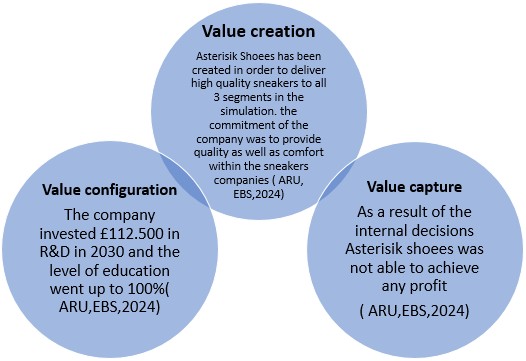
Figure 3: Asterisik model adaped from (Whittington, 2024)
(Source: Self-created in MS word)
Asterisik shoes invested in the high-quality shoes in order to provide comfort and quality for the customers (see figure 5) but the results were not as expected as a result of high prices and competition offering higher quality for a lower price. Therefore, no profit has been achieved within the company even though the value proposition was solid but let down by operational challenges (ARU, EBS,2024)
1.1.2 Application of the Balanced Scorecard to assess the company’s performance
The “Balance Scorecard (BSC)” plays a vital role as a tool for the strategic management process by which Asterisik shoes can emphasize developing the business performance in the athletic footwear markets. This analysis of the “balance-score card” also helps to improve the existing objective, mission, and values of the Asterisik shoes in the global competitive footwear markets (Pandey et al. 2022). Analysis and future forecast of Asterisik shoes' financial performance for the years 2026 to 2031 help to understand the financial performance of Asterisik shoes for that period. The “Balance Score Card” also helps to understand the financial performance, production qualities, and customer preference patterns in the global competitive markets.
Figure 4: Balance Scorecard
(Source: Self-created in MS excel)
Financial analysis
The “balance Score Card” identified that the financial performance level of the Asterisik shoees is negative during the overall simulation period indicating that the performance of Asterisik shoees is not satisfactory throughout the simulation year of 2026 to 2031
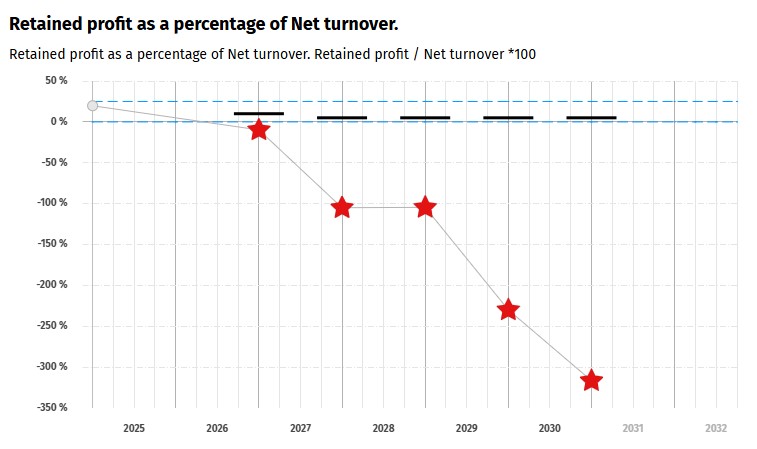
Figure 5: Decreasing net turnover indicates the negative situation of Asterisik shoees
Analysis from customers' perspectives
Analysis of the “Balance Score Card” from the customer’s perspective helps to understand the financial performance of Asterisik shoees (Mazzarol et al. 2020). It is identified that the “market share” of Asterisik shoees was 8.32% during the year 2026 which will tend to be reduced to 1.45% by the year of 2030 indicating depreciation of the financial performance of Asterisik shoees in the competitive markets.
Analysis from the production perspectives
The “Balance Score Card” also identified that Asterisik shoees faced some significant challenges from the production perspective that highly effected on the growth process of Asterisik shoees by the year of 2026 to 2031.
Year-wise analysis of the “Balanced Scorecard” Performance
Figure 6: “Balance sheet” of Asterisik shoees in 2026
Figure 7: “Income-Statement” of Asterisik shoees in 2026
The negative “operating profit” of -£286,288.54 indicates the lower revenue sharers of Asterisik shoees in the competitive athletic footwear market.
Figure 8: “Balance sheet” of Asterisik shoees in 2026
The values of cash equivalents were reduced to £3,631,622 in 2026.
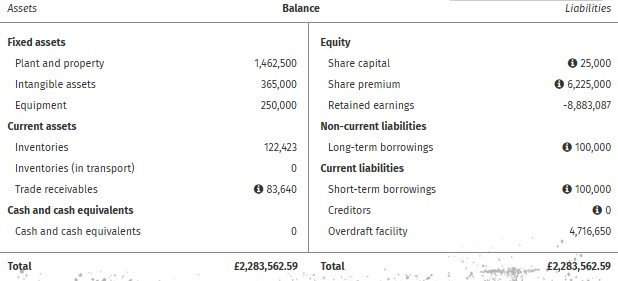
Analysis of the “balance sheet” of Asterisik shoees in 2030
 (Source: https://managementsimulations.edumundo.com/sneakers/#!/result/balance)
The existing property and plant size of Asterisik Shoees is gradually reduced to 1,462,500 and the inventory stock also reduced to 122,423 indicating a lower production level of the Asterisik Shoees in the competitive world.
Comparison of the Asset values in 2027, 2028 and 2029
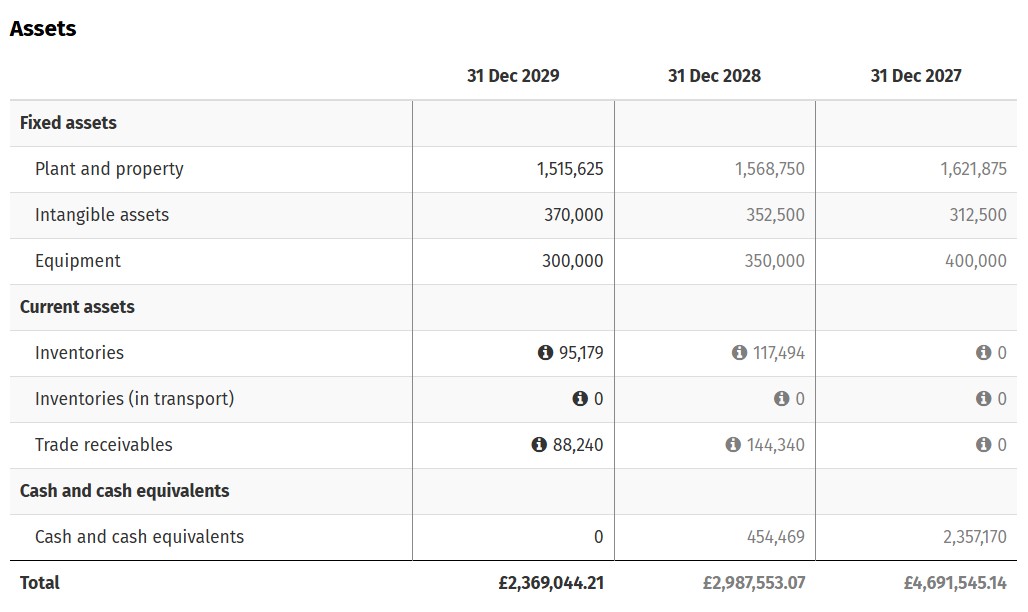
The above comparison of the asset performance indicates that the property value and the plant sizes of Asterisik Shoees drastically fell from 1,621,875 in 202 to 1,515,625 in 2029. It is identified that a decrease in the sales volume of trainers of Asterisik Shoees is responsible for the decrease in plant sizes (Fabeil et al. 2020)
The above comparison table also addressed the reduction of the property and the plant size of Asterisik Shoees between 2028 to 2030. Fluctuation of the asset values in the last two 2029 and 2030 indicates the decrease in the asset valuation of Asterisik Shoees and its financial health performances.
1.1.3 Analysis of the outcome of four strategic decisions
- The following section explains the reflection of taking four type of strategic decisions by me which is described as follows.
1.1.3.1 Decision 1: Research and Development
In 2030, Asterisik Shoees invested £112,500.00 in the R&D (ARU, EBS,2024). The reason for that decision was to improve the quality of our trainers trough product innovation (Tidd and Bessant, 2020). That was supposed to drive commitment to technical leadership and sustained competitive advantage, which was supposed to be achieved by developing core competencies in order to distinguish the company in the marketplace (Prahalad and Hamel, 1991).
The outcome of this decision was not as expected because we did not fully realise that innovation is a process that doesn’t produce quick results. In addition, Astereisik Shoees lacked a coherent overall strategy for innovation. In fact, research shows that this is one of key drivers to challenges to innovation (BGS Report, 2024). This outcome could have been at least avoided by improving our decision making and communication procedures.
1.1.3.2 Decision 2: Marketing
The marketing costs for Asterisik Shoees in 2029 were almost £400,000.00(ARU, EBS,2024)
The company invested quite a large amount of money in order to identify, anticipate and satisfy customers requirements (Chartered Institute of Marketing, 2023). The decision was supposed to help Asterisik Shoees to become recognisable within the market and to attract new customers.
Unfortunately, the outcome again was not in the company’s favour. The reason behind it was that the money invested were not adequately marketed. Instead of using a strong marketing platform the company has used MetroNow magazine- with light reach to the customers, targeting only men (ARU, EBS,2024). Therefore, as a result of the incorrect marketing plan within the company not all segments (women and kids trainers) were not adequately and strongly influenced which lead to lowering the sales.
1.1.3.3 Decision 3: Staff training
Asterisik Shoees was also focused on staff training in order to equip the staff with the necessary skills and knowledge not only to perform their jobs effectively, but to also demonstrate that the company values its employee’s growth in order to boost morale, increase job satisfaction and foster positive work environment. Over the 6 years of the company’s existence more than ½ million pounds have been invested in staff training (ARU, EBS,2024). The level of staff education reached 100% by year 2031, but their motivation level was only 55% which compared to the previous years was on the lowest level ever (ARU, EBS,2024). The reason behind it was that they were not given responsibilities that showcase their abilities as well as the management team was being unfair within the employees (Miller, 2016). Different circumstances could have led to a better engagement, higher productivity and proactivity which was not the case in Asterisik Shoees.
1.1.3.4 Decision 4: Warehouse
As soon as Asterisik became a part of the trainer industry it invested money to expand the warehouse to be able to store more trainers.
The investment of £500,000.00 in 2026 (ARU, EBS,2024) expanded the warehouse by 15% and was supposed to have a positive impact on a longer period. That would have had a positive affect if the internal strategies and collaboration within the company’s teams would have been on a better level. Not ordering re-stock of trainers when the stock was going down led to declining sales and losing profit. On the other hand, having full warehouse and not being able to sell the trainers was another bad decision within the company which could have been avoided if the price of the trainers would have been lowered down to attract more customers.
2.1. TASK 2
- Analysis of the implications of shifting trends and emerging risks for the company
1. Analysis of the implications of shifting trends emerging of risk of a company
The continuous changes in the demand patterns for athletic shoes of Asterisk Shoees are dominated by the changing preference patterns of consumers. The shifting trends of high men’s product prices to moderate product prices indicate the need for price restructures of the men’s products for the athletics products.
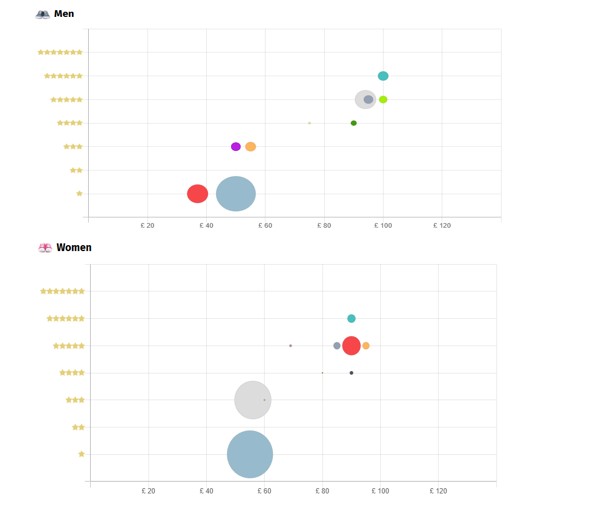
The above figure shows that shifting trends towards affordable price products indicate Asterisk Shoees can improve market sales by lowering the price ranges (Montoro and Widyantoro, 2022).
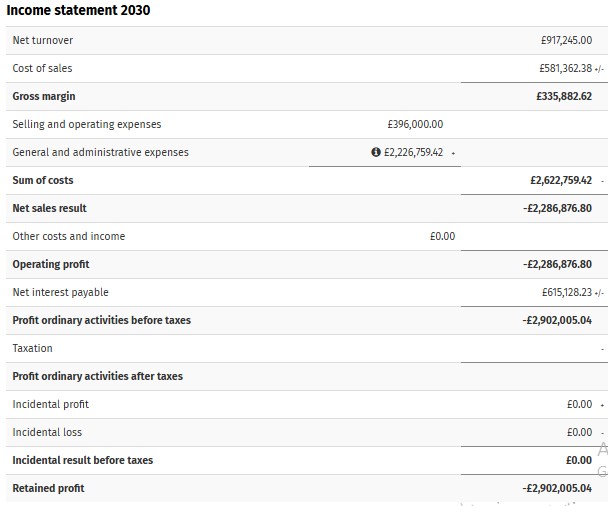
In 2026, this total asset value drops to £6,546,928.16 indicating that the Asterisik shoees is not performing well in the first year of business. The “Gross margin” value of Asterisik Shoees was £335,882.62. The “operating profit” of Asterisik Shoees is negative which is -£2,286,876.80 indicating that lowers the revenue growth of Asterisik Shoees for analyzing the operating expenses of Asterisik Shoees.
The “intangible assets” volumes increase to £312,500 by the year 2017. The equipment value is reduced from £450,000 to £400,000 by the year 2027 for a reduction of the sales volume of athletic footwear in the competitive world. Reduction of the “total asset values” is responsible for the reduction of the inventories and the cash equivalents. Reduction of the cash equivalent indicates a rise in the operational expense and the investment volume in the years 2026 and 2027. Therefore, an overall reduction of the value of the “total asset” component leads to a decline in the comprehensive financial performance of Asterisik Shoees in the athletic shoe markets. Asterisik Shoees also borrowed the monetary value by using the bank drafting facilities. Increasing of the creditor's values to £252,330 represents that the suppliers of the athletic shoes are gradually increased. The reduction of the plant sizes from 2028 to 2030 to £1,462,500 indicates the decrease of the existing assets values of Asterisik Shoees between 2028 to 2030. Changes in the inventory levels also indicate the fluctuation of its current asset values.
Technological integration
Technological integration is another factor that might improve by implementing the advanced technologies. Technological integration helps to overcome the bankruptcy challenges faced by the Asteriski Shoees. Asteriski Shoees can integrate the advance technologies by which Asteriski Shoees can emphasized on production of eco-friendly products.
It also presents a real chance for Asterisk Shoes to overcome its problems of both financial and organizational nature. Through the implementation of these technologies; the company, will be able to increase its production efficiency; through reduction of cost of manufacturing. Robotics in production; this means manufacturing will be more precise, less wastage and the turn round time will be reduced thus cutting the operational cost. Also, significant investment in use of artificial intelligence (AI) and machine learning in inventory management and demand forecasting will enable the company reduce on possible gains from inventory management such as overstocking or stockouts.
Moreover, the use of green technologies in the manufacturing process is in tune with the emerging new world trend of buying environmentally friendly products. Thus, Asterisk Shoes can produce ecological product lines through the integration of recycled materials along with using energy-efficient production and minimizing its CO2 emissions (Vitasek, 2020). It not only meets a growing consumer preference for sustainable products, but also strengthens the company image within a market segment that is rapidly beginning to demand more CSR. Introducing sustainability practices can also help companies with the appeal consumers have for products sustainable for the environment may lead to higher revenues and brand recognition.
The final area that digitalization of the customer experience also provides an opportunity to expand. Asterisk Shoes can increase its customer base easy accessible e-commerce platform that will enhance the company to sell its products on net and increase its market share easy data analyze the company can target its customer through marketing campaigns. Additional levels of consumer interactivity may also be achieved via social media integration in its operation so that the company can quickly adapt to ever-changing trends. That is why these technologies can ultimately contribute to the compensation of the financial problems facing Asterisk Shoes now and help in formulating new sources of income, increasing the company’s productivity and positions in the athletic footwear market competition.
- Assessment of two critical capabilities that will drive business value and growth
There exist different types of capabilities that might be improved
Development of product quality by integrating eco-friendly products
The development of product quality helps to improve the business growth of Asterisk Shoees in the competitive markets. The inclusion of ‘Green’ products in the line of products offered in Asterisik Shoes satisfies the aim of improving the market share in eco-friendly goods and services besides differentiating Asterisik Shoes as a company that cares for the environment. Moreover, there are goals linked to the use of postconsumer materials, biodegradable packaging, and the decrease in the energy intensity of the goods: the consideration of these aspects will allow the company to improve its brand image (Mansoori, and Lackéus, 2020). This is a major factor and should be of particular interest to any company since people, as consumers, are more likely to choose those brands that actively responding to the challenge of environmental protection. The current shift of consumers towards Quality athletic footwear present a good window of opportunity for Asterisk Shoes to compete in the saturated market.
In addition, the idea of creating environmentally sustainable products may also lead to new cooperations with green certification agencies that will add to the strengthening of brand reputation and awareness. Converting the shoe manufacturing process into sustainable design techniques, Asterisk Shoes can come up with products that meet not only high-quality standards but the new age environmental priorities as well. This strategy will enable the company to penetrate the special markets and reach the group of clients who place a special emphasis on the environmental concerns, thus increasing short-term and long-run sales.
Staff motivation
Staff motivation is another set of capabilities that might help to improve the business growth of Asterisk Shoees in the competitive framework. The motivation of the staff is a crucial business enabler because its affects the performance, productivity, and turnover of employees. This paper describes that(optarg) for Asterisk Shoes, motivation implemented thru targeted programs for the employees increase job satisfaction and involvement, mean creating and improving customer focus, idea creation, and operation enhancement (Bessant, and Tidd, 2020). Engaged employees are guarantors of organizational success and productivity, innovation, and extra effort towards achieving organizational goals.
Possible ways of staff motivation of Asterisk Shoes include; Providing reasonable and competitive wages, remunerations and incentives amongst others. Furthermore, promotion through training programs, vacancy increases and other within skill development schemes will make a sense of the career ladder and personal accomplishment.
Alleviating it is work culture, creating a culture that allows and encourages cooperation and collaboration, as well as one that is open and honest. With this in mind, you get to have a better employee retention level, which means that the company does not have to spend a lot of money looking for employee replacements, thus enhancing the organization’s stability. In addition, the proposal to include work-life balance programs and incentives for work merit would guarantee the continuation of performance and even increased levels of productivity for overall business profit increase. Due to the mentioned measures, Asterisk Shoes can increase the number of employees willing to contribute to the organization and achieve success on the shoe market [Referred to appendix 7].
3.0 Conclusion
In conclusion, the strategic management analysis of Asterisik Shoes highlights both the opportunities and challenges the company faces in the competitive athletic footwear market. The company’s strong focus on product leadership, innovation, and customer intimacy are integral to its strategy, aiming to differentiate Asterisik Shoes through high-quality, cutting-edge products that resonate with target customer groups. However, the analysis reveals that despite a solid mission and vision, the company’s performance has been hindered by several operational and strategic challenges.
The Balanced Scorecard evaluation suggests that Asterisik Shoes' financial performance has been unsatisfactory, with declining market share, negative operating profits, and asset depreciation. Key strategic decisions, including investments in research and development, marketing, staff training, and warehouse expansion, have had mixed outcomes, often failing to generate the expected returns due to poor execution and internal coordination. Additionally, the company faces external challenges such as shifting consumer preferences towards more affordable products and increasing competition from lower-priced alternatives.
If you require personalised support beyond this sample, you can explore New Assignment Help UK services for expert guidance in business strategy coursework.
REFERENCES
- BCG Digital Transformation Job Simulation (2024) Forage. Available at: https://www.theforage.com/simulations/bcg/digital-transformation-pk18 (Accessed 15 Dec 2024)
- Bessant, J. R. and Tidd, J. (2020) Managing Innovation: Integrating Technological, Market and Organizational Change. 7th edn. Hoboken: Wiley.
- The Chartered Institute of Marketing (2023). What is Marketing? | CIM Content hub. [online] www.cim.co.uk. Available at: https://www.cim.co.uk/content-hub/quick-read/what-is-marketing/.
- Fabeil, N.F., Pazim, K.H. and Langgat, J., 2020. The impact of Covid-19 pandemic crisis on micro-enterprises: Entrepreneurs’ perspective on business continuity and recovery strategy. Journal of Economics and Business, 3(2). https://papers.ssrn.com/sol3/papers.cfm?abstract_id=3612830
- Harvard Business Review, Porter, M.E., Kim, W.C. and Mauborgne, R.A. (2011) HBR's 10 Must Reads on Strategy (including featured article "What Is Strategy?" by Michael E. Porter). Boston: Harvard Business Review Press.
- Kim, H., Jo, Y. and Lee, D., 2021. R&D, Marketing, Strategic Planning, or Human Resources? Which CEO Career Is Most Helpful for the Economic Sustainability of ICT Startups in South Korea?. Sustainability, 13(5), p.2729. https://www.mdpi.com/2071-1050/13/5/2729
- Kitsios, F. and Kamariotou, M., 2021. Artificial intelligence and business strategy towards digital transformation: A research agenda. Sustainability, 13(4), p.2025. https://www.mdpi.com/2071-1050/13/4/2025
- Mansoori, Y. and Lackéus, M., 2020. Comparing effectuation to discovery-driven planning, prescriptive entrepreneurship, business planning, lean startup, and design thinking. Small Business Economics, 54, pp.791-818. https://link.springer.com/article/10.1007/s11187-019-00153-w
- Mazzarol, T., Reboud, S., Mazzarol, T. and Reboud, S., 2020. Planning and strategy in the small firm. Small Business Management: Theory and Practice, pp.95-152. https://jimm.journals.umz.ac.ir/article_3612.html
- Montororing, Y.D.R. and Widyantoro, M., 2022. Model of inventory planning using monte carlo simulation in retail supermarket with consider to competitors and stimulus strategies. Journal of Applied Engineering and Technological Science (JAETS), 4(1), pp.342-350. https://www.yrpipku.com/journal/index.php/jaets/article/view/1093
- Miller, B. (2016). 7 Reasons Your Workforce Is Not Motivated. [online] HR Daily Advisor. Available at: https://hrdailyadvisor.blr.com/2016/11/29/7-reasons-workforce-not-motivated/.
- Pandey, A.K., Singh, R.K., Jayesh, G.S., Khare, N. and Gupta, S.K., 2022. Examining the role of enterprise resource planning (ERP) in improving business operations in companies. ECS Transactions, 107(1), p.2681. https://iopscience.iop.org/article/10.1149/10701.2681ecst/meta
- Porter, M.E., Kim, W.C. and Mauborgne, R.A. (2011) HBR's 10 Must Reads on Strategy (including featured article "What Is Strategy?" by Michael E. Porter). Boston: Harvard Business Review Press.
- Satyro, W.C., de Mesquita Spinola, M., de Almeida, C.M., Giannetti, B.F., Sacomano, J.B., Contador, J.C. and Contador, J.L., 2021. Sustainable industries: Production planning and control as an ally to implement strategy. Journal of Cleaner Production, 281, p.124781. https://www.sciencedirect.com/science/article/pii/S0959652620348253
- Tidd, J. and Bessant, J.R. 2021. Managing innovation: integrating technological, market and organizational change, Wiley, Chichester.
- Vitasek, K. (2020). Prahalad and Hamel: Corporations and the Core Competency Concept - Future of Sourcing Digital Publication. [online] Future of Sourcing Digital Publication. Available at: https://futureofsourcing.com/prahalad-and-hamel-corporations-and-the-core-competency-concept/.
- Wieland, M. and Fill, H.G., 2020. A domain-specific modeling method for supporting the generation of business plans. https://dl.gi.de/items/03295d85-9c49-49a7-a53a-bcab19e6e3d2
- Whittington, R., Angwin, D., Regnér, P., Johnson, G. and Scholes, K. (2021). Fundamentals of Strategy. 5th ed. Hoboken: Pearson.