Style Guidelines For Literature Based Dissertation Sample
Explore comprehensive formatting guidelines, research methodology, citation standards, and academic writing principles for literature-based dissertations with practical terminal ballistics examples.
- 92650+ Project Delivered
- 1500+ Experts 24x7 Online Help
- No AI Generated Content



- 1. Introduction Of Style Guidelines For Literature-Based Dissertation
- 1.1 Background and Rationale
- 1.2 Research Problem
- 1.3 Research Aims and Objectives
- 1.4 Importance of the Study
- 1.5 Contribution to Existing Knowledge
- 2. Literature Review
- 2.1 Introduction to Terminal Ballistics
- 2.2 Theoretical Framework of Terminal Ballistics
- 2.3 Factors Influencing Projectile Behaviour Upon Impact
- 2.4 Experimental Studies and Observations
- 2.5 Terminal Ballistics in Forensic and Military Applications
- 2.6 Conclusion
- 3. Methodology
- 3.1 Introduction
- 3.2 Research Approach and Justification
- 3.3 Data Collection
- 3.4 Thematic Analysis Process
- 3.5 Reliability and Validity
- 3.6 Ethical Considerations
- 3.7 Conclusion
- 4. Results
- 4.1 Introduction
- 4.2 Projectile Penetration Dynamics
- 4.3 Fragmentation and Energy Dissipation
- 4.4 Ricochet Effects and Impact Angle
- 4.5 Influence of Target Materials
- 4.6 Summary of Findings
- 5. Discussion
- 5.1 Introduction
- 5.2 Projectile Penetration Dynamics and Energy Transfer
- 5.3 Fragmentation and Wound Ballistics
- 5.4 Ricochet Effects and Projectile Trajectory Analysis
- 5.5 Influence of Target Materials and Ballistic Resistance
- 5.6 Implications for Forensic Science, Military Applications, and Material Engineering
- 5.7 Conclusion
- 6. Conclusions and Recommendations
- 6.1 Conclusion
- 6.2 Recommendations
- 6.3 Future scope
1. Introduction Of Style Guidelines For Literature-Based Dissertation
1.1 Background and Rationale
Terminal ballistics refers to the behaviour of a projectile once it impacts a target, including penetration mechanics, deformation, fragmentation and the like. In short, this area of forensic science, defence applications, and material engineering has become highly significant (Sobral, Dinis-Oliveira and Barbosa, 2024). Improving body armour, designing ammunition, and reconstructing crime (or battle) scenes requires knowledge of the dynamics of projectile behaviour after impact.
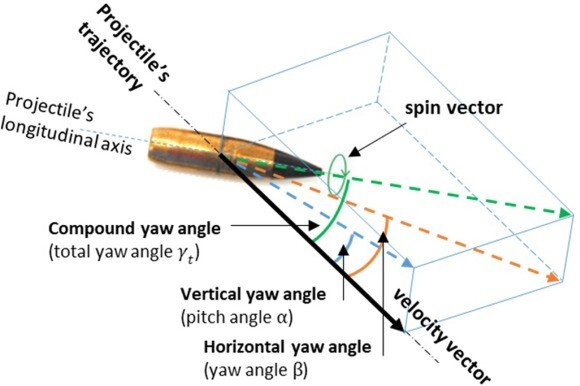
Figure 1.1: Projectile and different angles with the velocity vector of calibre ballistic
Much research has been conducted, but many forecast challenges persist. Penetration depth, ricochet probability and structural damage vary as a function of projectile composition, velocity and impact angle (Fras, 2024). New information has been gleaned from advances in computational modelling and high-speed imaging, and there remains a need to develop a theory to hardware bridge the model gap.
1.2 Research Problem
Significant studies have been made on external ballistics (flight behaviour) and wound ballistics (tissue penetration). Further, few have combined to understand how projectile behaviour changes explicitly spatially and temporally post-impact in different target conditions (Liao et al., 2025). This research aims to understand the coupled response mechanism of projectile and target, mainly focusing on the effects of target and projectile properties, velocity and various impact angles on penetration, fragmentation and ricochet dynamics.
1.3 Research Aims and Objectives
The primary aim of this dissertation is to explore how terminal ballistics affects projectile behaviour and dynamics after target impact. The specific objectives are:
- To review existing literature on terminal ballistics, focusing on projectile-target interactions.
- To analyze key influencing factors such as velocity, target material, and impact angles in shaping projectile behaviour.
- To evaluate theoretical models and experimental studies on penetration depth, fragmentation, and ricochet effects.
- To highlight the implications of terminal ballistics in forensic science, military applications, and protective gear development.
Research questions
- How does projectile velocity affect penetration depth, fragmentation, and energy dissipation upon impact?
- What role does target material composition play in altering projectile behavior post-impact?
- How does the impact angle influence ricochet probability and projectile trajectory after hitting a target?
- What are the forensic and military implications of terminal ballistics in reconstructing shooting incidents and designing protective gear?
1.4 Importance of the Study
This research impacts multiple areas, including ballistics engineering, forensic science and defence technology. This dissertation contributes to various key regions by understanding how differences in each variable impact projectile dynamics upon impact. Military and law enforcement benefit from it for ammunition effectiveness, safety design measures, and the meeting of weapons and protective gear design with the best performance (López-Moliner and Cristina, 2021). In addition, it enhances the forensic investigation techniques of reconstructing shooting incidents, thus furnishing law enforcement and forensic experts with a superior analytical tool for interpreting ballistic evidence accurately.
1.5 Contribution to Existing Knowledge
This dissertation bridges unknown knowledge in projectile behaviour post-impact using consolidated theoretical models, experimental studies, and real-world applications. It offers a critical analysis of terminal ballistics principles for future researchers and industry professionals to increase the performance of impact-resistant materials. The refined ammunition design in this study helps verify the ballistic advancements are being made through a safe and performing design.
Need Assignment Help that delivers results? Trusted Assignment Help in UK for well-researched, plagiarism-free academic solutions.
2. Literature Review
2.1 Introduction to Terminal Ballistics
The study of projectile behaviour on impact with a target has long been studied in forensic science, defence applications and material sciences. Terminal ballistics is different from internal and external ballistics, which are concerned with the motion of the projectile within the firearm and through the air but not the penetration, fragmentation, energy dissipation, and post-impact trajectory.
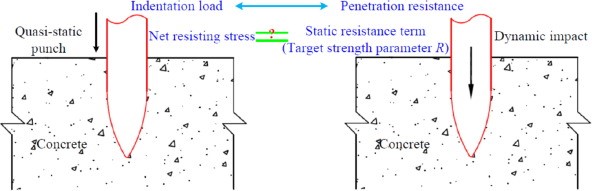
Figure 2.1: Impact of terminal ballistics based on trajectory
Understanding how different projectiles interact with various target materials is crucial for optimizing the advantage of ammunition performance, improving protective armour, and for forensic reconstructions of shooting incidents (Euteneuer and Courts, 2021). By their nature, terminal ballistics is essential in more than just military and law enforcement applications; it is used in biomedical research, as a basic understanding of wound ballistics is employed to analyze trauma and perform surgical intervention.
2.2 Theoretical Framework of Terminal Ballistics
Several theories and models explain how a projectile behaves upon impact to make up the study of terminal ballistics. Force, momentum, and energy transfer constitute the basis for developing penetration depth and projectile deformation, which Newtonian mechanics covers (Asgedom et al., 2024). To explain these contact behaviours, projectile contact with a target and what proportion of its kinetic energy it transfers at impact, the conservation principles of momentum and energy must be central. The Bethe-Tait equation and impact dynamics models have also been widely employed for penetration efficiency assessment of how kinetic energy is converted into deformation, heat and displacement (material displacement) (Hurley et al., 2021).
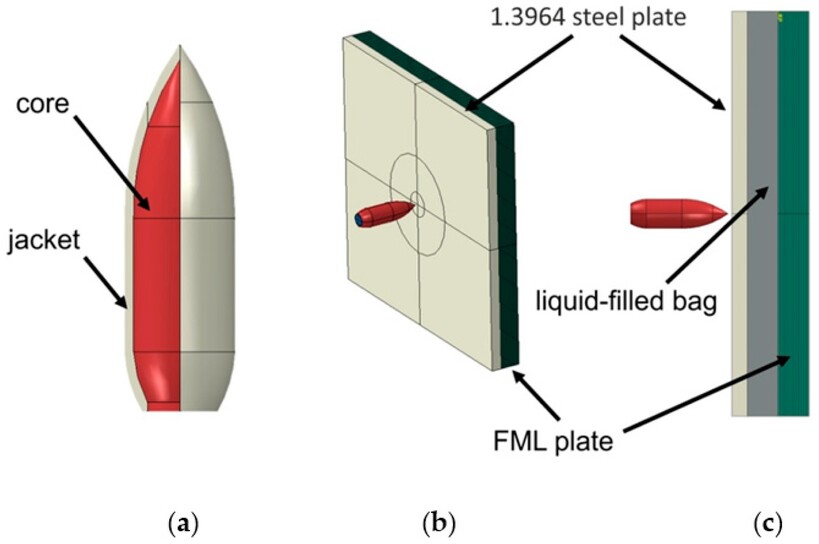
Figure 2.2: Experimental scrutiny of hydrodynamic modelling of ballistics impact on the target
Hydrodynamic theories also influence the interaction of the projectiles with the targets, which describe the response of fluids and soft materials to high-velocity impact (Kubit et al., 2022). The study of wound ballistics is particularly well suited to these theories, where the biological tissues in the path of the wound are investigated. For example, for hydrodynamic ram effect reasons, it is known that high-speed projectiles can generate temporary cavities within the soft tissue that cause extensive damage far removed from the direct path of penetration (Heilig and May, 2024). Such theoretical models provide guidelines to medical professionals to understand ballistic trauma and aid researchers in predicting the extent of injury in forensic casework.
The theoretical framework of terminal ballistics has been highly benefited by computational modelling. Researchers can use finite element analysis and hydrodynamic simulations to predict projectile behaviour under assorted conditions before requiring extensive physical testing. The results from these models can shed light on deformation mechanisms, penetration depth, and energy dissipation process, thereby explaining how different variables affect terminal ballistics outcomes (Heilig and May, 2024). While such advancements have been made, experimental validation of real-world ballistic events continues to be needed for continued reliance on theoretical predictions.
2.3 Factors Influencing Projectile Behaviour Upon Impact
Many variables are involved in projectile behaviour, including velocity, segmentation, composition, and target material properties. One of the most essential velocity factors is increased velocities, which increase the kinetic energy available for penetration and fragmentation (Ghaffari, Griffith and Barber, 2019). In general, complex material response, such as spallation, secondary fragmentation, and non-destructive shockwave formation, is associated with the impact of a projectile on a target at supersonic speed. Atmospheric test results have shown that the interaction of shockwaves and target materials will determine if the projectile will penetrate, ricochet, or shatter on impact (Ren et al., 2024).
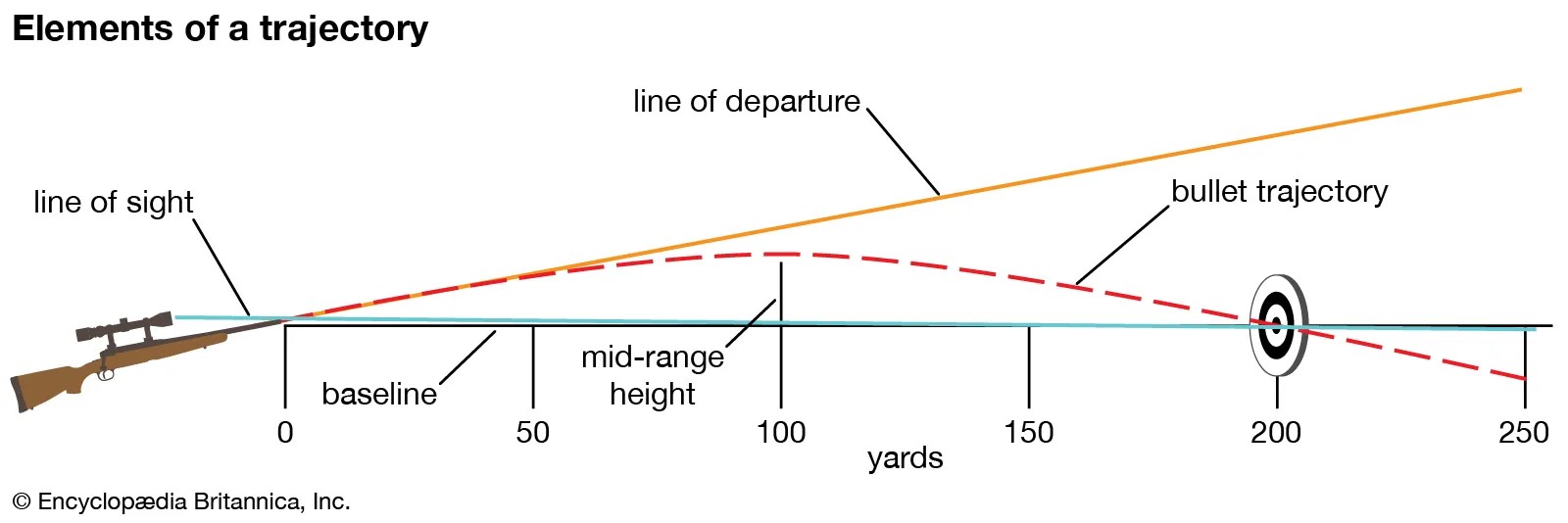
Figure 2.3: Trajectory of a bullet
Terminal ballistics outcomes are also dependent on projectile shape and composition. The streamlined design of pointed or armour-piercing projectiles tends to remove it more effectively since hollow-point bullets can expand on impact and increase tissue damage in forensic and self-defence cases. Resistance to deformation of the projectile upon impact depends on the hardness and density of the projectile material (Zhang, Poh and Zhang, 2020). For example, tungsten and depleted uranium are used to bombard targets in military applications because of their high density and penetration characteristics.
The projectile's behaviour is highly dependent on the target material composition, as various materials have different resistances to penetration. Ballistic gel or biological tissue is softer than ceramics or steel, thus making it more amenable to deeper penetration and more extensive energy transfer (Carr, Stevenson and Mahoney, 2018). In contrast, ceramics and Steel are complex and can induce projectile fragmentation. Additionally, composite armour and layered materials introduce additional complexity into penetration mechanics as such structures intentionally disperse impact energy across multiple layers, reducing a projectile’s effectiveness (Krasley et al., 2024).
Projectile behaviour is also influenced by impact angle since, at some angles, the projectile will penetrate, deflect or shatter. Deeper penetration occurs with perpendicular impacts and ricochets with oblique. The coefficient of restitution, which predicts the elasticity of the collision of a projectile on a surface at different angles, can help predict how the projectile will behave (Krasley et al., 2024). Therefore, understanding these factors is important because it can help forensic investigations reconstruct shooting incidents by analyzing bullet trajectories and impact sites.
2.4 Experimental Studies and Observations
Experimentally, such behaviour upon impact is analyzed under controlled conditions in several experimental studies. Forensic and medical research has widely used ballistic gel testing to simulate the response of soft tissue to gunshot wounds. Researchers can watch projectile deformation, and fragmentation occur in real time by using high-speed cameras as well as X-ray imaging. These data are helpful for forensic casework. These studies have shown that bullet expansion, cavitation, and secondary projectile formation are crucial in determining injury severity.
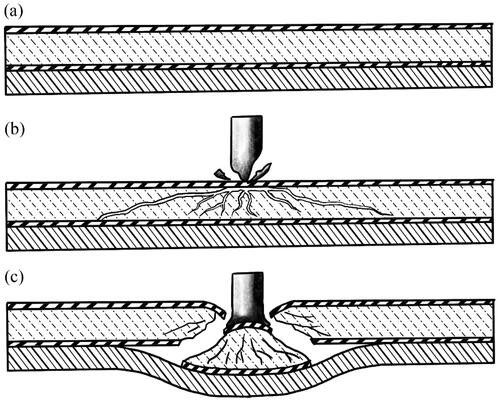
Figure 2.4: Armour penetration testing
Armour penetration testing is the subject of military and defence research that has been extensively studied to quantify the effectiveness of protective materials against high-velocity projectiles. Studies on ceramic and composite armour systems have indicated that layering hard and soft materials can increase impact resistance by dispersing kinetic energy (Yu et al., 2024). Experience that has been acquired through firing range with steel plates and Kevlar-based personal protection equipment is currently applied in the modern warfare and protective equipment doctrine for armour and vehicle protection.
Computational fluid dynamics has also received much attention in experimental research in recent years since it has allowed researches to predict the fluid-structure interactions that occur consequent to projectile impacts. From these simulations, it is easier for the medical practitioners to get deeper insight into the forces involved in wound ballistics and be in a position to evaluate these forces for various projectiles. As per the view of Jiang et al., (2022) incorporation of experimental and computational approach to carry out the terminal ballistics work has made it more accurate with the help of method.
2.5 Terminal Ballistics in Forensic and Military Applications
Terminal ballistics also goes beyond the theoretical and experimental fields and has socio-legal applications as well as in military anticipations. Reconstruction of crime scenes and the determination of the sequence of events in bullet-related events are critical in forensic science, and this is made possible through the ability of the scientist to analyze bullet trajectories, impact angles, and penetration characteristics (Mattijssen et al., 2023). Bullet fragments and impact patterns are examples of ballistic evidence that allow forensic experts to link projectiles to particular firearms and assist in criminal investigations and legal processes.
Terminal Ballistic research is applied to military purposes: improving ammunition effectiveness and protective armour. A critical understanding of how projectiles behave upon impact is necessary for developing armour-piercing rounds, explosive projectiles, and guided munitions. Terminal ballistics research directly informs the design of more resilient self-healing armour and reactive protection systems (Rana, 2024). This was used, in fact, in battlefield forensics to help determine excellent levels of damage on the battlefield and examine the usefulness of weaponry on the battlefield.
Another critical area of military research in this area is the study of blast-induced injuries and secondary projectile effects, which is assumed to assess the impact of explosive devices on personnel and structures. Understanding how blast waves interact with human tissue and how they impede protective gear can aid in developing mitigation strategies to save casualties in conflict zones (Mattijssen et al., 2023). However, the advancements in terminal ballistics research are still changing the face of military defence and forensic science, delivering crucial information on impact dynamics and material resilience.
2.6 Conclusion
Though the field is still crucial in forensic science, military defence, and material engineering, the study of terminal ballistics still holds value. Much has been learned about projectile behaviour on impact with theoretical frameworks, experiments and computational modelling. However, it still faces challenges in predicting real-world ballistic events owing to the complexity of the involved variables. Terminal ballistics analysis can be improved further by integrating advanced materials, machine learning algorithms and high-fidelity simulations, and the focus of future research should continue to be on that. Continued research in this field will bridge existing knowledge gaps and thus improve forensic methodologies, design of protective materials and ammunition design.
Struggling to structure your own literature-based dissertation? Get expert Dissertation Writing Help for well-researched, properly formatted chapters.
3. Methodology
3.1 Introduction
This section describes the research methodology employed in this dissertation and how data related to terminal ballistics was obtained, analyzed, and interpreted. Due to the nature of the research, the analysis was secondary qualitative in form, a method used to critically examine existing literature, experimental findings and theoretical models in terminal ballistics.
3.2 Research Approach and Justification
This study is of an exploratory and analytical nature and thus was done using qualitative research methodology. This dissertation critiques and interprets existing research findings, case studies and theoretical discussions rather than producing new empirical data. For this reason, secondary research is the most appropriate method because it allows for extensive literature review in various disciplines, including forensic science, materials engineering and defence technology. Using this approach, we obtain a broad and in-depth understanding of the variation of terminal ballistics outcomes relative to the other factors without the constraints of running primary experiments.
Thematic analysis was the primary data interpretation method. It examines qualitative data, identifying, analyzing, and reporting patterns or themes (Naeem et al., 2023). The authors identified key themes relevant to projectile impact dynamics, penetration mechanics, and post-impact behaviour through a systematic review of appropriate academic papers, experimental reports, and forensic case studies.
3.3 Data Collection
The data used for this dissertation was collected from secondary sources of peer-reviewed journal articles, forensic science reports, ballistic testing studies, and military research publications. Academic databases such as ScienceDirect, IEEE Xplore, SpringerLink and forensic science journals were used to obtain these sources. Technical reports from defence organisations and forensic laboratories also provided information from real-world ballistic applications. Either relevance to terminal ballistics or methodological rigour, focus was placed on the inclusion criteria, along with recency literature (relevant to the last two decades).
3.4 Thematic Analysis Process
This was a thematic analysis of the literature in which the following six steps were used to make the process rigorous and provide reliability for the identification of the themes: For the first time, the authors went through all the gathered papers to receive the basic insights of the results and the offered contribution to the established theory (Xu and Zammit, 2020). The second step was to develop the first set of codes deduced from the following data regarding projectile behaviour after impact, penetration and fragmentation pattern. The third process was classification of related codes like energy dissipation, material deformation and ricochet dynamics.
3.5 Reliability and Validity
This was very important for the validity and credibility of the findings of secondary qualitative research. The internal validity of this research was upheld solely on high impact peer reviewed articles and superiority was done by using multiple perspectives from different fields of study (Snyder, 2019). In the same way, findings from other disciplines like forensic science, engineering, and military defence studies were used to adopt the concept of triangulation. It was useful in minimizing the bias and also in presenting a number of different opinions on terminal ballistics principles.
3.6 Ethical Considerations
The non-interaction with ethical factors such as use of participants and data collection in this research classify this as secondary data research. Thus, all the sources were cited correctly, no cheating was observed, and no manipulation of the data obtained from the literature. Procedures of ethical research were followed and proper attribution as well as data were preserved and upheld in the given dissertation.
3.7 Conclusion
This approach of the method enables the author to provide an assessment of the terminal ballistics research rich in both the breadth and depth of approach. This research adopts secondary qualitative thematic synthesis as the methodology by focusing on literature to review a number of works and offer an understanding of projectile motion and its behaviour when in contact with a surface. Study of these phenomena is useful to determine the causes and effects of penetration, fragmentation and ricochet and thus provide understanding of the principles of terminal ballistics. This method will be used to draw the conclusions of this study for the implications to forensic science, military defence, and material engineering in the subsequent sections.
4. Results
4.1 Introduction
This section delivers the findings of the second level of secondary, qualitative thematic analysis of terminal ballistics research. The results summarized cover aspects of projectile penetration and fragmentation, ricochet patterns, and the influence of target material under the topics listed in the literature. These are the themes of this research since they bring out the different outcomes of the projectile as it strikes, and more importantly, what is requisite for forensic investigations, materials science, and even functionality in military.
4.2 Projectile Penetration Dynamics
Analysis of previously available literature shows that the effect of projectile velocity, shape and target material properties is dominant in penetration depth. It has been found that higher-velocity projectiles are more penetrative because the kinetic energy transfers faster upon impact (Young et al., 2018). Additionally, the end of the projectile affects the penetration, with pointed and armour-piercing shapes penetrating more deeply than hollow point and blunt shapes that tend to expand upon hitting.
Recent research finds that the penetration characteristics rely very much on the composition of the target material. Deep penetration into softer materials, such as ballistic gel or biological tissue, allows minor projectile deformation at maximum penetration versus hard materials, such as steel and ceramic armour, which induce projectile fragmentation (Si et al., 2022). Experimental studies on multi-layered armour show that one can reduce penetration by spreading kinetic energy over several layers of materials such as Kevlar and ceramic plates.
4.3 Fragmentation and Energy Dissipation
Post-impact damage and energy dissipation are directly related in part to projectile fragmentation. As stated in the literature, fragmentation of multiple smaller fragments is initiated when the projectile structure cannot resist the forces imposed upon impact (Si et al., 2022). More commonly, this phenomenon occurs in frangible ammunition and rifle rounds of high velocity in which bullets are manufactured to fracture on impact to deliver maximum damage.
Forensic case studies reveal that fragmentation makes forensic wound ballistics more complex or, in the words of the newly developing discipline of Forensic Ballistics, increases the fragmentation of the problem. Secondary wound tracks caused by fragmented projectiles complicate bullet trajectory analysis (Matsui et al., 2021). Military research also notes that tungsten or depleted uranium armour-piercing rounds are highly efficient at penetrating since they have little fragmentation.
4.4 Ricochet Effects and Impact Angle
Projectile velocity, impact angle, and target material will influence the likelihood of a projectile ricocheting off a surface. The literature generally shows that the probability of ricocheting is increased for oblique impacts, mainly when hitting rigid surfaces such as concrete, steel, or glass (Gao et al., 2022). Forensic ballistics studies demonstrate that analyzing ricochet patterns assists in reconstructing shooting incidences, especially in areas where bullets ricochet between several surfaces.
Deformation of the projectile during ricochet is shown to depend on the velocity and material composition of the projectile. The soft lead bullets are less likely to deform on impact, and the likelihood of further ricochets is reduced; full metal jacket bullets will maintain structural integrity and may be redirected off surfaces (Cho et al., 2022). Research within the military sector points out that occurrences of ricochet behaviour should be planned and accounted for, as inefficiencies at that battle stage will contribute to collateral damage.
4.5 Influence of Target Materials
Terminal ballistics is dependent upon the interaction between projectiles and target materials. Ballistic testing data analysis shows that shattering and absorbing kinetic energy is more effective when the material’s tensile strength is high (steel, ceramics). However, low-density materials like wood or foam would exhibit very little resistance to a projectile, hence allowing the projectile to pass through and lose its energy rapidly.
Material analysis plays a key role in forensic investigations as it is the tool of choice to deduce bullet trajectory and impact effects. Additional studies of gunshot residue dispersion also describe how target composition influences ballistic evidence (Guarnera et al., 2022). A Cadillac may spawn the equivalent of Nassau County police, but laboratory, military, and defence research that confirms that layered armour systems (soft and hard) absorb shock waves and spread impact forces gets little attention.
4.6 Summary of Findings
The analysis of existing literature for a thematic analysis provides a complete understanding of terminal ballistics. The penetration dynamics of the projectile is a function of the velocity, shape and properties of the target material and penetration efficiency increases with velocity. Fragmentation patterns influence forensic analysis and wound ballistics, including frangible ammunition with complex secondary effects. Impact angle and target rigidity are determining factors for ricochet behaviour, which influences the projectile trajectory both in forensic and military contexts. Energy dissipation characteristic, which is the role of the target material to achieve this end, makes composite armour indispensable in protective applications.
5. Discussion
5.1 Introduction
This chapter interprets and critically evaluates the results presented in the results chapter by relating them to extant research and theoretical frameworks in terminal ballistics. It discusses the projectile penetration dynamics, the fragmentation pattern, ricochet effects, and the target material interactions, which help provide a better understanding of how the projectile will behave upon impact. Real world implications for forensic science, military applications and material engineering are also considered, and the significance of these findings in these real-world scenarios.
5.2 Projectile Penetration Dynamics and Energy Transfer
The results show the dependence of the penetration depth on the projectile velocity, shape, and target material properties. The increased kinetic energy transfer by higher velocity projectiles is aligned with Newtonian mechanics principles in which projectiles that penetrate deeper are given higher velocity projectiles (Wang, 2024). The relationship between energy dissipation and penetration efficiency is well known in ballistics research, with pointed and armour-piercing projectiles outperforming blunt or hollow point rounds for penetration.
It is further supported by the interaction between the projectiles and materials that differ from the target material. While ballistic gel and biological tissue can absorb more energy than steel or ceramic armour, the latter effectively dissipates energy by deforming or fracturing the projectile. The findings agree with previous work on layered armour systems, which show that combining materials with different densities can effectively provide ballistic protection (Kim and Kang, 2020). These results are of practical interest since material properties must be optimized in terms of defensive capabilities to design body armour and vehicle protection systems.
5.3 Fragmentation and Wound Ballistics
Projectile fragmentation has significant forensic and military consequences. The results show that the projectile disperses multiple fragments when impact forces are too great for the projectile to withstand. Such a phenomenon is of great importance in forensic science, where the fragmentation patterns are analyzed to reconstruct the shooting incident and determine the bullet trajectory (Minzière et al., 2022).
Fragmentation complicates wound ballistics, as the number of wound tracks and cavitation effects makes forensic analysis more difficult. It is consistent with the literature that frangible ammunition, i.e. ammunition that is typically used in self-defence and law enforcement, is created to achieve maximum tissue damage with minimum over-penetration. Unlike military applications, rounds for these versions are pursued explicitly because they will fracture with a minimum penetration depth inside armoured targets (Carr, Stevenson and Mahoney, 2018). The results show that the correct ammunition selection is crucial in varied operational environments and that forensic and military specialists must comprehend fragmentation mechanics.
5.4 Ricochet Effects and Projectile Trajectory Analysis
Results show that ricochet behaviour is largely defined by impact angle, projectile composition, and target surface rigidity. Oblique impacts favour Ricochet; however, rigid surfaces, such as metal, concrete, and glass, tend to produce deflections with larger magnitudes (Wang and Yuan, 2023). This is consistent with forensic ballistics research that shows that ricochet analysis is a primary tool in crime scene reconstruction. Predicting ricochet trajectories improves forensic investigations in urban environments where bullets ricochet off many surfaces before coming to rest.
The deformation of the projectile in a ricochet varies in terms of material composition and impact force. Complete metal jacket rounds deform less on impact, preventing ricocheting, whereas soft lead bullets deform more upon effects and hence cannot ricochet further (Nishshanka, Shepherd and Paranirubasingam, 2020). This is important in army and police operations and forensic science, where ricochet behaviour may positively impact safety measures and tactical decisions. This suggests that incorporating ricochet analysis into forensic casework improves shooting reconstruction's reliability and knowledge of projectile dynamics.
5.5 Influence of Target Materials and Ballistic Resistance
Terminal ballistics is determined by the interaction of projectiles with target materials. Materials with high tensile strength, such as steel and ceramics, have superior resistance to penetration by dissipating kinetic energy through deformation and fracture mechanisms (Goda, 2022). Research into ballistic armour backs this up by showing that layering hard with soft materials improves impact resistance.
Material analysis is used to help determine bullet trajectory and impact effects in forensic investigations. Both the location and dispersion of gunshot residue and secondary projectile formation can be crucial in criminal casework, and results indicate that target composition may have an effect (Charles, Geusens and Nys, 2023). Ballistic testing plays a vital role in developing bullet-resistant gear for law enforcement and military personnel, as the target materials involved in energy dissipation are critical. These practical implications reach across material engineering through robust structural properties and can enhance ballistic protection and impact resistance of some of the most complex systems.
5.6 Implications for Forensic Science, Military Applications, and Material Engineering
The results of this study have significant implications across many different fields. A deeper understanding of penetration dynamics, fragmentation and ricochet effects is also helpful in exploiting ballistic reconstructions in forensic science. Magnum helps law enforcement analytical methodologies make sense of shooting-related crimes through the ability to analyse bullet trajectories and impact patterns (Dias et al., 2024).
American money spent on improving the accuracy or reliability (R) of 'modern' (whatever that means) firearms is thrown down a rabbit hole of oversensitivity, underproduction, and expense. The results pave the way for developing advanced protective materials and impact-resistant technologies relevant to advancing modern defence strategies (Karhankova et al., 2024). Also, the understanding of projectile behaviour upon impact helps in the design of weapons systems that maximise penetration efficiency with controlled fragmentation.
Ballistic resistance studies represent material engineering and guide the development of high-performance materials for protective applications. Such advancements in materials science are integrated through multilayered armour systems with ceramics, polymers, and composite fibres, showing how further integration of materials science can improve impact resilience (Savic and Cabrilo, 2021). These findings help refine structural properties to maximise ballistic protection in various industries.
5.7 Conclusion
The discussion ties these findings to previous research and practical applications and shows how important the individual aspects of projectile behavior onto impact are. The study's results confirm that penetration depth, fragmentation patterns, ricochet effects and target material interactions are all central to terminal ballistics. This is relevant to forensic science, military defence, material engineering, and ballistic research and has implications for these fields.
To advance the field further, more research should combine experimental ballistics testing, computational simulation, and interdisciplinary work. Further work in terminal ballistics addresses existing limitations and extends the scope of analysis to improve forensic methodologies, better protective materials, and superior ammunition design.
6. Conclusions and Recommendations
6.1 Conclusion
This dissertation investigates the principles of terminal ballistics with special attention to how projectile behaviour upon impact varies as a function of different factors. The penetration dynamics, fragmentation patterns and ricochet effects are analysed through a secondary qualitative thematic analysis, and the impact of the time-dependent target material composition is assessed. The results confirm the importance of velocity, the projectile shape, and material resistance on post-impact behaviour, as well as potential forensic science and military and materials engineering applications.
The study has shown that higher velocity projectiles increase kinetic energy transfer to increase penetration efficiency. Projectile shape and composition similarly affect penetration depth and deformation; while pointed and armour-piercing rounds maintain structural integrity, frangible ammunition allows penetration depth and damage to be maximized through controlled fragmentation and ultimate fragmentation. Impact angle and surface rigidity dependence of ricochet behaviour is demonstrated to have a major influence on forensic ballistics and tactical military operations. This reflects the need for composite armour for protective applications as target materials affect energy dissipation.
The presented findings help integrate the theoretical models and the experimental research upon impact, providing a holistic knowledge of projectile behaviour. This has important practical implications for forensic investigations, the design of ammunition, the development of protective gear, and terminal ballistics research in general. While this has made many contributions to the field, the study also acknowledges its limitations, such as using secondary data and the differences in ballistic testing methodologies across different studies.
6.2 Recommendations
Future studies into terminal ballistics should include experimental validation through controlled ballistic testing. Empirical studies would run with high-speed imaging, pressure sensors, and material stress analysis to gain further precise data on projectile-target interactions. This would improve the predictive capabilities for real-world applications and increase the accuracy of theoretical models. Experimental research should be expanded to complement computational modelling. Finite element analysis and fluid dynamics simulations can provide further insights into penetration mechanics, energy dissipation, and ricochet trajectories (Chen, Chen and Jiang, 2020). Integrating artificial intelligence and machine learning algorithms may improve ballistic simulation predictive accuracy.
Standardized testing protocols for gunshot residue analysis, successful bullet trajectory reconstruction from multiple bullet striations, and wound ballistics should be improved in forensic science to make forensic investigations more reliable (Shrivastava, Jain and Nagpal, 2021). Since ballistic impact patterns are volatile evidence, law enforcement and forensic laboratories must create comprehensive databases to aid crime scene reconstructions and judicial processes. Terminal ballistics should benefit from the collaboration of material scientists, forensic experts and defence engineers to close knowledge gaps and to advance material interfaces into interdisciplinary fields. International research activities can accelerate initiatives and funding programs in ballistic protection and forensic methodologies.
6.3 Future scope
Terminal ballistics still holds much importance in research and is used in determining forensic, military defence and material engineering. Understanding the complex interactions between projectiles and targets helps in more effective ammunition, better forensic reconstruction techniques, and better protective materials design (Guarnera et al., 2022). While this dissertation has enhanced our understanding of terminal ballistics in the broader context of the field, theoretical models should continue to be refined, tested by experimental methods, and integrated with technological advancements to further advance the state of the art in impact analysis and ballistic protection strategies.
References
- Asgedom, G., Yeneneh, K., Tilahun, G. and Negash, B. (2024). Numerical and experimental analysis of body armor polymer penetration resistance against 7.62 mm bullet. Heliyon, [online] 11(1), p.e41286. doi:https://doi.org/10.1016/j.heliyon.2024.e41286.
- Britannica (2019). Ballistics | Britannica. In: Encyclopædia Britannica. [online] Available at: https://www.britannica.com/science/ballistics [Accessed 20 Mar. 2025].
- Carr, D.J., Stevenson, T. and Mahoney, P.F. (2018). The use of gelatine in wound ballistics research. International Journal of Legal Medicine, 132(6), pp.1659–1664. doi:https://doi.org/10.1007/s00414-018-1831-7.
- Charles, S., Geusens, N. and Nys, B. (2023). Interpol Review of Gunshot Residue 2019 to 2021. Forensic Science International: Synergy, 6, p.100302. doi:https://doi.org/10.1016/j.fsisyn.2022.100302.
- Chen, F., Chen, R. and Jiang, B. (2020). The adaptive finite element material point method for simulation of projectiles penetrating into ballistic gelatin at high velocities. Engineering Analysis with Boundary Elements, 117, pp.143–156. doi:https://doi.org/10.1016/j.enganabound.2020.03.022.
- Cho, H., Choi, M.K., Park, S., Kim, M., Han, J. and Sohn, D. (2022). Determination of critical ricochet conditions for oblique impact of ogive-nosed projectiles on concrete targets using semi-empirical model. International Journal of Impact Engineering, [online] 165, p.104214. doi:https://doi.org/10.1016/j.ijimpeng.2022.104214.
- Dias, R.R., Meliande, N.M., Kotik, H.G., Camerini, C.G. and Pereira, I.M. (2024). Thermoplastic-Based Ballistic Helmets: Processing, Ballistic Resistance and Damage Characterization. Journal of Composites Science, [online] 8(10), pp.385–385. doi:https://doi.org/10.3390/jcs8100385.
- Euteneuer, J. and Courts, C. (2021). Ten years of molecular ballistics—a review and a field guide. International Journal of Legal Medicine. doi:https://doi.org/10.1007/s00414-021-02523-0.
- Feng, J., Sun, W., Wang, L., Chen, L., Xue, S. and Li, W. (2020). Terminal ballistic and static impactive loading on thick concrete target. Construction and Building Materials, [online] 251, p.118899. doi:https://doi.org/10.1016/j.conbuildmat.2020.118899.
- Fras, T. (2024). On the effect of pitch and yaw angles in oblique impacts of small-caliber projectiles. Defence technology, 31, pp.73–94. doi:https://doi.org/10.1016/j.dt.2023.06.004.
- Gao, Y., Feng, S., Huang, G., Feng, Y. and Huang, Q. (2022). Experimental study of the oblique impact and ricochet characteristics of cylindrical fragments. International Journal of Impact Engineering, 170, p.104334. doi:https://doi.org/10.1016/j.ijimpeng.2022.104334.
- Ghaffari, H.O., Griffith, W.A. and Barber, T.J. (2019). Energy delocalization during dynamic rock fragmentation. Geophysical Journal International, 217(2), pp.1034–1046. doi:https://doi.org/10.1093/gji/ggz064.
- Goda, I. (2022). Ballistic resistance and energy dissipation of woven-fabric composite targets: Insights on the effects of projectile shape and obliquity angle. Defence Technology. doi:https://doi.org/10.1016/j.dt.2022.06.008.
- Guarnera, L., Giudice, O., Livatino, S., Paratore, A.B., Salici, A. and Battiato, S. (2022). Assessing forensic ballistics three-dimensionally through graphical reconstruction and immersive VR observation. Multimedia Tools and Applications, 82. doi:https://doi.org/10.1007/s11042-022-14037-x.
- Heilig, G.A. and May, M. (2024). The hydrodynamic RAM effect: Review of historic experiments, model developments and simulation. Defence Technology. doi:https://doi.org/10.1016/j.dt.2024.07.010.
- Hurley, D.H., El-Azab, A., Bryan, M.S., Cooper, M.W.D., Dennett, C.A., Gofryk, K., He, L., Khafizov, M., Lander, G.H., Manley, M.E., Mann, J.M., Marianetti, C.A., Rickert, K., Selim, F.A., Tonks, M.R. and Wharry, J.P. (2021). Thermal Energy Transport in Oxide Nuclear Fuel. Chemical Reviews, 122(3), pp.3711–3762. doi:https://doi.org/10.1021/acs.chemrev.1c00262.
- Jiang, A., Li, Y., Li, D. and Hou, H. (2022). Study on Anti-Penetration Performance of Semi-Cylindrical Ceramic Composite Armor against 12.7 mm API Projectile. Crystals, 12(10), p.1343. doi:https://doi.org/10.3390/cryst12101343.
- Karhankova, M., Adamek, M., Krstulović-Opara, L., Mach, V., Bagavac, P., Stoklasek, P. and Mizera, A. (2024). Composites in Ballistic Applications Focused on Ballistic Vests—A Review. Journal of Composites Science, [online] 8(10), p.415. doi:https://doi.org/10.3390/jcs8100415.
- Kim, S. and Kang, T.H.-K. (2020). Development of Energy-Based Impact Formula—Part I: Penetration Depth. Applied Sciences, 10(14), pp.4964–4964. doi:https://doi.org/10.3390/app10144964.
- Krasley, A.T., Li, E., Galeana, J.M., Bulumulla, C., Beyene, A.G. and Demirer, G.S. (2024). Carbon Nanomaterial Fluorescent Probes and Their Biological Applications. Chemical Reviews. doi:https://doi.org/10.1021/acs.chemrev.3c00581.
- Kubit, A., Trzepieciński, T., Kiciński, R. and Jurczak, K. (2022). Three-Dimensional Smooth Particle Hydrodynamics Modeling and Experimental Analysis of the Ballistic Performance of Steel-Based FML Targets. Materials, 15(10), pp.3711–3711. doi:https://doi.org/10.3390/ma15103711.
- Liao, C.-C., Lin, M.-H., Chung, Y.-C. and Hsu, C.-C. (2025). Dynamic characteristics of granular beds subjected to projectile impact. International Journal of Mechanical Sciences, [online] 290, p.110096. doi:https://doi.org/10.1016/j.ijmecsci.2025.110096.
- López-Moliner, J. and Cristina (2021). Motion-in-depth effects on interceptive timing errors in an immersive environment. Scientific Reports, 11(1). doi:https://doi.org/10.1038/s41598-021-01397-x.
- Matsui, Y., Iguchi, S., Sato, E., Sato, Y., Shindo, K., Ishida, M., Saito, Y., Nakamura, K., Kushima, Y., Nishiwaki, M. and Imanishi, Y. (2021). Atypical Gunshot Injury Traversing the Neck with an Unexpected Nonlinear Bullet Trajectory: a Case Report and Review of the Literature. SN Comprehensive Clinical Medicine, 3(2), pp.765–771. doi:https://doi.org/10.1007/s42399-021-00760-3.
- Mattijssen, E.J.A.T., Kerkhoff, W., Hermsen, R. and Hes, R.A.G. (2023). Interpol review of forensic firearm examination 2019–2022. Forensic Science International: Synergy, 6, p.100305. doi:https://doi.org/10.1016/j.fsisyn.2022.100305.
- Minzière, V.R., Gassner, A., Gallidabino, M., Roux, C. and Weyermann, C. (2022). The relevance of gunshot residues in forensic science. WIREs Forensic Science, 5(1). doi:https://doi.org/10.1002/wfs2.1472.
- Naeem, M., Ozuem, W., Howell, K.E. and Ranfagni, S. (2023). A Step-by-Step Process of Thematic Analysis to Develop a Conceptual Model in Qualitative Research. International Journal of Qualitative Methods, [online] 22(1), pp.1–18. doi:https://doi.org/10.1177/16094069231205789.
- Nishshanka, B., Shepherd, C. and Paranirubasingam, P. (2020). Forensic based empirical study on ricochet behaviour of Kalashnikov bullets (7.62 mm × 39 mm) on 1 mm sheet metal. Forensic Science International, 312, p.110313. doi:https://doi.org/10.1016/j.forsciint.2020.110313.
- Rana, D.J. (2024). Forensic Ballistics: Firearms and Projectile Trajectories. [online] prepladder. Available at: https://www.prepladder.com/neet-pg-study-material/forensic-medicine/forensic-ballistics-study-of-firearms-and-projectile-trajectories [Accessed 20 Mar. 2025].
- Ren, S., Zhang, P., Wu, Q., Zhang, Q., Gong, Z., Song, G., Long, R., Gong, L. and Wu, M. (2024). Review of bumper materials for spacecraft shield against orbital debris hypervelocity impact. Defence Technology. doi:https://doi.org/10.1016/j.dt.2024.09.002.
- Savic, B. and Cabrilo, A. (2021). Effect of Heat Input on the Ballistic Performance of Armor Steel Weldments. Materials, 14(13), p.3617. doi:https://doi.org/10.3390/ma14133617.
- Shrivastava, P., Jain, V.K. and Nagpal, S. (2021). Gunshot Residue Detection Technologies—a Review. Egyptian Journal of Forensic Sciences, [online] 11(1). doi:https://doi.org/10.1186/s41935-021-00223-9.
- Si, P., Liu, Y., Yan, J., Bai, F. and Huang, F. (2022). Ballistic Performance of Polyurea-Reinforced Ceramic/Metal Armor Subjected to Projectile Impact. Materials, 15(11), p.3918. doi:https://doi.org/10.3390/ma15113918.
- Snyder, H. (2019). Literature Review as a Research Methodology: an Overview and Guidelines. Journal of Business Research, [online] 104(1), pp.333–339. doi:https://doi.org/10.1016/j.jbusres.2019.07.039.
- Sobral, A.F., Dinis-Oliveira, R.J. and Barbosa, D.J. (2024). CRISPR-Cas technology in forensic investigations: principles, applications, and ethical considerations. Forensic Science International Genetics, [online] pp.103163–103163. doi:https://doi.org/10.1016/j.fsigen.2024.103163.
- Wang, X. and Yuan, M. (2023). Mechanical model and numerical simulation of oblique penetration of projectile into foamed aluminum laminated target. Mechanics of advanced materials and structures, pp.1–9. doi:https://doi.org/10.1080/15376494.2023.2289074.
- Wang, Y. (2024). Particle-target interactions of high-speed microparticle impact for resulting material modifications. Materials Today Communications, [online] 41, p.110324. doi:https://doi.org/10.1016/j.mtcomm.2024.110324.
- Xu, W. and Zammit, K. (2020). Applying Thematic Analysis to Education: A Hybrid Approach to Interpreting Data in Practitioner Research. International Journal of Qualitative Methods, [online] 19(2), pp.1–9. doi:https://doi.org/10.1177/1609406920918810.
- Young, L., Rule, G.T., Bocchieri, R.T., Walilko, T.J., Burns, J.M. and Ling, G. (2018). When Physics Meets Biology: Low and High-Velocity Penetration, Blunt Impact, and Blast Injuries to the Brain. Frontiers in Neurology, 6(89). doi:https://doi.org/10.3389/fneur.2015.00089.
- Yu, Y., Wu, Y., Wang, B., Ma, M. and Gao, G. (2024). Review of the penetration resistance performance of lightweight ceramic composite armor under high-speed impact. Mechanics of Advanced Materials and Structures, pp.1–23. doi:https://doi.org/10.1080/15376494.2024.2374442.
- Zhang, F., Poh, L.H. and Zhang, M.-H. (2020). Resistance of cement-based materials against high-velocity small caliber deformable projectile impact. International Journal of Impact Engineering, 144, p.103629. doi:https://doi.org/10.1016/j.ijimpeng.2020.103629.