
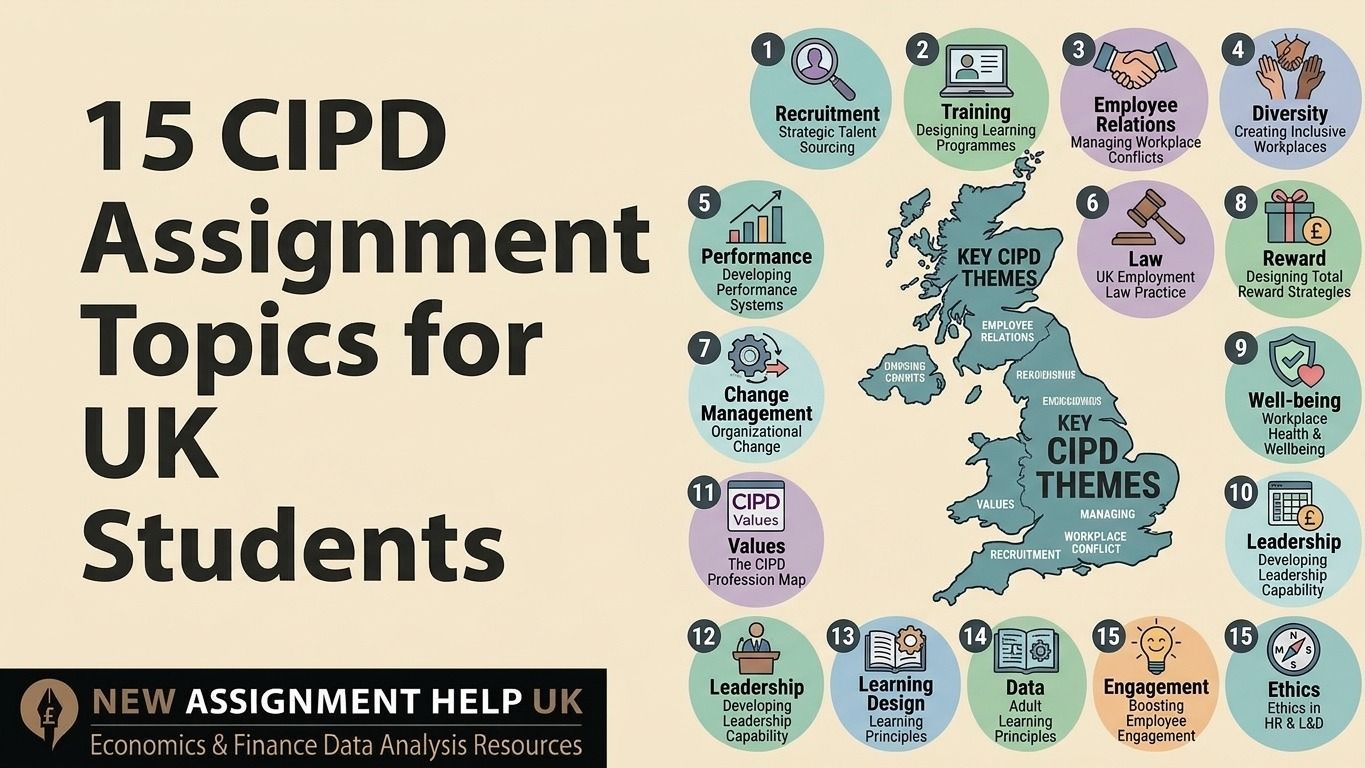
15 CIPD Assignment Topics for UK Students
- 15 CIPD Assignment Topics Students Can Research Without Stress
- How the Levels Differ
- CIPD Level 3 Topics (Foundation Certificate/Diploma)
- CIPD Level 5 Topics (Associate Diploma in People Management or L&D)
- CIPD Level 7 Topics (Advanced Diploma in Strategic People Management or L&D)
- How to Narrow a Broad Topic
- How to Choose the Right CIPD Assignment Topic
- Next Step Ahead
15 CIPD Assignment Topics Students Can Research Without Stress
CIPD assignment topics work best when they are small, easy to research and match your brief. To pick the right CIPD assignment topic, check three things. It must fit your brief, have enough good sources, and be small enough for your word limit. Start with your assessment criteria, then choose a topic you can compare and judge, not just describe. Below are 15 ideas, sorted by level, so you can find one that matches the depth your course expects.
How the Levels Differ
The CIPD assignment topics vary across levels in depth, focus and analytical requirements. Here is how they are different:
- Level 3: Explain ideas clearly and give simple examples.
- Level 5: Apply ideas to real workplaces and compare options.
- Level 7: Question ideas, weigh the evidence and think about strategy.
This is only a broad picture. Your university brief has the final say, so check it before deciding on the topic for your assignment. Let's begin with Level 3, where clear explanations earn the marks.
CIPD Level 3 Topics (Foundation Certificate/Diploma)
At this level, keep things practical. Pick a topic you can explain well with real examples.
- Employee recognition. A simple “well done” can mean as much as a bonus. Explain how recognition works, then compare money rewards with praise.
- Performance reviews. Many staff dread the yearly review. Describe how reviews work and show why regular check-ins might help more.
- Recruitment methods. Firms use interviews, tests and references. Explain each one, and say which seems fairest for a job, you know.
- Coaching and mentoring. People mix these up all the time. Explain how they differ and when each one fits best.
- Flexible working. Staff want choice, while employers worry about teamwork. Outline both views and link them to basic UK employment rules.
Once you can explain ideas well, the next step is using them. That is Level 5.
CIPD Level 5 Topics (Associate Diploma in People Management or L&D)
Here, you need to link theory to real workplaces. Choose a sector you know, such as retail, care or education.
- Engagement and performance. Do involved staff really work better? Compare two engagement strategies and judge which has stronger proof.
- Staff retention in the UK. People leave for many reasons. Pick one sector and test whether pay, managers or career growth matters most.
- Training that works. Training costs money. Ask if it changes what people do day to day, and look at how learning moves into the job.
- Equality, diversity and inclusion. Check whether inclusion plans create real change or only look good on paper. Use hiring or promotion as your focus.
- Wellbeing and business results. Caring for staff sounds kind, but does it pay off? Compare wellbeing programmes and what they actually deliver.
Ready to think bigger? Level 7 asks you to do exactly that.
CIPD Level 7 Topics (Advanced Diploma in Strategic People Management or L&D)
These topics call for deeper reading and a clear view of your own. Expect to question what the research says, not just report it.
- Talent management and workforce planning. Smart firms plan for skills they will need in two years. Judge how well succession planning prepares a business for gaps.
- AI in learning and development. AI can build a plan for each person, but it can also get things wrong. Weigh the gains against the risks, including fair and safe use.
- People analytics. Data can guide hiring and retention, but numbers miss the human side. Judge where data helps and where it falls short.
- HR and organisational change. Many change plans fail because people feel left out. Examine how leaders and clear communication can reduce resistance.
- Reward strategy and retention. What keeps people loyal: pay, perks or purpose? Compare them and argue which one matters most and why.
You have your list. Now comes the part where many students get stuck.
How to Narrow a Broad Topic
A big topic is hard to write well. For example, you like retention. Watch how it shrinks:
- Too broad: Employee retention
- Better: Retention in UK retail
- Best: How career growth affects retention among UK retail staff
Each step gives you more room for real analysis. Use this in every CIPD topic, and you will be able to turn your ideas into a big picture.
How to Choose the Right CIPD Assignment Topic
Ask yourself these four things before selection:
- Does it cover every point in my brief?
- Can I find enough good sources?
- Is it small enough for my word limit?
- Can I compare and judge, not just describe?
If your answer is yes in all four cases, then this is your final CIPD assignment topic.
Next Step Ahead
Write one clear question you want to answer. Then list three or four sources. After that, match each part of your brief to a section of your plan. This stops you from drifting and will help you build a clear structure backed by proper evidence.
The best topic fits your brief and keeps you curious. You don't need a perfect idea. You need a focused one that you can explore well. Start small, read a few good sources, and trust the process. If you are not satisfied with your first draft, then seeking CIPD assignment support can also prove to be the best choice.